
About Frans Snyders
Lived 1579 – 1657 (aged 77). Frans Snyders was a Belgian painter and architectural drafter.
Frans Snyders or Frans Snijders (11November 157919August 1657) was a Flemish painter of animals, hunting scenes, market scenes, and still lifes. A versatile artist, his works depict all sorts of foods, utensils, and tableware and wide assortment of animals. He was one of the earliest specialist animaliers and he is credited with initiating a wide variety of new still-life and animal subjects in Antwerp. His hunting scenes and still lifes engage the viewer with their dramatic and dynamic effects. He was a regular collaborator with leading Antwerp painters such as Peter Paul Rubens, Anthony van Dyck, Jacob Jordaens, and Abraham Janssens.
Life Snyders was born in Antwerp as the son of Jan Snijders, the keeper of a wine inn frequented by artists. According to legend the famous 16th-century painter Frans Floris squandered his fortune in the inn of his father. Snyders' mother was Maria Gijsbrechts. Snyders had five siblings. His brother Michiel also became a painter but no works of him are known.
Snyders was recorded as a student of Pieter Brueghel the Younger in 1593, and subsequently trained with Hendrick van Balen, who was the first master of Anthony van Dyck. Snyders became a master of the Antwerp Guild of Saint Luke in 1602. He travelled to Italy in 1608-9 where he first resided in Rome.
Snyders had returned to Antwerp in the spring of 1609. Snyders painted about 60 hunting paintings and animal pieces after designs by Rubens. In 1639 Rubens and Snyders received a follow-up commission for an additional 18 paintings for the hunting pavilion.
He had many apprentices. His pupils are believed to have included Nicasius Bernaerts, Peter van Boucle, Juriaen Jacobsze, Jan Roos and Paul de Vos. Jan Fyt (Joannes Fijt) was a student, and then assistant of Snyders from 1629. Peter van Boucle claimed that he was a pupil of Frans Snyders but there are no written sources available in Antwerp that support this contention. However, there are stylistic similarities in van Boucle's works which suggest that he worked in the circle of Frans Snyders.
Work General Snyders initially devoted himself to painting flowers, fruit and still lifes. Later he turned to painting animals. He was particularly interested in depicting wild animals, which he showed engaged in lively hunts and fierce combats.
His residence in Italy is believed to have had an important influence on his style of fruit painting. He is likely to have seen Caravaggio's Basket of Fruit in Cardinal Borremeo's collection in Milan. Snyders' large game pieces were very influential and the Dutch painter Jan Davidsz. de Heem, who worked in Antwerp for a significant period of time took inspiration from Snyders' work to develop his own large-scale game pieces.
The large and abundant still lifes of Snyders have been interpreted in many ways. Some read a propagandistic message into these paintings. The display of the luxurious abundance available in Antwerp which was at the time under Spanish administration possibly served the propagandistic purpose of showing the superiority of Spanish rule over Flanders when compared with Protestant control over the rebellious Northern Netherlands.
While in the Baroque tradition many of his compositions are complex and dynamic some are more focused and quiet. An example of the latter is the Grapes, Peaches and Quinces in a Niche (Museum of Fine Arts, Boston), where his brushwork is also more sketchy than usual.
Collaborations
Snyders is believed to have been a skilled figure painter in his own right as is evidenced by Jan Breughel the Elder's request that he make a copy after a Titian portrait in the Borromeo collection during his stay in Milan. The Recognition of Philopoemen is considered the first Baroque still life with figures. A famous collaboration between Rubens and Snyders is the Medusa (Kunsthistorisches Museum, Vienna). Painted around 1613–1617/1618, this small-scale work showed that Snyders' manner was not only well suited to Rubens' large pieces, but also adaptable to his smaller-scale works. Rubens relied on Snyders to create the visual richness that went hand in hand with his Baroque style, which stressed abundance and bounteousness. The two artists' brushwork was so close that contemporaries had difficulty distinguishing their contributions in collaborative works.
Snyders also painted the still life elements for other Antwerp painters such as Jacob Jordaens, Thomas Willeboirts Bosschaert, Jan Janssens and other artists. Frans Snyders collaborated with his second brother-in-law Cornelis de Vos. An example is the Still life with fruit and vegetables, which likely represents a larder of a fine house. The impression given by this composition is one of abundance as well as chaos. Closer inspection shows that the produce is arranged in a hierarchy reflecting their value and rarity. Cheaper root vegetables are on the ground while highly prized peas and asparagus are placed in the basket on the right.
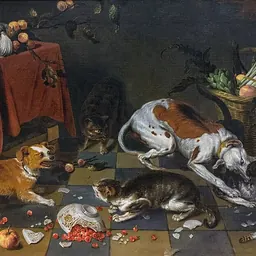
Animalier Snyders was the first artist to concentrate on incidents exclusively featuring animals in everyday environments. In these creations animals such as dogs, cats and monkeys were the sole protagonists. The scenes included fights between animals, hunts by animals, scenes from fables and symbolic representations.
Concert of Birds
One of the symbolic representations that Snyders created and to which he returned regularly is the concert of birds. Compositions on this theme represent different species of birds perched on tree trunks in the form of a concert of birds, sometimes with a musical score. The theme of the concert of birds predates the courtly fashion of the Baroque period of maintaining aviaries.
The theme has its roots in the representations of Aeolus with birds in the Middle Ages, which became very popular at the end of the 16th century. Its symbolic meaning is linked to the representation of the birds of Saint Francis of Assisi and to the devotion to Our Lady of the Birds. According to legend, in the 13th century a flock of birds had been observed gathering near a grove of beech trees outside Brussels. They had been attracted to that location by an image of the Virgin clamped between the branches of the trees. A Franciscan chapel dedicated to the Virgin was then built. It was destroyed during the iconoclastic fury of the Beeldenstorm in the 16th century but reconstructed at the end of the century. A particular feature of the chapel were the bird cages that were suspended from the ceiling. The birds in the cages contributed their song to the liturgy in the chapel. Snyders is said to have had a special relationship with the Franciscan order and he wanted to be buried in the Franciscan habit. In addition to this religious connotation, the concert of birds is also regarded as an allegory of the sense of hearing. Other interpretations are that the concert represents Wisdom, as the owl, which is the animal representing this quality, is sometimes depicted as the conductor of the bird concerts. A further interpretation is that the concert of birds symbolically alludes to harmony and natural regulation, in the sense of balance with nature. These concepts are embodied in the systematization of the birds' song. So, more generally, the concert of birds imagery refers to the political harmony and social order enjoyed by the owners of these paintings during the time the Southern Netherlands were governed by the Archdukes of Austria Albert and Isabella Clara Eugenia. This explains the success of the concert of birds paintings in bourgeois and aristocratic circles. Various followers of Snyders also painted this theme: in the Spanish Netherlands there were Paul de Vos, Jan Fyt and Jan van Kessel the Elder; in the Dutch Republic, Gijsbert d'Hondecoeter, his son Melchior d'Hondecoeter, Abraham Busschop and Jacobus Victors reworked the subject by making it more courtly; and in France the Flemish expatriates Nicasius Bernaerts or Pieter Boel also created compositions on the theme. The monkeys are painted with naturalism, neither idealizing nor caricaturing them.
While the monkey had since the Middle Ages symbolized the sinner - a greedy, lecherous creature, driven by its senses only – during the 16th and 17th centuries it became the symbol of stupidity. Through their uncontrolled grabbing and consuming of food the monkeys show their barbaric nature which is driven solely by animal instinct and desire. The Louvre compositions with capuchin monkeys can also be interpreted as a form of vanitas paintings: the fruit in these still lifes is appetizing yet bound to perish. The fruit thus symbolizes the brevity and futility of life. The compositions can further be regarded as illustrations of the risk of poor household management which is driven solely by the satisfaction of the senses.
Don’t just read it —
keep it.
Full-length biographies made to live with: read them, listen on the way to work, watch them tonight.
- E-book
- Audio
- Video
Instant download · yours to keep · every purchase keeps this site free
Important facts
more
Frans Sneyder, Frans Sdeñe, Frans Sneyre, Frans Sneders, Frans Sneider, Francois Snyders, Frans Snydens, Frans Esneide, Frans Esnaira, Frans Esneyde, Frans Sayders, Frans Snyder, Frans Scheneiden, Frans Snyden, Fran. co Yznaire, Frans Esmaysel, Frans Snider, Franchoijs Snijders, Schneiers, Fr. Snyers, franc snyders, Fr. Sneyders, Franz Sneyders, Esmaysel, esneyde, Suijers, Fran. Snyders, asneides, FPeople in Frans Snyders's life
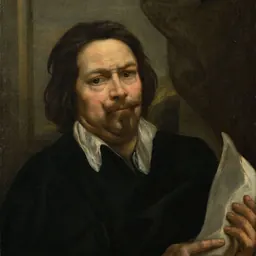
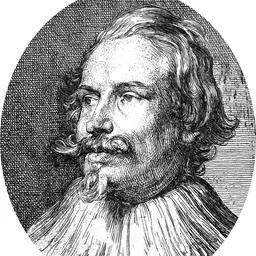
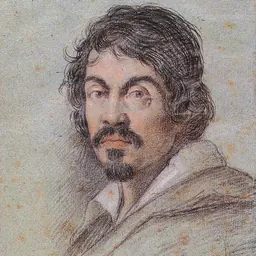
Named in this biography and alive at the same time



Related people
Same field, nearest in time
Contemporaries
People whose lives overlapped Frans Snyders's



Frequently asked questions
Who was Frans Snyders?
Flemish painter (1579–1657)
When was Frans Snyders born?
Frans Snyders was born on 11 November 1579 in Antwerp.
When did Frans Snyders die?
Frans Snyders died on 19 August 1657 in Antwerp.
What was Frans Snyders's occupation?
Frans Snyders was a painter and architectural drafter.
What nationality was Frans Snyders?
Frans Snyders was Belgian.
Sources & further reading
Cite this page
APA: Biography.guide. (2026). Frans Snyders. https://biography.guide/frans-snyders/
MLA: "Frans Snyders." Biography.guide, https://biography.guide/frans-snyders/.
Chicago: "Frans Snyders." Biography.guide. https://biography.guide/frans-snyders/.
Data last updated: 2026-09-20 · Spot an error? Report a correction.
Page generated 2026-09-27 05:29 UTC