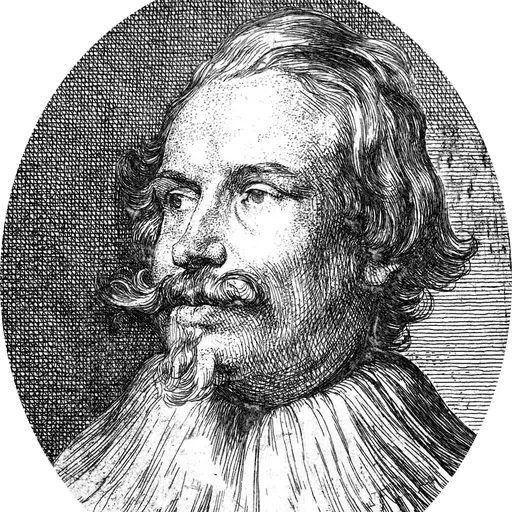
About Paul de Vos
Lived 1592 – 1678 (aged 85–86). Paul de Vos was a painter, animal painter, artist and draftsperson.
Paul de Vos (1591/92, or 1595 in Hulst – 30 June 1678 in Antwerp) was a Flemish Baroque painter who specialized in mainly in compositions of animals, hunting scenes and still lifes. He worked for an elite clientele and was a regular collaborator of leading Antwerp painters such as Anthony van Dyck and Peter Paul Rubens.
Life De Vos was born in Hulst near Antwerp, now in the Dutch province of Zeeland. Little is known of his childhood. His father moved with his family to Antwerp in 1596.
In 1604 Paul de Vos became a pupil of the obscure painter Denijs van Hove in Antwerp. In 1605 he continued his studies under the little-known painter David Remeeus (1559–1626) with whom his older brother Cornelis also trained. He later also trained with the equally obscure Eduard Snayers. De Vos became a master and joined the guild of St. Luke at a late age in 1620, probably because he had initially trained and worked in the workshop of his brother-in-law Frans Snyders who had married his sister Margaretha in 1611.
Paul de Vos married Isabella Waerbeek, a notary's daughter, on 15 Nov 1624 and the couple had 10 children.
In 1637-1638 he worked on the decorations for the Spanish royal residences, Buen Retiro and Torre de la Parada. Most of the decorations at the Torre de la Parada involving animal scenes without humans were by his hand. The governor of the Governor of the Spanish Netherlands Cardinal-Infante Ferdinand visited his workshop. Example of collaborations with Jan Wildens are the compositions Paradise (Kunsthistorisches Museum, Vienna) and Garden of Eden (Auctioned at Sotheby's on 28 January 2016 in New York, lot 30), which resemble the paradise paintings created by Jan Brueghel the Elder.
His collaborations with Rubens consisted mainly of hunting scenes.
One art historian has compared Paul de Vos' contributions to Rubens' hunting scenes with those of Paul Snyders' and found de Vos to be less accurate in the animal anatomy and less accomplished in the psychological expression of the animals. Other art historians regard the hunting scenes of de Vos as more dynamic and evidencing a more personal style when compared with those of Snyders, who was more a still life painter. In their collaboration with Rubens, Snyders and de Vos often worked from sketches made by Rubens while in other cases they were given the freedom to develop their own ideas. The expressive style and motifs of Rubens' animal paintings had an important influence on both Snyders and de Vos. His Fighting peacock and rooster (Museu Calouste Gulbenkian, Lissabon) is included in Willem van Haecht's gallery painting Apelles paints Campaspe (1630, Mauritshuis, Den Haag).
De Vos introduced new motifs into the iconographic tradition in his scenes of fighting cats and horses attacked by wolves.
Don’t just read it —
keep it.
Full-length biographies made to live with: read them, listen on the way to work, watch them tonight.
- E-book
- Audio
- Video
Instant download · yours to keep · every purchase keeps this site free
Important facts
People in Paul de Vos's life
Named in this biography and alive at the same time




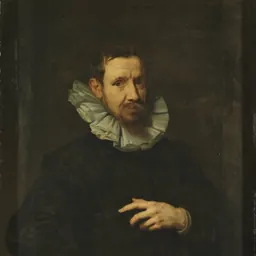
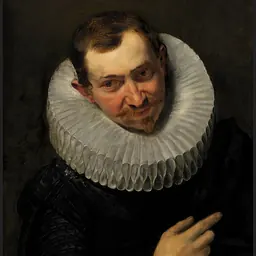
Related people
Same field, nearest in time
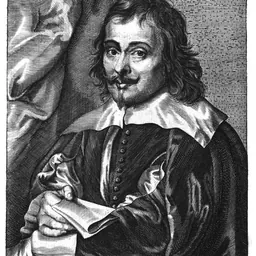
Contemporaries
People whose lives overlapped Paul de Vos's





Frequently asked questions
Who was Paul de Vos?
Flemish painter
When was Paul de Vos born?
Paul de Vos was born in 1592 in Hulst, Hulst.
When did Paul de Vos die?
Paul de Vos died on 30 June 1678 in Antwerp.
What was Paul de Vos's occupation?
Paul de Vos was a painter, animal painter, artist and draftsperson.
What nationality was Paul de Vos?
Paul de Vos's recorded nationality: Habsburg Netherlands.
Sources & further reading
Cite this page
APA: Biography.guide. (2026). Paul de Vos. https://biography.guide/paul-de-vos/
MLA: "Paul de Vos." Biography.guide, https://biography.guide/paul-de-vos/.
Chicago: "Paul de Vos." Biography.guide. https://biography.guide/paul-de-vos/.
Data last updated: 2026-09-22 · Spot an error? Report a correction.
Portrait: Wikimedia Commons · author & licence
Page generated 2026-09-27 05:03 UTC