
About Ali Fuad Başgil
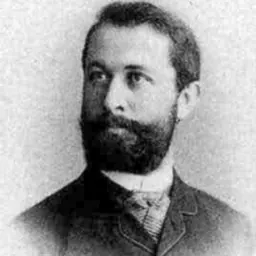
Lived 1893 – 1967 (aged 73–74). Ali Fuad Başgil was a Turkish jurist and politician.
Ali Fuat Başgil (1893–1967) was a Turkish politician and a faculty member of Istanbul University and Ankara University. He is one of the influential figures of the conservative political waves in Turkey. Following his dismissal from the university shortly after the military coup of 27 May 1960 he was elected as a senator. Then he became a candidate for the presidency of Turkey, but his nomination was rejected by the National Unity Committee. He joined the Justice Party and was elected as a member of the Parliament in the 1965 election.
Early life and education He was born in Çarşamba, Samsun, in 1893. After completing his primary school education in his hometown he went to Istanbul for secondary education. However, he could not graduate from high school since joined the Ottoman Army in 1914 and he fought on the Caucasian front for four years as a reserve officer.
Career and activities Following his graduation he returned Turkey and joined the Ministry of Education. Next year he became an associate professor of law at Ankara University. He was promoted to the professorship of Roman law in 1931. He began to work at Istanbul University in 1933 when it was reorganized. In addition to the writing of the constitution of Hatay, he served as the legal advisor to the Turkish delegation in the League of Nations Commission in Geneva in regard to the independence of Hatay in 1937. In 1943, he returned to his chair at Istanbul University's Faculty of Law.
After the military coup of 27 May 1960 which ended the rule of the Democrat Party (DP), the National Unity Committee removed Başgil along with 147 faculty members from his academic post. After his retirement Başgil became part of the Thinkers Club of which ideology was a synthesis of Turkism and Islamism. He was elected senator as an independent candidate from the Justice Party list representing Samsun in 1961. He went to Switzerland in 1962 where he worked at the Department of Turkish History and Language of the University of Geneva. Upon his return he joined the Justice Party and was elected as a member of parliament in the 1965 election. and magazines such as Serdengeçti and Hareket. His articles were mostly about secularism and freedom of religion. However, he opposed the concept of equality.
Başgil was the first Turkish scholar who discussed secularism openly and critically, but he did not reject it. He regarded secularism as the state's respect for the freedom of religion.
Başgil considered religion or Islam to be both helpful and essential for individuals and society.
Death Başgil died in Istanbul on 17 April 1967 and was buried in Karacaahmet Cemetery, Istanbul.
Don’t just read it —
keep it.
Full-length biographies made to live with: read them, listen on the way to work, watch them tonight.
- E-book
- Audio
- Video
Instant download · yours to keep · every purchase keeps this site free
Important facts
Related people
Same field, nearest in time


Contemporaries
People whose lives overlapped Ali Fuad Başgil's





Frequently asked questions
Who was Ali Fuad Başgil?
Turkish jurist and statesperson (1893–1967)
When was Ali Fuad Başgil born?
Ali Fuad Başgil was born in 1893 in Çarşamba.
When did Ali Fuad Başgil die?
Ali Fuad Başgil died on 17 April 1967 in Istanbul.
What was Ali Fuad Başgil's occupation?
Ali Fuad Başgil was a jurist and politician.
What nationality was Ali Fuad Başgil?
Ali Fuad Başgil was Turkish.
Sources & further reading
Cite this page
APA: Biography.guide. (2026). Ali Fuad Başgil. https://biography.guide/ali-fuad-basgil/
MLA: "Ali Fuad Başgil." Biography.guide, https://biography.guide/ali-fuad-basgil/.
Chicago: "Ali Fuad Başgil." Biography.guide. https://biography.guide/ali-fuad-basgil/.
Data last updated: 2026-09-20 · Spot an error? Report a correction.
Page generated 2026-09-27 05:05 UTC