
Alfred Hess
German Jewish industrialist, art collector and patron of the arts
About Alfred Hess
Lived 1879 – 1931 (aged 52). Alfred Hess was a German industrialist and art collector.
Alfred Hess (19 May 1879 – 24 December 1931) was a German Jewish industrialist and art collector.
Career
Hess was a shoe manufacturer in Erfurt, Thuringia. M & L Hess Schuhfabrik had four factories in Erfurt. He was keen on art and German expressionism. His portrait was made into a woodcut by Max Pechstein in 1919 when he was one of the artists who stayed at the Hess house. Hess made donations to local museums and his visitors' books were so lavishly decorated that illustrations were published as a book in 1957. Hess's factory was forcibly Aryanised under the Nazis.
A memorial plaque for Alfred Hess has been erected at the Hess villa in Alfred-Hess-Straße, Erfurt; the street was named after him in 1992.
Art collection With his wife Thekla (1884–1968), née Pauson, he had an art collection of around 4,000 works that contained important German Expressionist works.
Hess was a philanthropist, donating numerous artworks to museums in Germany. Gifts included the Johannes Driesch (1901 - 1930) drawing, Familie und Liebespaar, and Lyonel Feininger's Viadukt to the Museum für Kunst und Heimatgeschichte in Erfurt. He also loaned artworks to museums, such as Landungssteg by Lyonel Feininger and Tänzerinnen by Erich Henkel. These and other gifts and loans he made to museums were later seized by the Nazis, as were works from his private collection. Others were sold to finance the escape and survival of his family.
Hess' death and the family's fate under the Nazis Hess died in 1931, before the Nazis came to power. His widow Thekla, who emigrated from Germany to the UK via Switzerland, said that she was forced to sell paintings by the Gestapo. She was forced to deposit paintings with the Cologne Art Association in 1937, and was later told, falsely, that they had been destroyed. She joined her son Hans Hess in the UK in 1939.
Claims for restitution The Hess heirs filed claims for restitution for looted artworks and forced sales. Several works, such as Berlin Street Scene (1913) by Ernst Ludwig Kirchner and Nude by Karl Schmidt-Rottluff, have been returned to his granddaughter and heir, Anita Halpin, and subsequently sold; the former sold at auction for £20.5 million to the Neue Galerie New York, which also paid over £1 million to Halpin for Nude. Restitution was opposed by Ludwig von Pufendorf, Wolfgang Henze of the Ernst Ludwig Kirchner Archive in Bern, Switzerland; and Bernd Schultz, managing shareholder of Berlin's Villa Grisebach auction house who stated that they thought that the Hess family sold because of the financial crisis unrelated to any Nazi pressure.
Don’t just read it —
keep it.
Full-length biographies made to live with: read them, listen on the way to work, watch them tonight.
- E-book
- Audio
- Video
Instant download · yours to keep · every purchase keeps this site free
Important facts
People in Alfred Hess's life
Named in this biography and alive at the same time
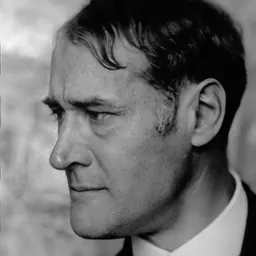
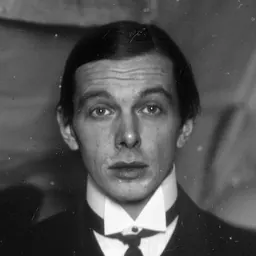
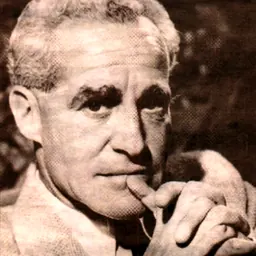
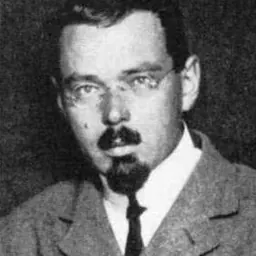

Related people
Same field, nearest in time


Contemporaries
People whose lives overlapped Alfred Hess's



Frequently asked questions
Who was Alfred Hess?
German Jewish industrialist, art collector and patron of the arts (1879-1931)
When was Alfred Hess born?
Alfred Hess was born on 19 May 1879 in Erfurt.
When did Alfred Hess die?
Alfred Hess died on 24 December 1931 in Erfurt.
What was Alfred Hess's occupation?
Alfred Hess was an industrialist and art collector.
What nationality was Alfred Hess?
Alfred Hess was German.
Sources & further reading
Cite this page
APA: Biography.guide. (2026). Alfred Hess. https://biography.guide/alfred-hess/
MLA: "Alfred Hess." Biography.guide, https://biography.guide/alfred-hess/.
Chicago: "Alfred Hess." Biography.guide. https://biography.guide/alfred-hess/.
Data last updated: 2026-09-20 · Spot an error? Report a correction.
Page generated 2026-09-27 05:31 UTC