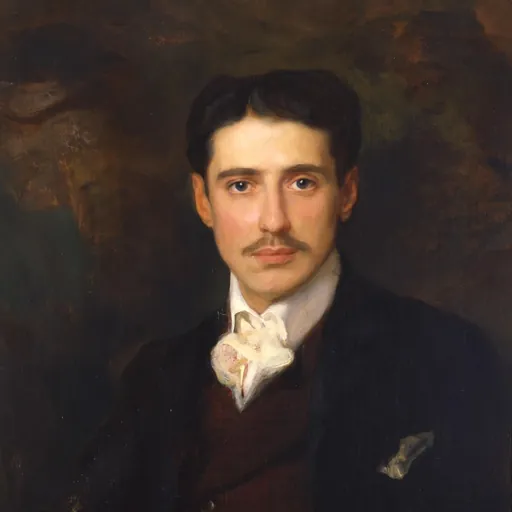
About Armand de Gramont
Lived 1879 – 1962 (aged 82). Armand de Gramont was a French industrialist, physicist, painter, scientist and entrepreneur.
Armand Antoine Agénor de Gramont, 12th Duke of Gramont (29 September 1879 – 2 August 1962) was a French nobleman, scientist and industrialist. He was known by the courtesy title of Duke of Guiche until 1925, when he succeeded his father as Duc de Gramont.
Early life Armand was born in Paris on 29 September 1879. He was the eldest son of Antoine Alfred Agénor de Gramont, 11th Duke of Gramont and, his second wife, Baroness Marguerite de Rothschild. From his father's first marriage to Princess Isabelle de Beauvau-Craon, he had an elder half-sister, Élisabeth de Gramont, a writer who married the 8th Duke of Clermont-Tonnerre, in 1896. After his mother's death in 1905, his father married Princess Maria Ruspoli, with whom he had two more sons.
His paternal grandparents were Agénor de Gramont, 10th Duke of Gramont, and Emma Mary Mackinnon (a daughter of William Alexander Mackinnon, 33rd Chief of the Scottish Clan Mackinnon). His maternal grandparents were Louise von Rothschild and Baron Mayer Carl von Rothschild (founder of the "Naples" branch of the Rothschild Family).
Career
In 1908, on the advice of Professor Carlo Bourlet, he established a laboratory for aerodynamic experiments in the garden of a retirement home founded by his parents-in-law in Levallois. In 1911, he defended his thesis for the doctorate in science at the Paris-Saclay Faculty of Sciences, entitled Essai d'aérodynamique du plan, the first thesis devoted to this subject in France. He then won the Fourneyron Prize from the French Academy of Sciences with Gustave Eiffel.
During World War I, Gramont was a motorist interpreter with the British Army Corps, then an aviator in the Technical Section of Aeronautics where he met the scientist Henri Chrétien. In March 1916, the Aviation Manufacturing Service of the Ministry of War asked Gramont to transform his aerodynamics laboratory into a workshop for manufacturing optical devices, particularly collimator sights. He observed the inadequacy of the French Army's equipment in precision optical instruments and the absence of engineers capable of developing them. He then headed a committee in favor of the creation of an institute of applied optics responsible for training a corps of optical engineers. Although the decision in principle was taken by the Government in 1916, the Institute of Theoretical and Applied Optics (SupOptique), which he chaired until his death, did not begin its activities until 1920. His daughter Corisande was a student engineer there.
As an industrialist, with the ambition of competing with German production, he founded in 1919 and managed the company Optique & Précision de Levallois (OPL), which took over from the optical device manufacturing workshop. Its headquarters were located at the same location, 86, Rue Chaptal in Levallois-Perret. The army was its main customer until World War II. In 1938, Armand de Gramont, wanting to diversify OPL's production towards the civilian world, had a factory built at Châteaudun in Eure-et-Loir. The company then produced famous cameras under the Foca brand.
Personal life
On 14 November 1904, he married Élaine Greffulhe, the daughter of Count Greffulhe and his wife, Élisabeth de Riquet de Caraman-Chimay (said to be a model for the Duchess of Guermantes in Marcel Proust’s novel, À la recherche du temps perdu). Together, they had five children: Jean Armand Antoine de Gramont (1909–1984), styled Count of Gramont, who married Ghislaine Meunier du Houssoy, a daughter of Robert Meunier du Houssoy, in 1941.
A rare film clip shows Proust (in bowler hat and grey coat) at Gramont's wedding in 1904. Proust’s wedding gift to Gramont was apparently a revolver in a leather case inscribed with verses from the bride’s childhood poems.
The Duke died at his Château de Vallière, in Mortefontaine, north of Paris, on 2 August 1962.
Descendants Through his eldest son Henri, he was a grandfather of Antoine de Gramont, 14th Duke of Gramont, himself the father of Antoine, 15th Duke of Gramont.
Gallery
Don’t just read it —
keep it.
Full-length biographies made to live with: read them, listen on the way to work, watch them tonight.
- E-book
- Audio
- Video
Instant download · yours to keep · every purchase keeps this site free
Important facts
People in Armand de Gramont's life
Named in this biography and alive at the same time
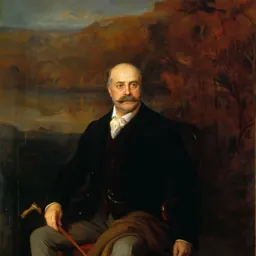
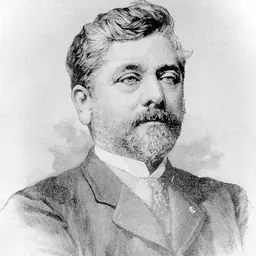
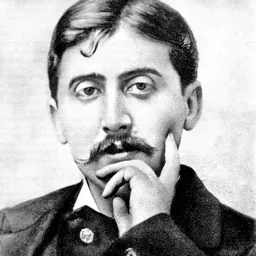

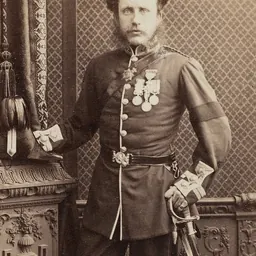


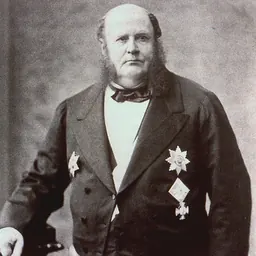
Related people
Same field, nearest in time
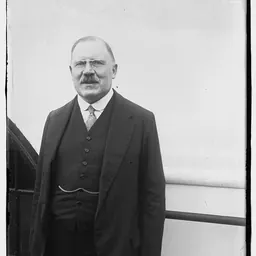
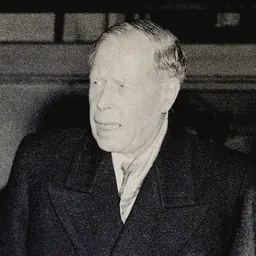


Contemporaries
People whose lives overlapped Armand de Gramont's




Frequently asked questions
Who was Armand de Gramont?
French scientific aristocrat (1879-1962)
When was Armand de Gramont born?
Armand de Gramont was born on 29 September 1879 in 8th arrondissement of Paris, Paris.
When did Armand de Gramont die?
Armand de Gramont died on 2 August 1962 in Mortefontaine.
What was Armand de Gramont's occupation?
Armand de Gramont was an industrialist, physicist, painter, scientist and entrepreneur.
What nationality was Armand de Gramont?
Armand de Gramont was French.
Sources & further reading
· Wikipedia: Armand de Gramont
· DBpedia: Armand de Gramont, 12th Duke of Gramont
Cite this page
APA: Biography.guide. (2026). Armand de Gramont. https://biography.guide/armand-de-gramont/
MLA: "Armand de Gramont." Biography.guide, https://biography.guide/armand-de-gramont/.
Chicago: "Armand de Gramont." Biography.guide. https://biography.guide/armand-de-gramont/.
Data last updated: 2026-09-21 · Spot an error? Report a correction.
Portrait: Wikimedia Commons · author & licence
Page generated 2026-09-27 05:00 UTC