
About Alexander J. B. Zehnder
Born 1946. Alexander J. B. Zehnder is a Swiss biochemist and university teacher.
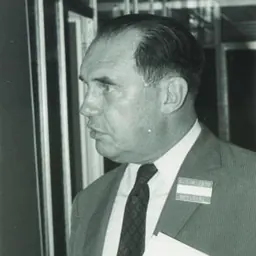
Alexander Jakob Boris Zehnder (born 21 February 1946), known informally as Sascha, is a Swiss microbiologist and environmental scientist. He spent most of his academic career as professor of microbiology at Wageningen University & Research (1983–1992) and later as professor of environmental biotechnology at ETH Zurich (1992–2004), where he simultaneously served as director of the Swiss Federal Institute of Aquatic Science and Technology (EAWAG). From July 2004 to December 2007, he served as President of the ETH Board, the governing body of the ETH Domain Switzerland's federal university and research system. He is known for his discovery of Methanothrix soehngenii, his virtual water research, his role as one of the founding figures of the 2000-watt society concept, and contributions to the development of the Dow Jones Sustainability Index.
Early life and education
Zehnder was born on 21 February 1946 in Goldach, in the canton of St. Gallen, Switzerland.
During his doctoral research, Zehnder discovered Methanothrix soehngenii, a methanogenic archaeon. The organism was formally described in 1982 in the journal Archives of Microbiology. Fellow microbiologist Willem Meindert de Vos later described it as "a major discovery" in anaerobic microbiology.
Career
United States (1977–1982)
After completing his PhD, Zehnder worked as a research associate in the Department of Bacteriology at the University of Wisconsin–Madison with Thomas D. Brock from 1977 to 1979.
ETH Zurich and EAWAG (1992–2004)
In 1992, Zehnder took on the dual role of director of EAWAG and professor of environmental biotechnology at ETH Zurich, positions he held until 2004. Under his directorship, EAWAG became an independent institute within the ETH Domain and expanded its research profile in water quality, aquatic ecology, environmental engineering, and the degradation of pollutants.
During this period, Zehnder became one of the founding figures of the 2000-watt society concept — a vision aimed at reducing the average energy consumption per person in the developed world to 2,000 watts by 2050. A 2002 paper in World Development demonstrated an inverse relationship between water availability and cereal imports in southern Mediterranean countries.
President of the ETH Board (2004–2007)
From July 2004 to December 2007, Zehnder served as President of the ETH Board, the governing body of the ETH Domain, which comprised ETH Zurich, EPFL, and four national research institutes — the Paul Scherrer Institute (PSI), EMPA, the Swiss Federal Institute for Forest, Snow and Landscape Research (WSL), and EAWAG — with a combined annual budget of over USD 2 billion at the time. During this period, he aimed to strengthen the international academic reputation of the ETH institutions. He formally retired in May 2008. He also serves on the International Advisory Board of NUS Cities and has been a member of The World Cities Summit Science of Cities Knowledge Council, Singapore.
His central recommendation was that HUN-REN should move away from a rigid public administrative structure and adopt a more flexible, independent model similar to world-class institutions such as the Max Planck Society or the ETH Domain. His reform strategy was built on three pillars: internationalisation, innovation, and impact.
His fields of expertise include water in both qualitative and quantitative aspects, the relationship between water and food security, and water scarcity in relation to climate change.
Honours and awards
Zehnder was elected a member of the Royal Netherlands Academy of Arts and Sciences in 1990. In 1998, he received an honorary doctorate from the University Henri-Poincaré in Nancy, France. In 2010, he received the Order of Merit of the Federal Republic of Germany, Cross of Merit 1st Class. Singapore awarded Zehnder the Pingat Bakti Masyarakat (Public Service Medal) in 2017. In 2019, he was elected a member of Academia Europaea. In December 2025, President Tamás Sulyok of Hungary awarded Zehnder the Officer's Cross of the Order of Merit of Hungary for his contributions to Hungarian science and his role in the renewal of the HUN-REN network.
Don’t just read it —
keep it.
Full-length biographies made to live with: read them, listen on the way to work, watch them tonight.
- E-book
- Audio
- Video
Instant download · yours to keep · every purchase keeps this site free
Important facts
People in Alexander J. B. Zehnder's life
Named in this biography and alive at the same time

Related people
Same field, nearest in time
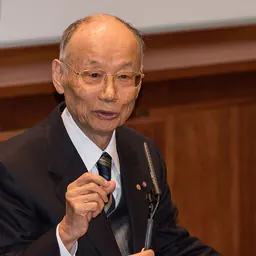



Contemporaries
People whose lives overlapped Alexander J. B. Zehnder's

Frequently asked questions
Who is Alexander J. B. Zehnder?
Swiss microbiologist (born 1946)
When was Alexander J. B. Zehnder born?
Alexander J. B. Zehnder was born in 1946 in Goldach.
What is Alexander J. B. Zehnder's occupation?
Alexander J. B. Zehnder is a biochemist and university teacher.
What nationality is Alexander J. B. Zehnder?
Alexander J. B. Zehnder is Swiss.
Sources & further reading
· Wikipedia: Alexander J. B. Zehnder
Cite this page
APA: Biography.guide. (2026). Alexander J. B. Zehnder. https://biography.guide/alexander-j-b-zehnder/
MLA: "Alexander J. B. Zehnder." Biography.guide, https://biography.guide/alexander-j-b-zehnder/.
Chicago: "Alexander J. B. Zehnder." Biography.guide. https://biography.guide/alexander-j-b-zehnder/.
Data last updated: 2026-09-20 · Spot an error? Report a correction.
Page generated 2026-09-27 05:21 UTC