
About Albert Hackelsberger
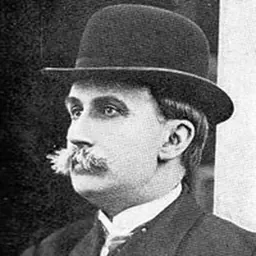
Lived 1893 – 1940 (aged 46). Albert Hackelsberger was a politician, entrepreneur, jurist and philosopher.
Albert Hackelsberger (17 October 1893 – 25 September 1940) was a German businessman and politician during the Weimar Republic and Nazi Germany. He sat as a deputy in the Reichstag for the German Center Party and, after its dissolution, as a "guest" of the Nazi faction in the Greater German Reichstag. His commitment to the Catholic Church and his support for a Jesuit college engendered the hostility of the Nazi regime. Arrested by the Gestapo in September 1938, he died two years later in unclear circumstances while still in custody.
Early years, war service and education Hackelsberger was born into a Catholic family, the son of a landowner who was the Bürgermeister in Bad Poikam (today, part of Bad Abbach. He attended the from 1904 and the from 1910 to 1914, where he earned his Abitur. On the outbreak of the First World War, he joined Dragoon Regiment 22 (3rd Baden) "Prinz Karl", headquartered in Mülhausen (today, Mulhouse), serving from 1914 to 1918 and attaining the rank of Leutnant in 1915. He fought on both the western and the eastern fronts, was wounded three times and was awarded for gallantry with the Iron Cross, 1st and 2nd class and several other decorations.
During the German Revolution of 1918–1919, Hackelsberger was elected chairman of the soldiers' council in Lörrach in November 1918. He briefly took command of the western border guard of the recently established Republic of Baden but soon retired from the military with the rank of Rittmeister.
In 1920, Hackelsberger began studying economics at the University of Freiburg, transferring in 1921 to Heidelberg University. He then studied law at Freiburg, Heidelberg and the University of Würzburg. At the same time, from 1922 to 1925, he completed training in banking and business administration. In 1923, he received a Ph.D in political science from Heidelberg and, in 1925, a Doctor of Law degree from Würzburg. He then passed the state law examination.
Business career Hacksberger married Helene van Eyck in 1920 and joined her family's firm, Weck Jar company in Wehr, in 1922. In 1926, two years after the retirement of his father-in-law, , he became general director of the company and retained this position until 1938. He was also the president of the Upper Baden Chamber of Commerce and a state labor court judge (Landesarbeitsrichter). In addition to managing his company, Hackelsberger was a member of multiple other corporate boards and agencies, including the following:
Following the Nazi seizure of power, in early 1933 Hackelsberger was elected as one of the two deputy chairmen of the Center Party. In March 1933, he was one of three representatives, along with the party chairman Ludwig Kaas and the other deputy chairman, Adam Stegerwald, who negotiated with Reich Chancellor Adolf Hitler the conditions for the Center Party's approval of the Enabling Act. He justified his support of Hitler with the view that he was the lesser evil, one that needed to be supported to avert greater dangers: "Hitler is Kerensky. More than one Lenin lurks behind the scenes."
From 7–14 June 1933, Hackelsberger was in Rome where he served as a go-between during the negotiations for the Reichskonkordat between Germany and the Holy See. Kaas, an ordained priest now working for the Vatican, conveyed the Church's wishes regarding the wording of the article on the de-politicization of the German clergy, through Hackelsberger, to Franz von Papen, the chief German negotiator. Hackelsberger, on his return to Germany, was also charged with the delivery of the text of the draft Concordat to Heinrich Brüning, a former chancellor who had replaced Kaas as the Centre Party chairman on 6 May.
Following the dissolution of the Centre Party in July 1933, Hackelsberger became the liaison between the Nazi Party and the former Center Party parliamentary deputies. He was reelected at the November 1933 election and continued to serve in the Reichstag until December 1938 as a "guest" of the Nazi faction.
Arrest and death
Hackelsberger's involvement with the Jesuits, his ardent Catholicism, his acceptance of a knighthood of the Order of St. Gregory the Great and his cross-border travels to France and Switzerland all made him suspect in the eyes of the Nazi regime, and he was deemed politically "unreliable". On 8 December 1938, his mandate in the Reichstag was revoked. The Nazi government closed down St. Blasien College in March 1939 "because the conditions under which the permit was granted could no longer be considered to be met".
In August 1940, after two years in solitary confinement and numerous Gestapo interrogations, Hackelsberger fell ill and was taken to a Freiburg clinic. Six weeks later, he died, allegedly from the effects of the prison conditions combined with an illness from the First World War. However, his cause of death remains unclear. Edmund Forschbach, another Catholic supporter who turned against the regime, claimed that Hackelsberger was killed in the Freiburg prison. Today, a memorial plaque in the courtyard of Tutzing Castle commemorates Hackelsberger.
Don’t just read it —
keep it.
Full-length biographies made to live with: read them, listen on the way to work, watch them tonight.
- E-book
- Audio
- Video
Instant download · yours to keep · every purchase keeps this site free
Important facts
People in Albert Hackelsberger's life
Named in this biography and alive at the same time



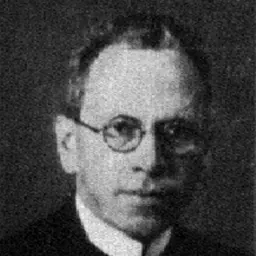

Related people
Same field, nearest in time




Contemporaries
People whose lives overlapped Albert Hackelsberger's
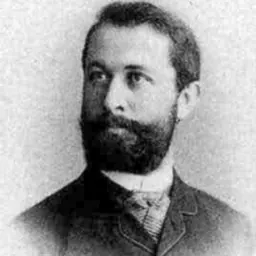

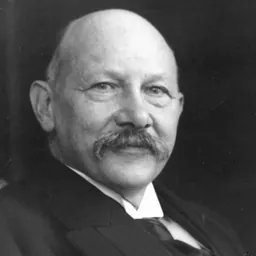
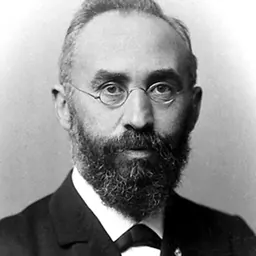

Frequently asked questions
Who was Albert Hackelsberger?
German politician (1893–1940)
When was Albert Hackelsberger born?
Albert Hackelsberger was born on 17 October 1893 in Bad Abbach.
When did Albert Hackelsberger die?
Albert Hackelsberger died on 25 September 1940 in Freiburg im Breisgau.
What was Albert Hackelsberger's occupation?
Albert Hackelsberger was a politician, entrepreneur, jurist and philosopher.
What nationality was Albert Hackelsberger?
Albert Hackelsberger's recorded nationality: German Reich.
Sources & further reading
· Wikipedia: Albert Hackelsberger
· DBpedia: Albert Hackelsberger
Cite this page
APA: Biography.guide. (2026). Albert Hackelsberger. https://biography.guide/albert-hackelsberger/
MLA: "Albert Hackelsberger." Biography.guide, https://biography.guide/albert-hackelsberger/.
Chicago: "Albert Hackelsberger." Biography.guide. https://biography.guide/albert-hackelsberger/.
Data last updated: 2026-09-20 · Spot an error? Report a correction.
Page generated 2026-09-27 05:29 UTC