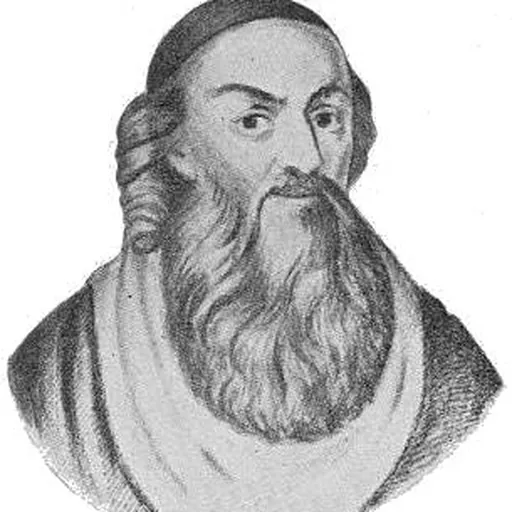
About Albert Brudzewski
Lived 1445 – 1497 (aged 51–52). Albert Brudzewski was a Polish mathematician, astronomer, philosopher, diplomat and university teacher, known for Moon.
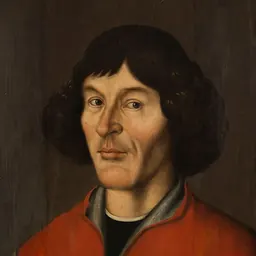
Albert Brudzewski, also known as Albert Blar (of Brudzewo), Adalbertus, Albert of Brudzewo or Albert of Brudzew (: ; c.1445–c.1497) was a Polish astronomer, philosopher and diplomat. A major accomplishment of Albert's was his modernization of the teaching of astronomy by introducing the most up-to-date texts. He was an influential teacher to Nicolaus Copernicus, who initiated the Copernican Revolution.
Later in his life he was secretary and diplomat of Alexander Jagiellon, Grand Duke of Lithuania.
Life Albert , who would sign himself "de Brudzewo" ("of Brudzewo"), was born about 1445 in the city of Brudzew or Brudzewo, in the Kingdom of Poland.
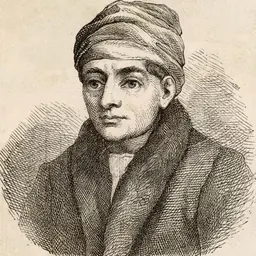
He matriculated at the Kraków Academy (now Jagiellonian University), where he earned his bachelor degree in 1470 and a master in 1474. Brudzewski was a student of Michał Falkener in physical sciences and of John of Głogów in mathematics. Brudzewski may have also been a disciple of German astronomer Regiomontanus at the University of Vienna. Brudzewski was well versed in Georg von Peuerbach's Theoricae novae planetarum and Regiomontanus' Tabulae directionum and Ephemerides.
Brudzewski also considered that the motion of the planets was influenced by the Sun as their source of power.
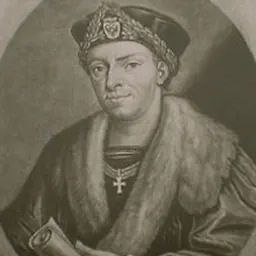
Other works include Introductorium Astronomorum Cracoviensium;Tabula resoluta Astronomic pro supputandis motibus corporum cœlestium and De Constructone Astrolabii. From 1489 to 1491, German poet and Renaissance humanist, Conrad Celtes traveled to Poland to meet and learn astrology from Brudzewski.
Albert of Brudzewo died in Vilnius circa 1497.
Views and contributions
On Averroes Brudzewski was seen as influential and persuasive astronomer, a fictionalist, and an opponent of Middle Ages Andalusian scholar Averroes (Ibn Rushd). Averroes disagreed with the majority of the astronomer Ptolemy's work. He believed that Ptolemy's devices and principles disobeyed the fundamental principles and basic consequences of Aristotelian physics. Averroes worked to replace the Ptolemaic astronomical system with a novel system that was similar to a system created by Eudoxus. Albert Brudzewski disagreed and criticized Averroes immediately. The major dispute was the figuring out the number of celestial orbs or spheres that lay in the heavens. Averroes refused to believe that there was a ninth sphere in the heavens. He believed that the creation of all celestial beings had to arise from the stars, but the ninth sphere did not possess any stars, so this could not be true. Albert Brudzewski argued with this and said that the heavens possessed more than ten spheres. He believed that the Sun itself had three spheres and the planets had their own as well. Richard of Wallingford, an astronomer in the 1300s, had an opposing view for the spheres of the planets. He claimed that no mortal knows whether eccentrics truly exist in the spheres of the planets, but spirits could give humans revelations about the true planetary motion of the heavens through mathematicians. This claim limits the astronomical knowledge of mortals and suggests that spirits do not have the same limitations. Brudzewski acknowledges the existence of these viewpoints but criticized their validity. To astronomers, spirits had an accurate knowledge of the number of celestial orbs. Although, he did not want to discredit the ability of mortals to make claims based on astronomical observations. Brudzewski made the claim for the fundamental principle of astrology that the heavens exert causal influences on the Earth. Some think that Brudzewski is the source for Copernicus's model of the Tusi couple. Albert does account for the moon and its double epicycles where he mentions a spot on the moon.
Don’t just read it —
keep it.
Full-length biographies made to live with: read them, listen on the way to work, watch them tonight.
- E-book
- Audio
- Video
Instant download · yours to keep · every purchase keeps this site free
Important facts
People in Albert Brudzewski's life
Named in this biography and alive at the same time

Related people
Same field, nearest in time


Contemporaries
People whose lives overlapped Albert Brudzewski's


Frequently asked questions
Who was Albert Brudzewski?
Polish academic and diplomat
When was Albert Brudzewski born?
Albert Brudzewski was born in 1445 in Kalisz, Brudzew.
When did Albert Brudzewski die?
Albert Brudzewski died in 1497 in Vilnius.
What was Albert Brudzewski's occupation?
Albert Brudzewski was a mathematician, astronomer, philosopher, diplomat and university teacher.
What was Albert Brudzewski known for?
Albert Brudzewski was known for Moon.
What nationality was Albert Brudzewski?
Albert Brudzewski was Polish.
Sources & further reading
· Wikipedia: Albert Brudzewski
Cite this page
APA: Biography.guide. (2026). Albert Brudzewski. https://biography.guide/albert-brudzewski/
MLA: "Albert Brudzewski." Biography.guide, https://biography.guide/albert-brudzewski/.
Chicago: "Albert Brudzewski." Biography.guide. https://biography.guide/albert-brudzewski/.
Data last updated: 2026-09-24 · Spot an error? Report a correction.
Portrait: Wikimedia Commons · author & licence
Page generated 2026-09-27 05:08 UTC