
Georg von Peuerbach
Austrian mathematician and astronomer
About Georg von Peuerbach
Lived 1423 – 1461 (aged 37). Georg von Peuerbach was an Austrian astronomer, mathematician and university teacher, known for Ptolemaic astronomy and Sine tables.
Georg von Peuerbach (also Purbach, Peurbach; ; 30 May 1423 – 8 April 1461 ) was an Austrian astronomer, poet, mathematician and instrument maker, best known for his streamlined presentation of Ptolemaic astronomy in the Theoricae Novae Planetarum. Peuerbach was instrumental in making astronomy, mathematics and literature simple and accessible for Europeans during the Renaissance and beyond.
Biography Peuerbach's life remains relatively unknown until he enrolled at the University of Vienna in 1446. He was born in the Austrian town of Peuerbach in upper Austria. A horoscope published eighty-nine years after his death places his date of birth specifically on 30 May 1423, though other evidence only indicates that he was born sometime after 1421. He received his Bachelor of Arts in 1448.
Peuerbach's intellect was discovered by a priest of his hometown, Dr. Heinrich Barucher. Dr. Barucher recognized Peuerbach's academic abilities from a young age and put him in contact with the Augustinian provost of Klosterneuburg Monastery, Georg Muestinger. Georg Muestinger taught a course at the University of Vienna entitled Theoricae Planetarum. These lectures were the first that Georg von Peuerbach attended at the University of Vienna and inspired him to enroll.
During his time at University of Vienna, Peuerbach received a master of philosophy in 1446 and a second master's degree in 1448, studying mathematics under the guidelines of Johann von Gmünden. His curriculum was composed primarily of humanities courses, as was usual at the time. His knowledge of astronomy derived from independent study, possibly from studying under followers of John von Gmünden. Majority of Georg's astrological discoveries were made in the last ten years of his life.
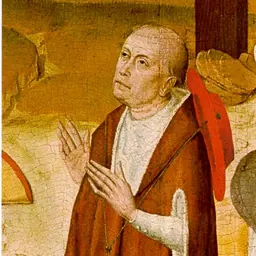
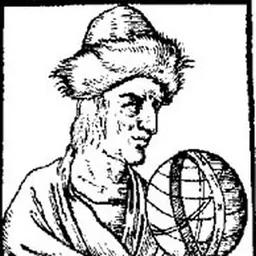
Georg Peuerbach traveled through central and southern Europe, most notably in Italy, giving lectures on astronomy. His lectures led to offers of professorships at several universities, including those at Bologna and Padua. During this time he also met Italian astronomer Giovanni Bianchini of Ferrara, perhaps the leading astronomer at the time, and the Cardinal Nicholas of Cusa.
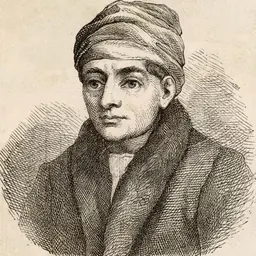
In 1454 Peuerbach was appointed court astrologer to King Ladislas V of Bohemia and Hungary. It was in this capacity that Peuerbach first met Ladislas' cousin Frederick who was then serving as guardian to the 14-year-old king and who would later become Frederick III, Holy Roman Emperor. Ladislas resided primarily in Prague and Vienna, allowing Peuerbach to maintain his position at the University of Vienna. During this time Peuerbach met Regiomontanus, who was then a student at the university. After Regiomontanus graduated in 1452 at the age of 15, he began collaborating extensively with Peuerbach in his astronomical work. although Regiomontanus, his successor, was able to continue his work.
Work
Peuerbach is best-known for his work Theoricae Novae Planetarum, written in 1454, and published by his disciple Regiomontanus in 1472. Theoricae Novae Planetarum presented a version of Claudius Ptolemy geocentric system in a more colloquial and comprehensible way. Based on a series of Peuerbach's lectures at Bürgerschule in Vienna that were transcribed by Regiomontanus. The book introduced the "New Planetary Theory of Georg von Peuerbach" based on the already successful Ptolemaic system, this new theory presented the physical realities of eccentric planetary spheres. In his model of the sun Peuerbach removed simple eccentric shells and added partial orbs, some of which were eccentric and some concentric to the center of the world. Similar models for the planets replaced the body of the sun with an epicycle sphere carrying each planet.
Peuerbach's ideas replaced Theorica Planetarum Communis, a work credited to Gerardus Cremonensis, as the standard university text on astronomy and was studied by many influential astronomers including Nicolaus Copernicus and Johannes Kepler. Expanded the Astronomy program at the University of Vienna. Influenced many other European astrological and astronomical discoveries with his observations and ideologies
Legacy Georg von Peuerbach's work outlives him because of his ability to communicate astronomy, mathematics and art. His contributions simplified seeming difficult ideas, making them more digestible and inspiring critical thought. Through his tutelage he was able to create an astronomy program at his alma mater, further expanding the understanding of astronomy.
Peuerbach's and Regiomontanus's contribution expanded the European understanding of astronomy by translating Ptolemy's Almagest in a book that later influenced Nicolaus Copernicus. Though the work was completed after Peuerbach's death in 1461, Regiomontanus carried on with the task and eventually the Epitome of the Almagest was published in 1496, nearly 35 years after his teacher’s death, and 20 years after his own (Regiomontanus died in 1476). This book would go on to be an important reference for Nicholas Copernicus for the creation of his book De Revolutionibus.
Ironically Nicolaus Copernicus's work, and later Sir Issac Newton's, disproved many of the ideas that Peuerbach supported while defending the Ptolemaic system, nonetheless his advancement in technology and theory help modernize the study of astronomy.
Peuerbach's input in Regiomontanus's trigonometric tables was used by future astronomers in the coming century. Though a fair amount of Peuerbach's work is believed to have circulated in academia, his full observations were only published by Johann Schöner nearly a century after Peuerbach's death. His Theoricae Novae Planetarum would be released in numerous editions between 1472 and 1596, with additions by scholars such as Regiomontanus, Peter Apian, Erasmus Reinhold, and Philip Melanchthon. It is believed that by 1653, at least 56 Latin printings of the text had been published with numerous editions in other languages as well.
Peuerbach’s Theoricae Novae Planetarum became one of the most common astronomy textbooks used to train future scholars. He is credited with being instrumental in the European understanding of astronomy and the Ptolemaic system. The descriptions of the solid spheres model (common to the Ptolemaic planetary system) seen in the Theoricae Novae Planetarum would remain the accepted view of the nature of the spheres until the time of Tycho Brahe, who disproved the existence of solid spheres. The Theoricae Novae Planetarum is also credited with helping to establish much of the technical vocabulary used by astronomers through the seventeenth century.
Peuerbach is also known to have developed and distributed tables that were capable of predicting eclipses of both the sun and the moon, and this practice was continued by Regiomontanus. The manuscript, titled Tabulae Eclipsium, saw continued use, as late as Tycho Brahe near the end of the sixteenth century. He is also believed to have overseen the collection and duplication of numerous astronomical manuscripts. This culminated in the development of a scientific printing press in Nuremberg by Regiomontanus. The printing press was further used to publish astronomical works such as Peuerbach's own Theoricae Novae Planetarum, as well as the Astronomicon written by the poet Manilius
Works
Tabulae eclipsium (in Latin). 1459 treatises based on elementary arithmetic, sine tables, calculating devices, and the astronomical instruments Peurbach, Georg and Regiomontanus, Tractatus Georgi Peurbachii super propositiones Ptolemaei de sinubus & chordis (A treatise of George Peurbach on the propositions of Ptolemy concerning the sines and chords), Johann Petreius, Germany, 1468
Don’t just read it —
keep it.
Full-length biographies made to live with: read them, listen on the way to work, watch them tonight.
- E-book
- Audio
- Video
Instant download · yours to keep · every purchase keeps this site free
Important facts
People in Georg von Peuerbach's life
Named in this biography and alive at the same time
Related people
Same field, nearest in time


Contemporaries
People whose lives overlapped Georg von Peuerbach's


Frequently asked questions
Who was Georg von Peuerbach?
Austrian mathematician and astronomer (1423-1461)
When was Georg von Peuerbach born?
Georg von Peuerbach was born on 30 May 1423 in Peuerbach.
When did Georg von Peuerbach die?
Georg von Peuerbach died on 8 April 1461 in Vienna.
What was Georg von Peuerbach's occupation?
Georg von Peuerbach was an astronomer, mathematician and university teacher.
What was Georg von Peuerbach known for?
Georg von Peuerbach was known for Ptolemaic astronomy and Sine tables.
What nationality was Georg von Peuerbach?
Georg von Peuerbach was Austrian.
Sources & further reading
· Wikipedia: Georg von Peuerbach
· DBpedia: Georg von Peuerbach
Cite this page
APA: Biography.guide. (2026). Georg von Peuerbach. https://biography.guide/georg-von-peuerbach/
MLA: "Georg von Peuerbach." Biography.guide, https://biography.guide/georg-von-peuerbach/.
Chicago: "Georg von Peuerbach." Biography.guide. https://biography.guide/georg-von-peuerbach/.
Data last updated: 2026-09-20 · Spot an error? Report a correction.
Page generated 2026-09-27 05:30 UTC