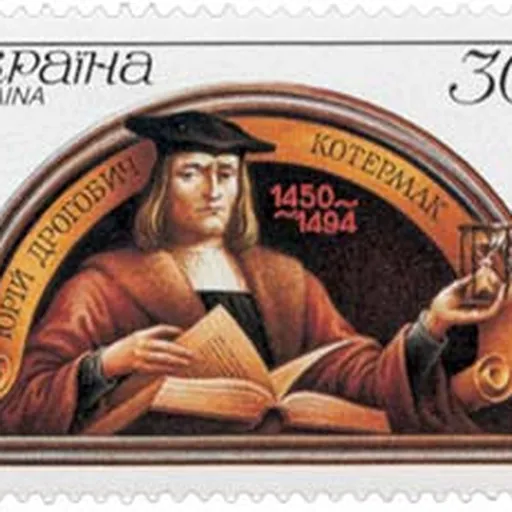
Yuriy Drohobych
Ukrainian astrologist, surgeon and philosopher
About Yuriy Drohobych
Lived 1450 – 1494 (aged 43–44). Yuriy Drohobych was a Polish astronomer, philosopher, university teacher, astrologer, medic and editor.
Yuriy Drohobych or Kotermak (1450 – 4 February 1494) was a Ruthenian philosopher, astronomer, writer, medical doctor, rector of the University of Bologna, and professor of Kraków Academy, and the first publisher of a Church Slavonic printed text. He is the author of Iudicium Pronosticon Anni 1483 Currentis.
Biography
Education Yuriy Drohobych was born in the city of Drohobych in the Kingdom of Poland, to a townsman Michael Donat Kotermak.
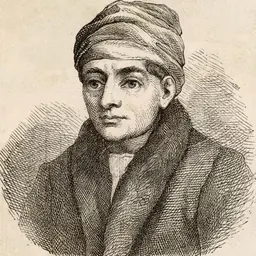
In 1468 or early 1469 Drohobych entered the Jagiellonian University in Kraków. Two years later he received his bachelor's degree and in 1473 his master's. He taught during the summer and participated in scientific discussions on Saturdays and Sundays. After he gained some significant achievements in Kraków, Drohobych traveled to Bologna University, where natural sciences and medicine were gaining popularity. Here he improved his Latin, learned Greek, and continued his studies of natural philosophy, especially astronomy. Drohobych's astronomy professor was Girolamo Manfredi, one of the most renowned astronomers in 15th century Italy. Manfredi introduced Drohobych to German astronomer Johannes Müller (Regiomontanus), who believed in heliocentrism; however, it had not been mathematically proven at that time.
Teaching In 1478 Drohobych received his doctorate in philosophy, but he continued his studies. This time he took up medicine. At that time natural philosophy disciplines were closely connected. Almost all contemporary philosophers demonstrated prowess in astronomy and medicine, which allowed university professors to transfer from one department to another. Similar methods were used in teaching both disciplines, the reading and interpretation of Latin translations of Greek and Arab classical authors.
Shortly after Drohobych completed his medical studies, he was offered a position to teach astronomy at Bologna University. At the beginning of 1481, the student body of the university elected Drohobych the rector of the school of Medicine and Free Arts; For their part, physicians themselves practiced another kind of healing art, "physic". The term derived from the Greek noun physis, meaning "nature". Physicians had to study natural philosophy because the purposes of physic were to preserve health and prolong life; healing the sick was an important part, but only one of the many parts, of physic. The physician had to be able to offer advice to the healthy as well as to the sick about how to live according to nature, for being in harmony with nature would result in the preservation of health as well as the prolongation of life. Thus "medicine" and "physic," as used in the late 15th century, are terms that suggest the differences between major traditions in the healing arts: one based upon experience, the other upon learning; one concerned primarily with healing, the other primarily with the preservation of health.
In 1491 Drohobych published one of the first books in the Church Slavonic language "Осьмогласник", ("Octoechos "or "Antiphonal"), and the first books in Ukrainian: "Часословець" ("Horologion" or "Book of Hours"), "Тріодь пісна" and "Тріодь цвітна" (Triodion). All these publications built the foundation for the further development of the Ukrainian cultural identity.
Drohobych died on February 4, 1494, in Kraków, at 44. He left behind a rich legacy. During his tenure at Jagiellonian University, humanistic ideas began to gain popularity among professors and students. Drohobych was the first Ukrainian scholar to advance these ideas in Ukraine. As time went on, he found many followers among Ukrainian scholars and students who studied in Italy and Poland and who disseminated these ideas upon their return to their homeland. In the mid-15th century, due to the lack of internal and external stimuli, Ukraine's education system slipped into decay. Drohobych and his followers created a niche that helped to preserve, sustain, and develop socio-cultural and philosophical ideas that lay the foundation for Ukraine's revival by the 17th and 18th centuries, helping preserve the national identity at a time when present-day Ukrainian lands belonged to different rulers.
Don’t just read it —
keep it.
Full-length biographies made to live with: read them, listen on the way to work, watch them tonight.
- E-book
- Audio
- Video
Instant download · yours to keep · every purchase keeps this site free
Important facts
People in Yuriy Drohobych's life
Named in this biography and alive at the same time

Related people
Same field, nearest in time

Contemporaries
People whose lives overlapped Yuriy Drohobych's


Frequently asked questions
Who was Yuriy Drohobych?
Ukrainian astrologist, surgeon and philosopher (1450-1494)
When was Yuriy Drohobych born?
Yuriy Drohobych was born in 1450 in Drohobych.
When did Yuriy Drohobych die?
Yuriy Drohobych died on 4 February 1494 in Kraków.
What was Yuriy Drohobych's occupation?
Yuriy Drohobych was an astronomer, philosopher, university teacher, astrologer, medic and editor.
What nationality was Yuriy Drohobych?
Yuriy Drohobych was Polish.
Sources & further reading
Cite this page
APA: Biography.guide. (2026). Yuriy Drohobych. https://biography.guide/yuriy-drohobych/
MLA: "Yuriy Drohobych." Biography.guide, https://biography.guide/yuriy-drohobych/.
Chicago: "Yuriy Drohobych." Biography.guide. https://biography.guide/yuriy-drohobych/.
Data last updated: 2026-09-23 · Spot an error? Report a correction.
Portrait: Wikimedia Commons · author & licence
Page generated 2026-09-27 05:07 UTC