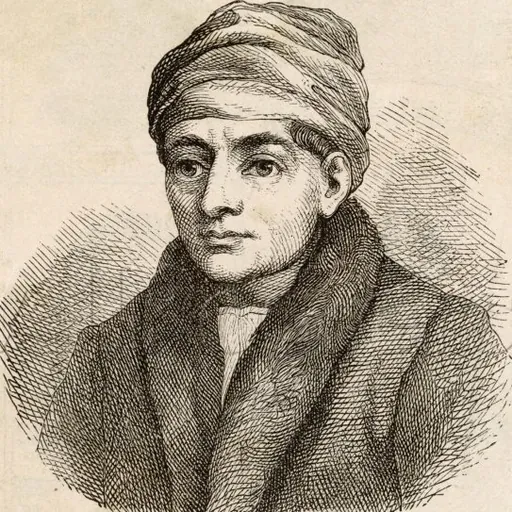
Regiomontanus
German mathematician and astronomer
About Regiomontanus
Lived 1436 – 1476 (aged 40). Regiomontanus was a German astronomer, mathematician, historian of mathematics, astrologer, catholic bishop and printer, known for Tangent tables and Trigonometric tables.
Johannes Müller von Königsberg (6 June 1436 – 6 July 1476 He lectured in optics and ancient literature.
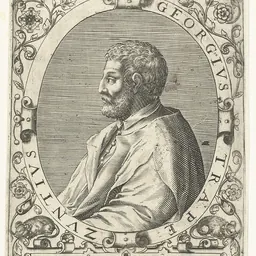
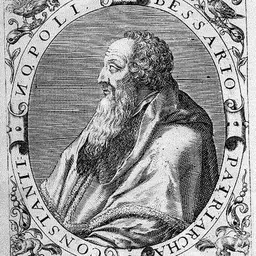
In 1460 the papal legate Basilios Bessarion came to Vienna on a diplomatic mission. Being a humanist scholar with a great interest in the mathematical sciences, Bessarion sought out Peuerbach's company. George of Trebizond who was Bessarion's philosophical rival had recently produced a new Latin translation of Ptolemy's Almagest from the Greek, which Bessarion, correctly, regarded as inaccurate and badly translated, so he asked Peuerbach to produce a new one. Peuerbach's Greek was not good enough to do a translation but he knew the Almagest intimately so instead he started work on a modernised, improved abridgement of the work. Bessarion also invited Peuerbach to become part of his household and to accompany him back to Italy when his work in Vienna was finished. Peuerbach accepted the invitation on the condition that Regiomontanus could also accompany them. However Peuerbach fell ill in 1461 and died having completed only the first six books of his abridgement of the Almagest. On his death bed Peuerbach made Regiomontanus promise to finish the book and publish it. The trigonometric tables that he created while living in Hungary, his Tabulae directionum profectionumque (printed posthum., 1490), were designed for astrology, including finding astrological houses. The Tabulae also contained several tangent tables.
In 1471 Regiomontanus moved to the Free City of Nuremberg, in Franconia, then one of the Empire's important seats of learning, publication, commerce and art, where he worked with the humanist and merchant Bernhard Walther.
The 1472 comet was visible from Christmas Day 1471 to 1 March 1472 (Julian Calendar), a total of 59 days.
In 1475, Regiomontanus was called to Rome by Pope Sixtus IV on to work on the planned calendar reform. Sixtus promised substantial rewards, including the title of bishop of Regensburg, but it is unlikely that he was actually appointed to the role. Regiomontanus reached Rome, but he died there after only a few months, in his 41st year, on 6 July 1476. According to a rumor repeated by Gassendi in his Regiomontanus biography, he was poisoned by relatives of George of Trebizond whom he had criticized in his writing; it is however considered more likely that he died from the plague.
Much of the material on spherical trigonometry in Regiomontanus' On Triangles was taken directly from the twelfth-century work of Jabir ibn Aflah otherwise known as Geber, as noted in the sixteenth century by Gerolamo Cardano.
Publications
Legacy Simon Stevin, in his book describing decimal representation of fractions (De Thiende), cites the trigonometric tables of Regiomontanus as suggestive of positional notation.
Regiomontanus designed his own astrological house system, which became one of the most popular systems in Europe.
In 1561, Daniel Santbech compiled a collected edition of the works of Regiomontanus, De triangulis planis et sphaericis libri quinque (first published in 1533) and Compositio tabularum sinum recto, as well as Santbech's own Problematum astronomicorum et geometricorum sectiones septem. It was published in Basel by Henrich Petri and Petrus Perna.
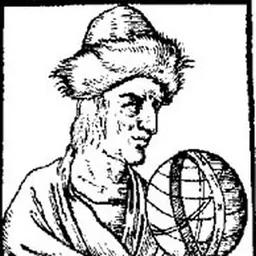
There is an image of him in Hartmann Schedel's 1493 Nuremberg Chronicle. He is holding an astrolabe. Yet, although there are thirteen illustrations of comets in the Chronicle (from 471 to 1472), they are stylized, rather than representing the actual objects.
The crater Regiomontanus on the Moon is named after him.
An observatory open to the public in Nuremberg, :de:Regiomontanus-Sternwarte, is named after him.
Don’t just read it —
keep it.
Full-length biographies made to live with: read them, listen on the way to work, watch them tonight.
- E-book
- Audio
- Video
Instant download · yours to keep · every purchase keeps this site free
Important facts
People in Regiomontanus's life
Named in this biography and alive at the same time


Related people
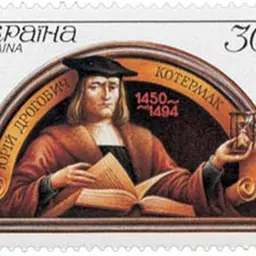
Same field, nearest in time


Contemporaries
People whose lives overlapped Regiomontanus's

Frequently asked questions
Who was Regiomontanus?
German mathematician and astronomer (1436–1476)
When was Regiomontanus born?
Regiomontanus was born on 6 June 1436 in Königsberg in Bayern, Unfinden.
When did Regiomontanus die?
Regiomontanus died on 6 July 1476 in Rome.
What was Regiomontanus's occupation?
Regiomontanus was an astronomer, mathematician, historian of mathematics, astrologer, catholic bishop and printer.
What was Regiomontanus known for?
Regiomontanus was known for Tangent tables and Trigonometric tables.
What nationality was Regiomontanus?
Regiomontanus was German.
Sources & further reading
Cite this page
APA: Biography.guide. (2026). Regiomontanus. https://biography.guide/regiomontanus/
MLA: "Regiomontanus." Biography.guide, https://biography.guide/regiomontanus/.
Chicago: "Regiomontanus." Biography.guide. https://biography.guide/regiomontanus/.
Data last updated: 2026-09-20 · Spot an error? Report a correction.
Portrait: Wikimedia Commons · author & licence
Page generated 2026-09-27 04:58 UTC