
About Bernhard Walther
Lived 1430 – 1504 (aged 73–74). Bernhard Walther was a German astronomer.
Walther's residence where the observatory was located. Now the Albrecht Dürer House museum. Bernhard Walther (1430June 19, 1504) was a German merchant, humanist and astronomer based in Nuremberg, Germany.
Walther was born in Memmingen, and was a man of large means, which he devoted to scientific pursuits. When Regiomontanus settled in Nuremberg in 1471, they worked in collaboration to build an observatory and a printing press. After the death of Regiomontanus in 1476 at Rome, Walther bought his instruments, after Hans von Dorn, commissioned by the Hungarian king, had failed to come to an agreement with the council of Nuremberg. Walther continued to observe the planets until his death in Nuremberg. His house, purchased in 1509 by Albrecht Dürer, is today a museum.
Astronomy Walther amplified on the effects of refraction in altering the apparent location of the heavenly bodies, and substituted Venus for the Moon as a connecting-link between observations of the Sun and stars. As a result, his observations are the most precise prior to those of Tycho Brahe.
His pupil Johannes Schöner made unpublished data of Walther's observations of Mercury available to Nicolaus Copernicus. There were 45 observations in total, 14 of them with longitude and latitude. Copernicus used three of them in "De revolutionibus", giving only longitudes, and erroneously attributed them to Schöner.
These values differed slightly from the ones published by Schöner in 1544 in Observationes XXX annorum a I. Regiomontano et B. Walthero Norimbergae habitae, [4°, Norimb. 1544]., a collection of the astronomical observations of Regiomontanus and Walther, as well as manuscripts of Regiomontanus, which had been in the possession of Walther. In 1618, Willebrord Snell noted them as an appendix to his Observationes Hassiaceae.
Equipment In 1484 Walther introduced clocks driven by weights, their first use in astronomical determinations. His printing press was used to produce some of the earliest astronomical publications.
Legacy Walther is the eponym of lunar crater Walther.
Works Regiomontanus, Johannes: Opera Collectanea. Osnabrück: Otto Zeller 1972 (includes Observations by Bernhard Walther)
Don’t just read it —
keep it.
Full-length biographies made to live with: read them, listen on the way to work, watch them tonight.
- E-book
- Audio
- Video
Instant download · yours to keep · every purchase keeps this site free
Important facts
People in Bernhard Walther's life
Named in this biography and alive at the same time
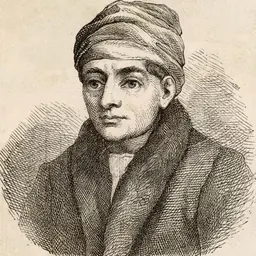



Related people
Same field, nearest in time




Contemporaries
People whose lives overlapped Bernhard Walther's




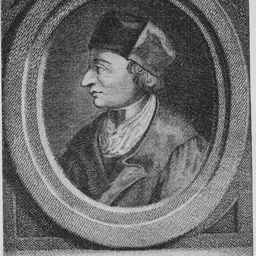

Frequently asked questions
Who was Bernhard Walther?
German astronomer (1430–1504)
When was Bernhard Walther born?
Bernhard Walther was born in 1430 in Memmingen.
When did Bernhard Walther die?
Bernhard Walther died on 19 June 1504 in Free Imperial City of Nuremberg.
What was Bernhard Walther's occupation?
Bernhard Walther was an astronomer.
What nationality was Bernhard Walther?
Bernhard Walther was German.
Sources & further reading
Cite this page
APA: Biography.guide. (2026). Bernhard Walther. https://biography.guide/bernhard-walther/
MLA: "Bernhard Walther." Biography.guide, https://biography.guide/bernhard-walther/.
Chicago: "Bernhard Walther." Biography.guide. https://biography.guide/bernhard-walther/.
Data last updated: 2026-09-20 · Spot an error? Report a correction.
Page generated 2026-09-27 05:18 UTC