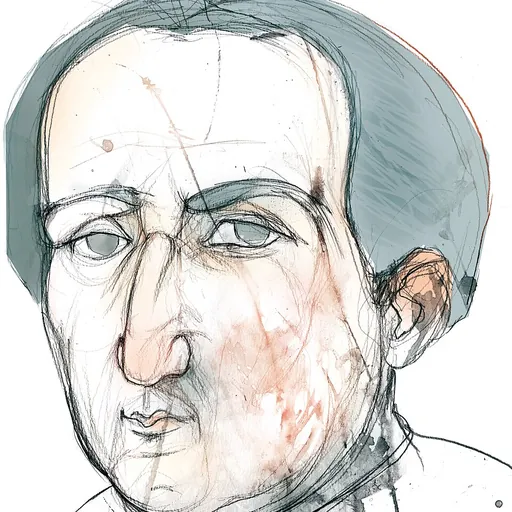
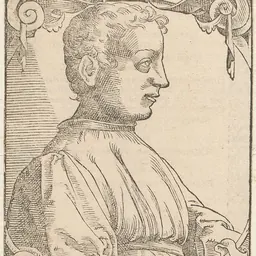
Abraham Zacuto
Spanish Jewish astronomer and rabbi (1452 – c. 1515)
About Abraham Zacuto
Lived 1450 – 1515 (aged 64–65). Abraham Zacuto was a mathematician, astronomer, historian, astrologer, rabbi and writer.
Abraham Zacuto (, ; 12 August 1452 – ) was a Sephardic Jewish astronomer, astrologer, mathematician, rabbi and historian. Born in Castile, he served as Royal Astronomer to King John II of Portugal before fleeing to Tunis.
His astrolabe of copper, astronomical tables, and maritime charts played an important role in the Spanish and Portuguese voyages of discovery, being used by both Vasco Da Gama and Christopher Columbus.
Life Zacuto was born in Salamanca, Castile in 1452. He may have studied and taught astronomy at the University of Salamanca. He later taught astronomy at the universities of Zaragoza and then Carthage. He was well versed in Jewish Law, and was the rabbi of his community. Zacuto was actually Abraham Zacuto III, his ancestor the first was the author of the Sepher ha-Mishpotim in 1311, which today is in the library of the Jewish Theological Seminary in New York. He writes that his family had resided in Iberia since the expulsion of the Jews from France in 1306. His brother in law was the kabbalist, Rabbi Abraham ben Eliezer Halevi
With the Catholic Monarchs of Spain issuing the 1492 Alhambra Decree ordering the expulsion of the Jews, Zacuto took refuge in Lisbon, Portugal. Already famous in academic circles, he was invited to court and nominated Royal Astronomer and Historian by King John II of Portugal, a position which he held until the early reign of Manuel I. He was consulted by the king on the possibility of a sea route to India, a project which he supported and encouraged.
Zacuto was one of the few who managed to flee Portugal during the forced conversions and prohibitions of departure that the Portuguese king Manuel I enacted to keep the Jews in Portugal as nominal Christians for foreign policy reasons (see persecution of Jews and Muslims by Manuel I of Portugal). Zacuto first fled to Tunis and later moved to Jerusalem. It was composed of 65 detailed astronomical tables (ephemerides), with radix set for the year 1473 and with the meridian at Salamanca, charting the positions of the Sun, Moon and five planets. As the quadrant could not be used to look directly at the sun, Portuguese navigators began using the astrolabe on board (an old land-based instrument to measure the height of the sun indirectly). Zacuto's tables in conjunction with the new metal nautical astrolabe allowed navigators to take accurate readings anywhere. Already in 1497, Vasco da Gama made use of Zacuto's tables and the astrolabe on his maiden trip to India. It continued to be used by Portuguese ships thereafter to reach far-off destinations such as Brazil and India.
Vasco da Gama and his crew underwent a thorough briefing and preparation by Zacuto. They learnt how to use the new instruments which he had developed for their trip before they set off on their voyage to India in 1496. Prior to that, Zacuto had further improved existing astronomical tables, mostly those prepared under King Alphonso X of Castille. Already Christopher Columbus had used Zacuto's tables. The story is that on one of his voyages, when attacked by the natives, Columbus noted that Zacuto had predicted an eclipse for that day, and used this information to threaten the natives and convince them that he could extinguish the Sun and Moon and deprive them of all light. Based on this story, Zacuto's work saved Columbus' life and that of his crew.
Sefer yuḥasin In 1504, while in Tunisia, Abraham Zacuto wrote a history of the Jewish people, Sefer yuḥasin, starting with the Creation of the World and going to 1500, and several other astronomical/astrological treatises. The History was highly regarded and was reprinted in Cracow in 1581, in Amsterdam in 1717, and in Königsberg in 1857, while a complete, uncensored, edition was published by Herschell Filipowski in London in 1857.
Legacy Abraham Zacuto might have an uncredited appearance in Luís de Camões's 1572 epic poem, Os Lusíadas, as "the Old Man of Restelo", a Cassandra-like character that comes forward just before Vasco da Gama's departure to chide the vanity of fame and warn of the travails that await him (Canto IV, v.94-111). This may be Camões' poetic interpretation of an alleged meeting reported by Gaspar Correia between Vasco da Gama and the old Abraham Zacuto at a monastery near Belém beach just before his fleet's departure, in which Zacuto reportedly gave da Gama some final navigational tips and warned him of the dangers to avoid.
The small Abraham Zacuto Portuguese Jewish Museum , founded in 1939 and located in the former Synagogue of Tomar, is named after Zacuto.
The crater Zagut on the Moon is named after him.
Don’t just read it —
keep it.
Full-length biographies made to live with: read them, listen on the way to work, watch them tonight.
- E-book
- Audio
- Video
Instant download · yours to keep · every purchase keeps this site free
Important facts
People in Abraham Zacuto's life
Named in this biography and alive at the same time




Related people
Same field, nearest in time

Contemporaries
People whose lives overlapped Abraham Zacuto's


Frequently asked questions
Who was Abraham Zacuto?
Spanish Jewish astronomer and rabbi (1452 – c. 1515)
When was Abraham Zacuto born?
Abraham Zacuto was born on 12 August 1450 in Salamanca.
When did Abraham Zacuto die?
Abraham Zacuto died in 1515 in Ottoman Empire.
What was Abraham Zacuto's occupation?
Abraham Zacuto was a mathematician, astronomer, historian, astrologer, rabbi and writer.
What nationality was Abraham Zacuto?
Abraham Zacuto's recorded nationality: Crown of Castile.
Sources & further reading
Cite this page
APA: Biography.guide. (2026). Abraham Zacuto. https://biography.guide/abraham-zacuto/
MLA: "Abraham Zacuto." Biography.guide, https://biography.guide/abraham-zacuto/.
Chicago: "Abraham Zacuto." Biography.guide. https://biography.guide/abraham-zacuto/.
Data last updated: 2026-09-23 · Spot an error? Report a correction.
Portrait: Wikimedia Commons · author & licence
Page generated 2026-09-27 05:08 UTC