
About John of Głogów
Lived 1445 – 1507 (aged 61–62). John of Głogów was a Polish mathematician, philosopher, astronomer, university teacher, geographer and theologian.
Jan of Głogów (; ) (c. 1445 – 11 February 1507 ) was a notable Polish polyhistor at the turn of the Middle Ages and Renaissance—a philosopher, geographer and astronomer at the University of Krakow.
Life John was born into the Schelling (also found as Schilling, Shieling, and Schelink) family in Głogów (in German, Glogau) in the Lower Silesian Duchy of Głogów, which from 1331 had belonged to Bohemia and thus, during his lifetime, to the Holy Roman Empire. He variously styled himself Johannes Glogoviensis, Glogerus, de Glogovia and Glogowita; but while he may have been of German extraction, he never used the name "Schelling."
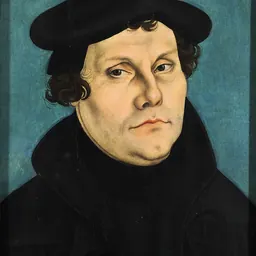
He began his education in a local school at the Collegiate Church of the Assumption of the Virgin Mary. As the scion of a wealthy bourgeois family, he could continue his education at one of the best universities in that part of Europe: the University of Krakow, which is now known as Jagiellonian University. He embarked on his studies there, at age 16 in 1462, which is the first documented date of his life. After three years he obtained his baccalaureate, and after two more, his licentiate. In 1468 he received his Magister Artium degree, the equivalent of a Doctor of Philosophy degree. This was but the beginning of a forty-year academic career. Throughout these 40 years, John spent one year away from the University of Krakow and spent the academic year at the University of Vienna which took place in 1497–1498. He would later also obtain a baccalaureate in theology. In 1478 and 1489–90 he was dean of the department of arts. Jan Haller became John's trusted publisher right before 1500, as well as becoming the biggest publisher in Krakow at that time. Haller published many of John's works, such as the books John wrote on subjects being taught at the university for the students there. He wrote textbooks covering the complete range of philosophical knowledge at the time. His numerous extant works cover medicine, grammar, logic, philosophy, geography, astronomy and astrology. He won fame in the latter field with his "prognostications"; in one of these, he predicted the advent of a "black friar" who would bring disarray to Christianity. The friar would later be identified with the Augustinian friar, Martin Luther.
John of Głogów published commentaries on many different figures such as Johannes de Sacrobosco, Aristotle, Alexander de Villa Dei, Peter of Spain, and others. When John finished his studies and began lecturing, the University of Krakow, at that point, was heavily influenced by Averroistic views, which he did not support. He favored the Ptolemic model of the universe, subscribing to the belief of geocentrism and the existence of physical celestial spheres on which the planets revolved on.
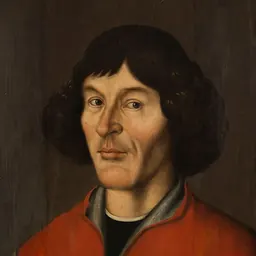
He is thought to have been one of the teachers of Nicolaus Copernicus, who enrolled at the University of Krakow in 1491. Along with teaching Copernicus, John taught a man of the name Wojciech Brudzewo (better known by his anglicized name Albert Brudzewski), who was also known very well in the field of astronomy, and they worked together to try and satisfy astronomers of their time with the state of astronomy.
John of Głogów and Michael of Biestrzycowa, as well as other philosophers, disagreed with the logic of consequences (or treatise on consequences), which entailed the connection of antecedent and consequent, according to the Cracovian authors from the 15th century. Johannes Virdung, a celebrated sixteenth century astrologer, also attended John's lectures at Krakow in 1486.
His grammar was used in Kraków schools for over a century. He is reputed to have been the first in Poland to note the discovery of America.
His first two years of lecturing had given him entry to the Kraków Academy's Collegium Minus (the Lesser College), and from 1484 he had been a member of the Collegium Maius (the Greater College). Collegiate membership entailed a semi-monastic life and the observation of an uncommonly austere regime. He devoted his income to charitable works. It was located on St. Anne's Street near the back of the greater college, College Mauis.
John continued these themes of contradiction in his other commentaries including his commentaries on Aristotle's work. John did not focus on Aristotle's astronomy or Mathematics, but rather Aristotle's metaphysical ideas. He questioned whether the connection between words and concepts was properly allocated for in Aristotle's Book of Predicaments. In addition, John deconstructed and analyzed Aristotle's book of Prior Analysis. Throughout John's commentaries on Aristotle's work, his topics stemmed for one central idea. This idea is whether there are truly relationships between the nature of reality and reasoning. For example, Is the syllogism between the body and soul to the universe accurate. In addition, John introduced some lines of his own thinking like the similarities between humans and animals. This material would be further developed by René Descartes. One of John's last commentaries on Aristotle was comptus chirometralis, which focuses on ethics.
The year before John died, he finished his commentary on Johannes de Sacrobosco. Johannes's publication was called Sphaera. While the piece of work fell under the topic of astronomy, John was able to connect it with astrology also. During this time period, there was a large debate arguing the proper use of celestial orbs. Followers of Ptolemy believed orbs were a combination of epicycles and eccentrics, while followers of Averroe thought orbs needed to be centered around the Earth, therefore epicycles and eccentrics were physically impossible. John, being a strong follower of Ptolemy's science, used his commentary of Johannes's work to argue in favor of orbs being made of epicycles and eccentrics, though his main reason for creating the commentary was to teach it to his students at The University of Kraków. Throughout the commentary, John contradicts Johannes on several points. First, he argues Johannes's circles are not legitimate because mathematical concepts cannot cause celestial objects to move. In addition, John goes on to explain that the Sun is in an eccentric orb, moved by its annual motion, and rotates slowly. Another point john refutes it the number of orbs needed to explain the Moon's motion. John believes 4 orbs are required.
Don’t just read it —
keep it.
Full-length biographies made to live with: read them, listen on the way to work, watch them tonight.
- E-book
- Audio
- Video
Instant download · yours to keep · every purchase keeps this site free
Important facts
People in John of Głogów's life
Named in this biography and alive at the same time

Related people
Same field, nearest in time

Contemporaries
People whose lives overlapped John of Głogów's

Frequently asked questions
Who was John of Głogów?
Silesian-Polish philosopher (1445-1507)
When was John of Głogów born?
John of Głogów was born in 1445 in Głogów.
When did John of Głogów die?
John of Głogów died on 11 February 1507 in Kraków.
What was John of Głogów's occupation?
John of Głogów was a mathematician, philosopher, astronomer, university teacher, geographer and theologian.
What nationality was John of Głogów?
John of Głogów was Polish.
Sources & further reading
Cite this page
APA: Biography.guide. (2026). John of Głogów. https://biography.guide/john-of-glogow-mathematician/
MLA: "John of Głogów." Biography.guide, https://biography.guide/john-of-glogow-mathematician/.
Chicago: "John of Głogów." Biography.guide. https://biography.guide/john-of-glogow-mathematician/.
Data last updated: 2026-09-25 · Spot an error? Report a correction.
Page generated 2026-09-27 05:07 UTC