
Ahmad ibn Billah
President of Algeria from 1963 to 1965
About Ahmad ibn Billah
Lived 1916 – 2012 (aged 95). Ahmad ibn Billah was an Algerian politician and association football player.
Service with French Army Ben Bella first volunteered for service in the French Army in 1936. The Army was one of the few avenues of advancement for Algerians under colonial rule and voluntary enlistment was common. Posted to Marseille, he played center midfield for Olympique de Marseille in 1939–1940. His only appearance for the club was in a game against FC Antibes in the Coupe de France on 29 April 1940 in Cannes, during which he scored a goal. Club officials offered him a professional spot on the team, but he rejected the offer. He also played for IRB Maghnia.
Ben Bella enlisted again in 1940, believing that the French Army offered the best opportunity for non-discriminatory treatment of Algerians. Fighting for France during the Second World War, he was decorated twice, receiving the Croix de Guerre after manning an anti-aircraft post during the Nazi invasion in 1940. He was demobilised after the fall of France, but joined a Free French regiment of Moroccan tirailleurs (infantry) with whom he saw service throughout the Italian campaign. In Italy, he was decorated for bravery demonstrated at the Battle of Monte Cassino, during which he dragged a wounded commissioned officer to safety, assuming control of his battalion. For this, he was promoted to the rank of warrant officer and received the Médaille militaire, the highest decoration of the Free French forces, directly from Charles de Gaulle.
On 8 May 1945, while France was celebrating Germany's surrender, widespread protests erupted in the Algerian town of Sétif. The war had intensified colonial repression of the Algerians, prompting a backlash that led to the deaths of more than 100 Europeans and around 1,500 Algerians, according to official reports.
Before independence First organization for uprising against French regime in Algeria After the Sétif and Guelma massacre in 1945, Ben Bella returned to Algeria, becoming politically active in the opposition movement against the French regime. French authorities sent assailants with the intention of assassinating him on his farm.
The attempt against his life failed, but the farm was confiscated and he went into hiding. After the nationalist parties had achieved great success in local elections in 1947, this was followed by the fixing of the Algerian Assembly elections in 1948 by French officials, agreed to and justified by the Socialist Governor-General Marcel-Edmond Naegelen, Ben Bella became convinced that achieving democratic independence through peaceful means was illusory. Together with Messali Hadj and his party, he helped to found the Organisation Spéciale (OS), a paramilitary organization whose strategic aim was to take up arms against the French colonial regime as quickly as possible. This group became the immediate predecessor of the National Liberation Front. He was in charge of organizing the wilayas (regional military sections of the FLN) and supplying weapons to insurgents and getting financial support from friendly Arab countries.
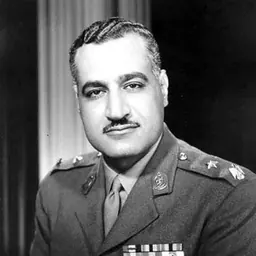
On 4 April 1949, Ben Bella led a robbery of the central post office in Oran to gain funds for the organization, obtaining 3 million francs which he used to buy weapons. He was eventually caught in 1950 and sentenced to eight years' imprisonment in Blida jail. In captivity, he was exposed to the writings of Sultan-Galiev, which greatly influenced him in the future. He escaped soon afterwards in 1952 by cutting through his prison window bars with a knife that had been smuggled into jail in a loaf of bread, making his way to Tunisia and then to Egypt, reaching Cairo by 1952 where he was granted sanctuary by the president Gamal Abdel Nasser.
At the outbreak of the Algerian War in 1954, Ben Bella was based in Cairo, where he had become one of the nine members of the Revolutionary Committee of Unity and Action that headed the Front de Liberation Nationale (FLN), founded in November that year during a secret meeting of Algerian leaders in Switzerland. The FLN soon began armed insurrection against the French colonists, which became a guerilla war in Algeria.
Algerian War A meeting planning for the transfer of weapons from east base to the Algerians Freedom Fighters. Ben Bella is the second from the left. Ben Bella played an important role during the war, leading the FLN, organizing the shipment of foreign weapons and coordinating political strategy. Although he was not present in Algeria, assassination attempts against him by French authorities persisted. After national independence, he was named vice president of Algeria in Benyoucef Benkhedda's cabinet.
Ben Bella and his associates were responsible for developing a system of bases and routes for providing the National Liberation Army (ALN) in Algeria with weapons, ammunition and other supplies. The ALN logistical system was focused in Egypt and Libya in the early years of the war. Once the French occupation of Tunisia and Morocco ended in 1956, Ben Bella and his associates established a system of camps in both countries for training men and sending them into Algeria.
Ben Bella felt excluded from the Soummam conference on 20 August 1956, and thus rejected it for its "secularism", the decision to integrate the European minority in independent Algeria, and the misrepresentation of delegates. According to Abane Ramdane, Ben Bella's rejection of the charter was due to the fact that it was drafted by Kabyles.
In October 1956, he was arrested in Algiers by French military authorities, who hijacked the plane on which he was flying. He was kept prisoner until the Evian accords in 1962, and released on 5 July. His arrest earlier had led to the resignation of Alain Savary, who was opposed to Guy Mollet's policies; as a prisoner during the height of the FLN terror campaign, he remained relatively untarnished by his association with the organization.
At the FLN conference in Tripoli in May–June 1962, Ben Bella repealed the Soummam conference and gave priority to the implementation of a national Arab-Islamic culture and identity of Algeria.
Due to Pakistan's support for the FLN, Ben Bella had been given a Pakistani diplomatic passport to make his foreign travels possible in the face of an international manhunt co-ordinated by the French and their allies. Ben Bella also traveled on a Pakistani diplomatic passport during the years of his exile from Algeria in the 1980s. By September 1962, Bella was in control of Algeria in all but name. He was elected premier in a one-sided election on 20 September, which was recognized by the United States on 29 September. Algeria was admitted as the 109th member of the United Nations on 8 October 1962.
As prime minister, Ben Bella arranged to legalize the seizures of autogestion spontaneously undertaken by Algerian workers. In March 1963, he drew up (with his circle of advisers) a set of decrees to nationalize all previously European-owned land. In his words, the "Tripoli program remained a dead letter, and independence and revolution made no sense, as long as Algerian soil was in hands of the big landowners".
He used his position to push for the approval of the constitution drawn up by the FLN, and alienated allies. Mohammed Khider and Ferhat Abbas resigned their political offices in 1963, dismayed by the dictatorial tendencies on display in Ben Bella's proposed constitution, which enshrined a one-party state and rejected political pluralism. Nevertheless, this action presented no problem to the Algerian people: the constitution was approved and, on 15 September 1963, Ben Bella was elected president of the country, unopposed and with an immense majority.
During his presidency, Ben Bella was confronted with the challenge of building a postcolonial state infrastructure from the ground up; the country had no independent state traditions and its senior civil servants had always been staffed by the French. Despite a predisposition toward an egalitarian way of governing and a lifestyle lacking in extravagance (he did not live in the governor's palace, and maintained an open-door policy with Algerian citizens), Ben Bella's actions in government did not always match his intentions. After stabilizing the country, he embarked on a series of initially popular but chaotically handled land reforms for the benefit of landless farmers, and increasingly turned to socialist rhetoric.
His policy of autogestion, or self-management, was adopted after Algerian peasants seized former French lands and was inspired by Marxist Yugoslavian leader Josip Broz Tito. He also worked on the development of his country, instituting reforms, undertaking campaigns for national literacy, and nationalizing several industries and calling for socialization of the economy and Arabization.
On many occasions, however, he improvised government policy as he went, as with his National Solidarity Fund, for which he asked the Algerian people to "voluntarily" hand over jewellery and banknotes.
In international relations, he had to maintain connections with the former colonial master France, and also accepted economic aid from both the US and the Soviet Union, as each sought to move his regime into its orbit and into opposition to the other. At the same time, Ben Bella wished Algeria to become a leader of Third World liberation movements and of the Third World itself.
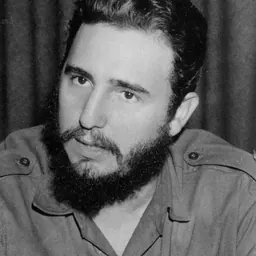
He also established good relations with Fidel Castro, Che Guevara and Cuba. After his 1962 visit, Cuba sent a health mission to Algeria, with doctors and medical help, and later sent weapons and soldiers as aid during the Sand War against Morocco. He was awarded the title Hero of the Soviet Union on 30 April 1964.
During his tenure, Ben Bella encountered political struggles with former leaders of the FLN, including Mohammed Khider, Ferhat Abbas, Mohammed Boudiaf and Hocine Aït Ahmed. Ahmed founded the Front des Forces Socialistes (Socialist Forces Front) (FFS) to confront Ben Bella, and the others joined after being alienated by Ben Bella's dictatorial leadership. In 1963, the FFS called for an armed revolt against the regime. However, it had force only in the Kabylia region, and by the summer of 1964 the revolt was controlled and FFS leaders were arrested.
In addition to political resistance, Ben Bella faced religious opposition. The Association of the Algerian Ulema claimed that the "state Islam" that Ben Bella wanted to achieve was not an application of true Muslim values, but rather an attempt to please the population.
His government was overthrown in June 1965 while he was planning to host an Afro-Asian international meeting, in a bloodless coup led by his defense minister Houari Boumédiène. He was held for eight months in an underground prison, then for the next 14 years lived under house arrest.
House arrest and later freedom
After being deposed in 1965, Ben Bella was detained for eight months in prison. He was then transferred to an isolated villa in Birouta, where he was placed under house arrest for 14 years. He was, however, permitted a private life there, and in 1971 he married , an Algerian journalist; their meeting was arranged by Ben Bella's mother. They became religiously observant Muslims, and adopted two girls, Mehdia and Nouria. After Boumedienne's death in 1978, restrictions on him were eased in July 1979, and he was freed on 17 January 1980. Ben Bella briefly resided in France but was then expelled in 1983. He moved to Lausanne, Switzerland, and launched the Mouvement pour la Démocratie en Algérie (MDA), a moderate Islamic opposition party, in 1984. In September 1990, he returned to Algeria, and, in 1991, led the MDA in the first round of the country's abortive parliamentary elections. He led campaigns in support of the Palestinian cause, against United States foreign policy, and expressed support for the Iraqi invasion of Kuwait by Saddam Hussein in 1990. The MDA was banned in 1997.
Ben Bella died on 11 April 2012 at his family home in Algiers. Though the reasons of his death were unknown, he had been treated for respiratory illnesses twice at Ain Naadja. His body lay in state on 12 April before the funeral at El Alia Cemetery on 13 April. Algeria declared eight days of national mourning.
Heads of state and government present at state funeral Country Title Dignitary
Don’t just read it —
keep it.
Full-length biographies made to live with: read them, listen on the way to work, watch them tonight.
- E-book
- Audio
- Video
Instant download · yours to keep · every purchase keeps this site free
Important facts
People in Ahmad ibn Billah's life
Named in this biography and alive at the same time




Related people
Same field, nearest in time


Contemporaries
People whose lives overlapped Ahmad ibn Billah's



Frequently asked questions
Who was Ahmad ibn Billah?
President of Algeria from 1963 to 1965
When was Ahmad ibn Billah born?
Ahmad ibn Billah was born on 25 December 1916 in Maghnia.
When did Ahmad ibn Billah die?
Ahmad ibn Billah died on 11 April 2012 in Algiers.
What was Ahmad ibn Billah's occupation?
Ahmad ibn Billah was a politician and association football player.
What nationality was Ahmad ibn Billah?
Ahmad ibn Billah was Algerian.
Sources & further reading
Cite this page
APA: Biography.guide. (2026). Ahmad ibn Billah. https://biography.guide/ahmad-ibn-billah/
MLA: "Ahmad ibn Billah." Biography.guide, https://biography.guide/ahmad-ibn-billah/.
Chicago: "Ahmad ibn Billah." Biography.guide. https://biography.guide/ahmad-ibn-billah/.
Data last updated: 2026-09-20 · Spot an error? Report a correction.
Page generated 2026-09-27 05:26 UTC