
Abdus Salam
Theoretical physicist, and Nobel Prize in Physics recipient
About Abdus Salam
Lived 1926 – 1996 (aged 70). Abdus Salam was an Indian and Pakistani university teacher, theoretical physicist and physicist, known for Electroweak theory, Goldstone boson and Grand Unified Theory.
Mohammad Abdus Salam (; 29 January 192621 November 1996) was a Pakistani theoretical physicist and Nobel laureate. He shared the 1979 Nobel Prize in Physics with Steven Weinberg and Sheldon Glashow "for their contributions to the theory of the unified weak and electromagnetic interaction between elementary particles, including, inter alia, the prediction of the weak neutral current". He was the first Pakistani, and second person from any Muslim country (after Anwar Sadat of Egypt) to win a Nobel Prize.
Salam was scientific advisor to the Ministry of Science and Technology in Pakistan from 1960 to 1974, a position from which he played a major and influential role in the development of the country's science infrastructure. For this, he is viewed as the "scientific father" In 1974, Abdus Salam departed from his country in protest after the Parliament of Pakistan unanimously passed a parliamentary bill declaring members of the Ahmadiyya Muslim community, to which Salam belonged, non-Muslim.
Salam's notable achievements include the Pati–Salam model, a Grand Unified Theory he proposed along with Jogesh Pati in 1974, magnetic photon, vector meson, work on supersymmetry and most importantly, electroweak theory, for which he was awarded the Nobel Prize. Salam heavily contributed to the rise of Pakistani physics within the global physics community.
Biography
Youth and education Abdus Salam was born on 29 January 1926 in Jhang in the Punjab Province of British India (present day in Pakistan) into a Punjabi family professing Ahmadiyya. He belonged to the Muslim Rajput community, his son Ahmad Salam later recounted that he would tell him stories of Rajput cultural history "of which he was very proud". Jagjit Singh, in his biography of Salam, says that his family traditionally traced its genealogy back to a Rajput prince named Buddahn who converted to Islam at the hands of a Sufi preacher and later founded the city of Jhang around the year 1160. Salam was the son of Chaudhary Muhammad Hussain, a school teacher of Jhang and Hajirah who belonged to Faizullah Chak near Batala.
Salam established an early reputation in Punjab for outstanding academic performance. At age 14, he scored the highest marks ever recorded for the entrance examination of the Punjab University, earning a full scholarship to the Government College of Lahore. As a fourth-year student, he published an elegant solution for a mathematical problem originally studied by Srinivasa Ramanujan. In 1944, his mathematics exam results set a new Punjab record. Salam also excelled in Urdu and English literature, which could have led him to pursue further studies in English. However, on the recommendation of a mentor, he chose to continue with an M.A. in mathematics.
At his father's urging, Salam attempted to enter the Indian Civil Service (ICS), considered the most prestigious career path for young graduates. He applied to the Indian Railways but was rejected after failing the medical optical tests; examiners also ruled that he was too young to qualify. In 1950, he received the Smith's Prize from Cambridge University for the most outstanding pre-doctoral contribution to Physics. After finishing his degrees, Fred Hoyle advised Salam to spend another year in the Cavendish Laboratory to do research in experimental physics, but Salam had no patience for carrying out experiments in the laboratory. His doctoral thesis titled "Developments in quantum theory of fields" contained comprehensive and fundamental work in quantum electrodynamics. By the time it was published in 1951, it had already gained him an international reputation and the Adams Prize. During his doctoral studies, his mentors challenged him to solve within one year an intractable problem which had defied such great minds as Paul Dirac and Richard Feynman. He began to supervise the education of students who were particularly influenced by him. As a result, Riazuddin remained the only student of Salam who had the privilege to study under Salam at the undergraduate and post-graduate level in Lahore, and post-doctoral level in Cambridge University. In 1953, Salam was unable to establish a research institute in Lahore, as he faced strong opposition from his peers. Salam went back to Cambridge and joined St John's College. During 1957, his tenure at Imperial College, London started. As time passed, this department became one of the prestigious research departments that included well known physicists such as Steven Weinberg, Tom Kibble, Gerald Guralnik, C. R. Hagen, Riazuddin, and John Ward.
At Cambridge and Imperial College he formed a group of theoretical physicists, the majority of whom were his Pakistani students. At age 33, Salam became one of the youngest persons to be elected a Fellow of the Royal Society (FRS) in 1959. and to whom he presented his research work on neutrinos. Oppenheimer and Salam discussed the foundation of electrodynamics, problems and their solution. His dedicated personal assistant was Jean Bouckley. In 1980, Salam became a foreign fellow of the Bangladesh Academy of Sciences.
Scientific career Salam made an important and significant contribution in Particle physics. In his early career in Pakistan, Salam was greatly interested in mathematical series and their relation to physics. Salam had played an influential role in the advancement of nuclear physics, but he maintained and dedicated himself to mathematics and theoretical physics and focused Pakistan to do more research in theoretical physics. Salam had worked on the neutrino with his chiral symmetry. Salam later passed his work to Riazuddin, who made pioneering contributions in neutrinos. In 1962, Salam published his theoretical work on the vector meson. In 1961, Salam began to work with John Clive Ward on symmetries and electroweak unification. Together with Weinberg and Sheldon Glashow, Salam formulated the mathematical concept of their work.
In 1966, Salam carried out work on the magnetic monopole.
In 1972, Salam began to work with Indian-American theoretical physicist Jogesh Pati. This led to the development of Pati–Salam model in particle physics.
Salam, Glashow, and Weinberg were awarded the Nobel Prize in Physics in 1979. The Nobel Prize Foundation paid tribute to the scientists and issued a statement saying: "For their contributions to the theory of the unified weak and electromagnetic interaction between elementary particles, including, inter alia, the prediction of the weak neutral current". Only one known official replica of the Nobel Prize Medal was ever produced by the Mint of Pakistan in 1979/80. This medal has a large test cut and damage from two to three o'clock. The replica medal was sold at auction to an unknown bidder on April 23, 2025. In the 1970s Salam continued trying to unify forces by including the strong interaction in a Grand Unified Theory.
Government work
In 1961 he approached President Khan to set up the country's first national space agency, thus on 16 September 1961 the Space and Upper Atmosphere Research Commission was established, with Salam as its first director. On the direction of Salam, Ishrat Hussain Usmani set up plutonium and uranium exploration committees throughout the country. In October 1961, Salam travelled to the United States and signed a space co-operation agreement between Pakistan and US. In November 1961, the US National Aeronautics and Space Administration (NASA) started to build a space facility – Flight Test Center (FTC) – at Sonmiani, a coastal town in Balochistan Province. Salam served as its first technical director.
While in the IAEA, Salam had consulted about the establishment of the International Centre for Theoretical Physics (ICTP), a research physics institution, in Trieste, Italy. Salam obtained permission from President Ayub Khan to set up the Karachi Nuclear Power Plant.
Space programme
In early 1961, Salam approached President Khan to lay the foundations of Pakistan's first executive agency to co-ordinate space research. According to Rehman, Salam's influence in nuclear development was diminished as late as 1974, and he became critical of Bhutto's control over science. As early as 1972–73, he had been a great advocate for the atomic bomb project,
In 1965, the plutonium Pakistan Atomic Research Reactor (PARR-I) went critical under Salams' leadership. In 1973, Salam proposed the idea of establishing an annual college to promote scientific activities in the country to the chairman of PAEC, Munir Khan, who accepted and fully supported the idea. This led to the establishment of the International Nathiagali Summer College on Physics and Contemporary Needs (INSC), where each year since 1976 scientists from all over the world come to Pakistan to interact with local scientists. The first annual INSC conference was held on advanced particle and nuclear physics.
In November 1971, Salam met with Zulfikar Ali Bhutto in his residence, and following Bhutto's advice, went to the United States to avoid the Indo-Pakistani War of 1971. Salam travelled to the US and returned to Pakistan with scientific literature about the Manhattan Project, and calculations involving atomic bombs. A few months after the meeting, Salam, Khan, and Riazuddin, met with Bhutto in his residence where the scientists briefed him about the nuclear weapons program. After the meeting, Salam established the 'Theoretical Physics Group' (TPG) in PAEC. Salam led groundbreaking work at TPG until 1974.
An office was set up for Salam in the Prime Ministers' Secretariat by order of Bhutto. Although he had left the country, Salam did not hesitate to advise the PAEC and Theoretical and Mathematical Physics Group on important scientific matters, and kept his close association with TPG and PAEC.
Advocacy for science
In 1964, Salam founded the International Centre for Theoretical Physics (ICTP), Trieste, in Italy and served as its director until 1993. In 1974, he founded the International Nathiagali Summer College (INSC) to promote science in Pakistan. The INSC is an annual meeting of scientists from all over the world who come to Pakistan and hold discussions on physics and science.
In 1997, the scientists at ICTP commemorated Salam and renamed ICTP as the "Abdus Salam International Centre for Theoretical Physics". Salam also founded the Third World Academy of Sciences (TWAS) and was a leading figure in the creation of a number of international centres dedicated to the advancement of science and technology.
In 1979, Salam said: Physicists believed there are four fundamental forces of nature; the gravitational force, the weak and strong nuclear force, and the electromagnetic force. Salam was a firm believer that "scientific thought is the common heritage of mankind", and that developing nations needed to help themselves, and invest in their own scientists to boost development and reduce the gap between the Global South and the Global North, thus contributing to a more peaceful world.
In 1981, Salam became a founding member of the World Cultural Council.
Although Salam left Pakistan, he did not terminate his connection to home.
Personal life Abdus Salam was a very private individual, who kept his public and personal lives quite separate. At his death, he was survived by three daughters and a son by his first wife, and a son and daughter by his second, Professor Dame Louise Johnson, formerly Professor of molecular biophysics at Oxford University. Two of his daughters are Anisa Bushra Salam Bajwa and Aziza Rahman.
Religion Salam was an Ahmadi Muslim,
In 1974, the Pakistan parliament made the Second Amendment to the Constitution of Pakistan that declared Ahmadis to be . In protest, Salam left Pakistan for London. After his departure, he did not completely cut his ties to Pakistan, and kept a close association with the Theoretical Physics Group as well as academic scientists from the Pakistan Atomic Energy Commission. His body was returned to Pakistan and kept in Darul Ziafat, where some 13,000 men and women visited to pay their last respects. Approximately 30,000 people attended his funeral prayers.
Salam was buried in Bahishti Maqbara, a cemetery established by the Ahmadiyya Muslim Community at Rabwah, Punjab, Pakistan, next to his parents' graves. The epitaph on his tomb initially read "First Muslim Nobel Laureate". The Pakistani government removed "Muslim" and left only his name on the headstone. It is the only nation to officially declare that Ahmadis are non-Muslim. The word "Muslim" was initially obscured on the orders of a local magistrate before moving to the national level. Under Ordinance XX of 1984, being an Ahmadi, he was considered a non-Muslim according to the definition provided in the Second Amendment to the Constitution of Pakistan.
Legacy His craving for nationalism is symbolized best by his wish to be buried in his own homeland... He loved his country and its soil. We projected him as a hero, a father, and role model for our young scientists... Masud Ahmad, on Salam's legacy Salam founded the Space Research Commission of and was its first director. His alma mater, Government College Lahore, now a university, has the Abdus Salam Chair in Physics and Abdus Salam School of Mathematical Sciences named after him. The Abdus Salam Chair was also established in his honour at the Syed Babar Ali School of Science and Engineering in the Lahore University of Management Sciences. He made a significant contribution towards the 2012 success in the search for the Higgs boson.
Ghulam Murtaza, a student of Salam, wrote:
[When Dr.] Salam was to deliver a lecture, the hall would be packed and although the subject was Particle Physics, his manner and eloquence was such as if he was talking about literature. When he finished his lectures, listeners would often burst into spontaneous applause and give him a standing ovation. ... [People] from all parts of the world would come to Imperial College and seek [Dr.] Salam's help. He would give a patient hearing to everyone including those who were talking nonsense. He treated everyone with respect and compassion and never belittled or offended anyone. [Dr.] Salam's strength was that he could "sift jewels from the sand".
Ishfaq Ahmad, a lifelong friend of Salam recalls:
Dr Salam was responsible for sending about 500 physicists, mathematicians and scientists from Pakistan, for PhD's to the best institutions in UK and USA. In 2020, a group of students belonging to the State Youth Parliament desecrated an image of Salam that was present at a college in Gujranwala, while chanting slogans against the Ahmadiyya Muslim community. This deliberate effort to stifle mention of Salam is attributed to Salam belonging to the Ahmadiyya Muslim community, who have faced state-sponsored discrimination since the 1970s.
Documentaries on Abdus Salam Salam – the film LLC started formally researching and developing a film on the science and life of Abdus Salam in 2004, two years after the producers had conceived of the idea. A fundraising teaser was released by Kailoola Productions to coincide with Salam's birth anniversary on 29 January 2017. The post-production phase of this documentary film, pending funding, is estimated at US$150,000. The film Salam: The First ****** Nobel Laureate, directed by the Indian-American documentary filmmaker Anand Kamalakar, was announced in 2018 and released on Netflix in October 2019.
Abdus Salam Pilgrim Films released The Dream of Symmetry in September 2011. Their press release describes it as presenting "the extraordinary figure of Abdus Salam, who not only was an outstanding scientist but also a generous humanitarian and a valuable person. His rich and busy life was an endless quest for symmetry, that he pursued in the universe of physical laws and in the world of human beings."
Honours Dr. Salam's genius was like a magic... And there was always an element of eastern mysticism in his ideas that left one wondering how to fathom his genius...|Masud Ahmad, honoring Abdus Salam While covering the media converge on Salam's tribute, The News International, referred to Salam as the "great Pakistan scientist".
In 1998, the Edward A. Bouchet-ICTP Institute was renamed as the Edward Bouchet Abdus Salam Institute. Since 2003, Government College University has the Abdus Salam School of Mathematical Sciences. In 2008, in an opinion piece, Daily Times called Salam "one of the greatest scientists Pakistan has ever produced".
In 2015, the Academy of Young Researchers and Scholars, Lahore, renamed its library as the "Abdus Salam Library". In the town of Vaughan, Ontario, Canada, near the headquarters of the Canadian branch of the Ahmadiyya Muslim Community, of which Abdus Salam was a member, the community has named a street after him, 'Abdus Salam Street', while at CERN in Geneva, Switzerland there is 'Route Salam'. Additionally, there are two annual Abdus Salam science fairs, one held in Canada and the other in the US. Each is organised as a National event for young scientists from the Ahmadiyya Muslim Community in an effort to motivate youth toward scientific endeavour.
On 6 December 2016, Pakistan's prime minister Nawaz Sharif approved the renaming of Quaid-i-Azam University's (QAU) physics centre to the Professor Abdus Salam Center for Physics. It was also announced that the Professor Abdus Salam Fellowship will be established, which will include five annual fully funded Pakistani PhD students in the field of Physics in "leading international universities".
In November 2020, English Heritage erected a blue plaque in Salam's honour in Campion Road, Putney, London, at the house that was his London home for almost 40 years.
In June 2023, Imperial College, London announced the renaming of its Imperial College Central Library as the Abdus Salam Library.
Awards and recognition
In 1979, Salam was awarded a third of the 1979 Nobel Prize in Physics, along with Glashow and Weinberg, For their contributions to the theory of the unified weak and electromagnetic interaction between elementary particles, including, inter alia, the prediction of the weak neutral current''. Salam is recipient of first high civil awards – Star of Pakistan. Guthrie Medal and Prize (1976) Sir Devaprasad Sarvadhikary Gold Medal (Calcutta University) (1977) Salam donated the money he had won. It was created by Asghar Qadir, Riazuddin and Fayyazuddin in 1980, and it was first awarded in 1981. The winners are selected by a committee (consisted of Aghar Qadir, Fayyazuddin, and Riazuddin, and others. The Abdus Salam Shield of Honor in Mathematics was initiated by the National Mathematical Society of Pakistan to promote and recognize quality research in Mathematics in 2015. It was awarded for the first time in 2016.
Contributions Salam's primary focus was research on the physics of elementary particles. His particular numerous groundbreaking contributions included:
two-component neutrino theory and the prediction of the inevitable parity violation in weak interaction; gauge unification of weak and electromagnetic interactions, the unified force is called the "Electroweak" force, a name given to it by Salam, and which forms the basis of the Standard Model in particle physics; predicted the existence of weak neutral currents, and W and Z bosons, before their experimental discovery symmetry properties of elementary particles; unitary symmetry; renormalization of meson theories; gravity theory and its role in particle physics; two tensor theory of gravity and strong interaction physics; unification of electroweak with strong nuclear forces, grand unification theory; related prediction of proton-decay; Pati–Salam model, a grand unification theory; Supersymmetry theory, in particular formulation of Superspace and formalism of superfields in 1974; the theory of supermanifolds, as a geometrical framework for understanding supersymmetry, in 1974; Supergeometry, the geometric basis for supersymmetry, in 1974; application of the Higgs mechanism to 'electroweak symmetry breaking'; prediction of the magnetic photon in 1966; Abdus Salam National Centre for Mathematics (ASNCM), Government College University, Lahore, Pakistan. Abdus Salam Chair in Physics (ASCP), Government College University, Lahore, Pakistan. Abdus Salam International Centre for Theoretical Physics, Trieste, Italy. Abdus Salam School of Mathematical Sciences, Lahore, Pakistan The Edward Bouchet Abdus Salam Institute (EBASI) Abdus Salam Library at Imperial College London
Don’t just read it —
keep it.
Full-length biographies made to live with: read them, listen on the way to work, watch them tonight.
- E-book
- Audio
- Video
Instant download · yours to keep · every purchase keeps this site free
Important facts
more
Pakistan and its Nuclear Deterrent Program, Pati–Salam model, Preon, Quantum mechanics, Space and Upper Atmosphere Research Commission, Standard Model, Strong gravity, Superfield, W and Z bosonsFamily & relationships
People in Abdus Salam's life
Named in this biography and alive at the same time

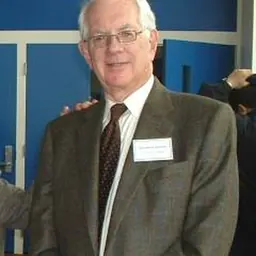


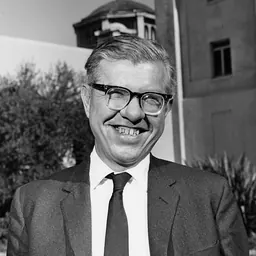


Related people
Same field, nearest in time
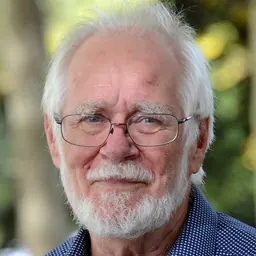
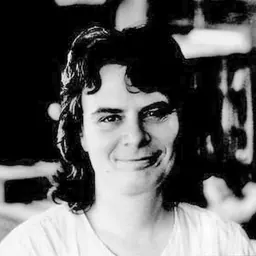


Contemporaries
People whose lives overlapped Abdus Salam's

Frequently asked questions
Who was Abdus Salam?
theoretical physicist, and Nobel Prize in Physics recipient
When was Abdus Salam born?
Abdus Salam was born on 29 January 1926 in Jhang.
When did Abdus Salam die?
Abdus Salam died on 21 November 1996 in Oxford.
What was Abdus Salam's occupation?
Abdus Salam was a university teacher, theoretical physicist and physicist.
What was Abdus Salam known for?
Abdus Salam was known for Electroweak theory, Goldstone boson, Grand Unified Theory, Higgs mechanism, Magnetic photon and Neutral current.
What nationality was Abdus Salam?
Abdus Salam was Indian and Pakistani.
Sources & further reading
Cite this page
APA: Biography.guide. (2026). Abdus Salam. https://biography.guide/abdus-salam-university-teacher/
MLA: "Abdus Salam." Biography.guide, https://biography.guide/abdus-salam-university-teacher/.
Chicago: "Abdus Salam." Biography.guide. https://biography.guide/abdus-salam-university-teacher/.
Data last updated: 2026-09-20 · Spot an error? Report a correction.
Page generated 2026-09-27 05:24 UTC