
About Steven Weinberg
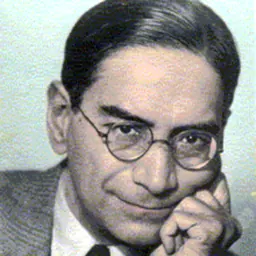
Lived 1933 – 2021 (aged 88). Steven Weinberg was an American physicist, writer, university teacher, theoretical physicist and cosmologist, known for Asymptotic safety, Axion and Effective action.
Career and research After completing his Ph.D., Weinberg worked as a postdoctoral researcher at Columbia University (1957–1959) and University of California, Berkeley (1959) and was promoted to faculty at Berkeley (1960–1966). He did research in a variety of topics of particle physics, such as the high energy behavior of quantum field theory, symmetry breaking, pion scattering, infrared photons and quantum gravity (soft graviton theorem). It was also during this time that he developed the approach to quantum field theory described in the first chapters of his book The Quantum Theory of Fields and started to write his textbook Gravitation and Cosmology, having taken up an interest in general relativity after the discovery of cosmic microwave background radiation. with the masses of the force-carriers of the weak part of the interaction being explained by spontaneous symmetry breaking. One of its fundamental aspects was the prediction of the existence of the Higgs boson. Weinberg's model, now known as the electroweak unification theory, had the same symmetry structure as that proposed by Glashow in 1961: both included the then-unknown weak interaction mechanism between leptons, known as neutral current and mediated by the Z boson. The 1973 experimental discovery of weak neutral currents (mediated by this Z boson) was one verification of the electroweak unification. The paper by Weinberg in which he presented this theory is one of the most cited works ever in high-energy physics.
After his 1967 seminal work on the unification of weak and electromagnetic interactions, Weinberg continued his work in many aspects of particle physics, quantum field theory, gravity, supersymmetry, superstrings and cosmology. In the years after 1967, the full Standard Model of elementary particle theory was developed through the work of many contributors. In it, the weak and electromagnetic interactions already unified by the work of Weinberg, Salam and Glashow, are made consistent with a theory of the strong interactions between quarks, in one overarching theory. In 1973, Weinberg proposed a modification of the Standard Model that did not contain that model's fundamental Higgs boson. Also during the 1970s, he proposed a theory later known as technicolor, in which new strong interactions resolve the hierarchy problem.
Weinberg became Eugene Higgins Professor of Physics at Harvard University in 1973, a post he held until 1983. This approach allowed the development of effective theory of quantum gravity, low energy QCD, heavy quark effective field theory and other developments, and is a topic of considerable interest in current research.
In 1979, some six years after the experimental discovery of the neutral currents—i.e. the discovery of the inferred existence of the Z boson—but after the 1978 experimental discovery of the theory's predicted amount of parity violation due to Z bosons' mixing with electromagnetic interactions, Weinberg was awarded the Nobel Prize in Physics with Glashow and Salam, who had independently proposed a theory of electroweak unification based on spontaneous symmetry breaking. The theoretical physicist Peter Woit called Weinberg "arguably the dominant figure in theoretical particle physics during its period of great success from the late sixties to the early eighties", calling his contribution to electroweak unification "to this day at the center of the Standard Model, our best understanding of fundamental physics". Science News named him along with fellow theorists Murray Gell-Mann and Richard Feynman the leading physicists of the era, commenting, "Among his peers, Weinberg was one of the most respected figures in all of physics or perhaps all of science". Sean Carroll called Weinberg one of the "best physicists we had; one of the best thinkers of any variety" who "exhibited extraordinary verve and clarity of thought through the whole stretch of a long and productive life", while John Preskill called him "one of the most accomplished scientists of our age, and a particularly eloquent spokesperson for the scientific worldview".
Other contributions Besides his scientific research, Weinberg was a public spokesman for science, testifying before Congress in support of the Superconducting Super Collider, writing articles for The New York Review of Books, and giving various lectures on the larger meaning of science. His first popular science book, The First Three Minutes: A Modern View of the Origin of the Universe (1977), described the origin of the universe in the Big Bang. Dreams of a Final Theory (1992) made the case for reductionism and the Superconducting Super Collider.
Although still teaching physics, in later years he turned his hand to the history of science, efforts that culminated in To Explain the World: The Discovery of Modern Science (2015). A hostile review in the Wall Street Journal by Steven Shapin attracted a number of commentaries, a response by Weinberg,
In 2016, Weinberg became a default leader for faculty and students opposed to a new law allowing the carrying of concealed guns in UT classrooms. He announced that he would prohibit guns in his classes, and said he would stand by his decision to violate university regulations in this matter even if faced with a lawsuit. Weinberg never retired and taught at UT until his death. Weinberg recalled "I found myself so often defending the reductionist aims of high energy physics that I wrote a book about it, Dreams of a Final Theory. Alas, funding for the Super Collider was cancelled in 1993, but even though I grieve that we physicists had failed to convince Congress, I'm at least proud that my book made it into McEwan's canon."
Personal life and archive In 1954 Weinberg married legal scholar Louise Goldwasser and they had a daughter, Elizabeth.
Weinberg's papers were donated to the Harry Ransom Center at the University of Texas.
Worldview Weinberg identified as a liberal.
Views on religion Weinberg was an atheist. Before he was an advocate of the Big Bang theory, Weinberg said: "The steady-state theory is philosophically the most attractive theory because it least resembles the account given in Genesis."
Views on Israel Weinberg was known for his support of Israel, which he characterized as "the 'most exposed salient' in a war between liberal democracies and Muslim theocracies." He wrote the 1997 essay "Zionism and Its Adversaries" on the issue.
Honors and awards Queen Beatrix meets Nobel laureates in 1983. Weinberg is third from left. Honorary Doctor of Science degrees from eleven institutions: University of Chicago, Knox College, University of Rochester, Yale University, City University of New York, Dartmouth College, Weizmann Institute, Clark University, Washington College, Columbia University, Bates College. American Academy of Arts and Sciences, elected 1968 National Academy of Sciences, elected 1972 Elected a Foreign Member of the Royal Society (ForMemRS) in 1981 Elected to American Philosophical Society (1982) Emperor Has No Clothes Award by the Freedom From Religion Foundation, 1999 Lewis Thomas Prize for Writing about Science, 1999 Humanist of the Year, American Humanist Association, 2002 Benjamin Franklin Medal for Distinguished Achievement in the Sciences, American Philosophical Society, 2004 James Joyce Award, University College Dublin, 2009 Breakthrough Prize, 2020
Selected publications A list of Weinberg's publications can be found on arXiv and Scopus.
Full list of publications and scientific literature content can be found on inspire-hep and NASA ADS
https://inspirehep.net/authors/983868
INSPIRE ID: INSPIRE-00135339
Bibliography: textbooks Gravitation and Cosmology: Principles and Applications of the General Theory of Relativity (1972) The Quantum Theory of Fields (three volumes: I Foundations 1995, II Modern Applications 1996, III Supersymmetry 2000, Cambridge University Press, , , ) Cosmology (2008, OUP) Lectures on Quantum Mechanics (2012, second edition 2015, CUP) Lectures on Astrophysics (2019, CUP, ) Foundations of Modern Physics (2021, CUP, )
Bibliography: popular science The First Three Minutes: A Modern View of the Origin of the Universe (1977, updated with new afterword in 1993, ) The Discovery of Subatomic Particles (1983) Elementary Particles and the Laws of Physics: The 1986 Dirac Memorial Lectures (1987; with Richard Feynman) Dreams of a Final Theory: The Search for the Fundamental Laws of Nature (1993), To Explain the World: The Discovery of Modern Science (2015), Harper/HarperCollins Publishers, Steven Weinberg: A Life in Physics (2024), Cambridge University Press,
Bibliography: collected essays Facing Up: Science and Its Cultural Adversaries (2001, 2003, HUP) Glory and Terror: The Coming Nuclear Danger (2004, NYRB) Lake Views: This World and the Universe (2010), Belknap Press of Harvard University Press. Third Thoughts (2018), Belknap Press,
Scholarly articles
Popular articles A Designer Universe?, a refutation of attacks on the theories of evolution and cosmology, e.g., those conducted under the rubric of intelligent design, is based on a talk given in April 1999 at the Conference on Cosmic Design of the American Association for the Advancement of Science in Washington, D.C. This and other works express Weinberg's strongly held position that scientists should be less passive in defending science against anti-science religiosity. Beautiful Theories, an article reprinted from Dreams of a Final Theory by Steven Weinberg in 1992 which focuses on the nature of beauty in physical theories. The Crisis of Big Science, The New York Review of Books, May 10, 2012. Weinberg places the cancellation of the Superconducting Super Collider in the context of a bigger national and global socio-economic crisis, including a general crisis in funding for science research and the provision of adequate education, healthcare, transportation, and communication infrastructure, and criminal justice and law enforcement.
Don’t just read it —
keep it.
Full-length biographies made to live with: read them, listen on the way to work, watch them tonight.
- E-book
- Audio
- Video
Instant download · yours to keep · every purchase keeps this site free
Important facts
more
Technicolor (physics), Unitarity gauge, Weinberg angle, Weinberg–Witten theoremFamily & relationships
People in Steven Weinberg's life
Named in this biography and alive at the same time




Related people
Same field, nearest in time


Contemporaries
People whose lives overlapped Steven Weinberg's



Frequently asked questions
Who was Steven Weinberg?
American theoretical physicist (1933-2021)
When was Steven Weinberg born?
Steven Weinberg was born on 3 May 1933 in New York City.
When did Steven Weinberg die?
Steven Weinberg died on 23 July 2021 in Austin.
What was Steven Weinberg's occupation?
Steven Weinberg was a physicist, writer, university teacher, theoretical physicist and cosmologist.
What was Steven Weinberg known for?
Steven Weinberg was known for Asymptotic safety, Axion, Effective action, Electroweak interaction, Joos–Weinberg equation and Minimal subtraction scheme.
What nationality was Steven Weinberg?
Steven Weinberg was American.
Sources & further reading
Cite this page
APA: Biography.guide. (2026). Steven Weinberg. https://biography.guide/steven-weinberg/
MLA: "Steven Weinberg." Biography.guide, https://biography.guide/steven-weinberg/.
Chicago: "Steven Weinberg." Biography.guide. https://biography.guide/steven-weinberg/.
Data last updated: 2026-09-20 · Spot an error? Report a correction.
Page generated 2026-09-27 05:21 UTC