
About Aage Bohr
Lived 1922 – 2009 (aged 87). Aage Bohr was a Danish physicist, pedagogue and nuclear physicist.
Aage Niels Bohr (; 19 June 1922 – 8 September 2009) was a Danish nuclear physicist who shared the Nobel Prize in Physics in 1975 with Ben Roy Mottelson and James Rainwater "for the discovery of the connection between collective motion and particle motion in atomic nuclei and the development of the theory of the structure of the atomic nucleus based on this connection". His father was Niels Bohr.
Starting from Rainwater's concept of an irregular-shaped liquid drop model of the nucleus, Bohr and Mottelson developed a detailed theory that was in close agreement with experiments.
Since his father, Niels Bohr, had won the prize in 1922, he and his father are one of the several pairs of fathers and sons who have both won the Nobel Prize.
Early life and education Bohr was born in Copenhagen on 19 June 1922, the fourth of six sons of the physicist Niels Bohr and his wife Margrethe Bohr (née Nørlund). His oldest brother, Christian, died in a boating accident in 1934, and his youngest, Harald, was severely disabled and placed away from the home in Copenhagen at the age of four. He would later die from childhood meningitis. Of the others, Hans became a physician; Erik, a chemical engineer; and Ernest, a lawyer and Olympic athlete who played field hockey for Denmark at the 1948 Summer Olympics in London. The family lived at the Institute of Theoretical Physics at the University of Copenhagen, now known as the Niels Bohr Institute, where he grew up surrounded by physicists who were working with his father, such as Hans Kramers, Oskar Klein, Yoshio Nishina, Wolfgang Pauli and Werner Heisenberg. While paying a visit to Columbia University, he met Isidor Isaac Rabi, who sparked in him an interest in recent discoveries related to the hyperfine structure of deuterium. This led to Bohr becoming a visiting fellow at Columbia from January 1949 to August 1950.
By the late 1940s it was known that the properties of atomic nuclei could not be explained by then-current models such as the liquid drop model developed by Niels Bohr amongst others. The shell model, developed in 1949 by Maria Goeppert Mayer and others, allowed some additional features to be explained, in particular the so-called magic numbers. However, there were also properties that could not be explained, including the non-spherical distribution of charge in certain nuclei. In a 1950 paper, James Rainwater of Columbia University suggested a variant of the drop model of the nucleus that could explain a non-spherical charge distribution. Rainwater's model postulated a nucleus like a balloon with balls inside that distort the surface as they move about. He discussed the idea with Bohr, who was visiting Columbia at the time, and had independently conceived the same idea, and had, about a month after Rainwater's submission, submitted for publication a paper that discussed the same problem, but along more general lines. Bohr imagined a rotating, irregular-shaped nucleus with a form of surface tension. Bohr developed the idea further, in 1951 publishing a paper that comprehensively treated the relationship between oscillations of the surface of the nucleus and the movement of the individual nucleons.
Upon his return to Copenhagen in 1950, Bohr began working with Ben Roy Mottelson to compare the theoretical work with experimental data. In three papers, that were published in 1952 and 1953, Bohr and Mottelson demonstrated close agreement between theory and experiment; for example, showing that the energy levels of certain nuclei could be described by a rotation spectrum. They were thereby able to reconcile the shell model with Rainwater's concept.
Only after doing his Nobel Prize-winning research did Bohr receive his doctorate from the University of Copenhagen, in 1954, writing his thesis on "Rotational States of Atomic Nuclei". Bohr became a professor at the University of Copenhagen in 1956, and, following his father's death in 1962, succeeded him as director of the Niels Bohr Institute, a position he held until 1970. He remained active there until he retired in 1992. In addition to the Nobel Prize, he won the Dannie Heineman Prize for Mathematical Physics in 1960, the Atoms for Peace Award in 1969, H. C. Ørsted Medal in 1970, Rutherford Medal and Prize in 1972, John Price Wetherill Medal in 1974, and the Ole Rømer medal in 1976. Bohr and Mottelson continued to work together, publishing a two-volume monograph, Nuclear Structure. The first volume, Single-Particle Motion, appeared in 1969; the second, Nuclear Deformations, in 1975. He was a member of the Norwegian Academy of Science and Letters from 1980. Bohr was also an elected member of the American Academy of Arts and Sciences, the American Philosophical Society, and the United States National Academy of Sciences.
In 1981, Bohr became a founding member of the World Cultural Council.
Bohr's wife Marietta died in 1978. In 1981, he married Bente Scharff Meyer (1926-2011). His son, Tomas Bohr, is a professor of physics at the Technical University of Denmark, working in the area of fluid dynamics. Aage Bohr died in Copenhagen on 8 September 2009. He was survived by his second wife and children.
Don’t just read it —
keep it.
Full-length biographies made to live with: read them, listen on the way to work, watch them tonight.
- E-book
- Audio
- Video
Instant download · yours to keep · every purchase keeps this site free
Important facts
People in Aage Bohr's life
Named in this biography and alive at the same time




Related people
Same field, nearest in time

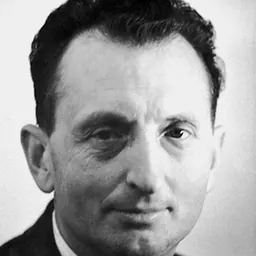
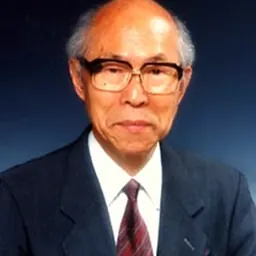


Contemporaries
People whose lives overlapped Aage Bohr's

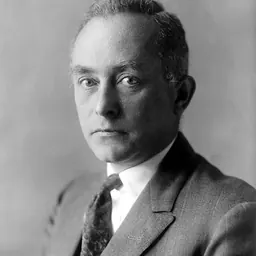
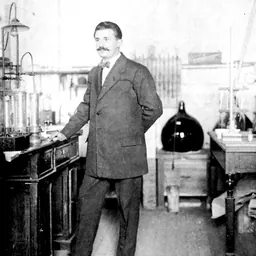
Frequently asked questions
Who was Aage Bohr?
Danish physicist (1922–2009)
When was Aage Bohr born?
Aage Bohr was born on 19 June 1922 in Copenhagen.
When did Aage Bohr die?
Aage Bohr died on 8 September 2009 in Copenhagen.
What was Aage Bohr's occupation?
Aage Bohr was a physicist, pedagogue and nuclear physicist.
What nationality was Aage Bohr?
Aage Bohr was Danish.
Sources & further reading
Cite this page
APA: Biography.guide. (2026). Aage Bohr. https://biography.guide/aage-bohr/
MLA: "Aage Bohr." Biography.guide, https://biography.guide/aage-bohr/.
Chicago: "Aage Bohr." Biography.guide. https://biography.guide/aage-bohr/.
Data last updated: 2026-09-20 · Spot an error? Report a correction.
Page generated 2026-09-27 05:18 UTC