
About Zhao Yi
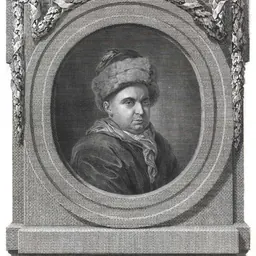
Lived 1727 – 1814 (aged 86–87). Zhao Yi was a Chinese poet and historian.
Zhao Yi (; 1727–1814) was a poet, historian, and critic during the Qing dynasty in China. Zhao is notable for his innovative poetry, his historical writings (including Notes on the Twenty-Two Dynastic Histories), and for espousing unconventional views on various aspects of Chinese dynastic history.
Education
Zhao's early life exemplified the Confucian ideal of upward mobility from destitution through the skillful cultivation and use of intelligence, education, and personal connections. Like many other aspirants to social status in the Qing Empire, Zhao began his studies early in life. Zhao began his education before the age of five, and was recorded to have been a precocious learner.
The originality of Zhao's ideas on poetry were recognized in his own lifetime, as is attested to in the writings of his friend and fellow poet Yuan Mei who appreciated Zhao's poetic eccentricities as well as his unorthodox and rich literary influences, and drew a firm distinction between Zhao's work and that of his contemporaries who imitated Tang and Song poetry. Zhao wrote poems glorifying the Qing conquest and genocide of the Dzungar Mongols. Zhao Yi wrote the Yanpu zaji in "brush-notes" style, where military expenditures of the Qianlong Emperor's reign were recorded.
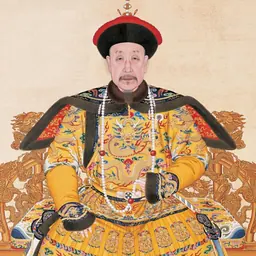
The Qianlong Emperor was praised as being the source of "eighteenth-century peace and prosperity" by Zhao Yi.
Zhao supported the view that historians and works of history were of great importance in China. In one instance, he argued that, while the Confucian Classics constituted the principles of Chinese dynastic government, it was works of history that provide the actual record of the government at work that could act as a guide to what historian Richard J. Smith calls, “proper conduct for the present and future.”
With regard to another historical position, Zhao was at odds with the still popular and (in modern times) patriotic view that the peace policy of the Southern Song dynasty toward the Jin dynasty was traitorous, and Zhao instead adopted the minority position he shared with the earlier Chinese scholar Wang Fuzhi that the peace policy saved the Southern Song from further defeat at the hands of the Jin. At least one modern Western scholar has taken a position that aligns with Zhao's, arguing that the peace policy was “validated by the later history of the Southern Sung.”
In another notable instance of an unconventional historical interpretation, Zhao espoused what historian Arthur Waldron terms a “realistic opinion” that the fall of the Ming dynasty was the fault of the Ming dynasty elites, who made empty words and were poorly informed. These elites opposed the peace efforts of the Chongzhen Emperor toward the Manchus, and this brought about unnecessary conflict that the Manchus had not intended. This view limits the responsibility of the Manchus for initiating Manchu-Ming conflict and shifts it to the Ming dynasty elites.
In one further notable divergence from many Chinese writers in his era and even more so during the Ming dynasty, Zhao offered praise for the efforts of the founder of the Qin dynasty, Qin Shihuang, to secure the northern borders of China with the early Great Wall rather than the criticisms of certain other Chinese writers (such as Wan Sitong and Li Mengyang).
Assessment
Although because of various setbacks, Zhao failed to achieve the political influence which he had ambitions to attain in his lifetime and considered his professional career a failure, Zhao has been recognized as an important figure in Chinese history and historiography through the present day.
Don’t just read it —
keep it.
Full-length biographies made to live with: read them, listen on the way to work, watch them tonight.
- E-book
- Audio
- Video
Instant download · yours to keep · every purchase keeps this site free
Important facts
People in Zhao Yi's life
Named in this biography and alive at the same time
Related people
Same field, nearest in time


Contemporaries
People whose lives overlapped Zhao Yi's





Frequently asked questions
Who was Zhao Yi?
Qing Dynasty poet and historian
When was Zhao Yi born?
Zhao Yi was born in 1727 in Wujin District.
When did Zhao Yi die?
Zhao Yi died in 1814 in Changzhou, China, Jiangsu.
What was Zhao Yi's occupation?
Zhao Yi was a poet and historian.
What nationality was Zhao Yi?
Zhao Yi was Chinese.
Sources & further reading
Cite this page
APA: Biography.guide. (2026). Zhao Yi. https://biography.guide/zhao-yi-poet/
MLA: "Zhao Yi." Biography.guide, https://biography.guide/zhao-yi-poet/.
Chicago: "Zhao Yi." Biography.guide. https://biography.guide/zhao-yi-poet/.
Data last updated: 2026-09-22 · Spot an error? Report a correction.
Page generated 2026-09-27 05:30 UTC