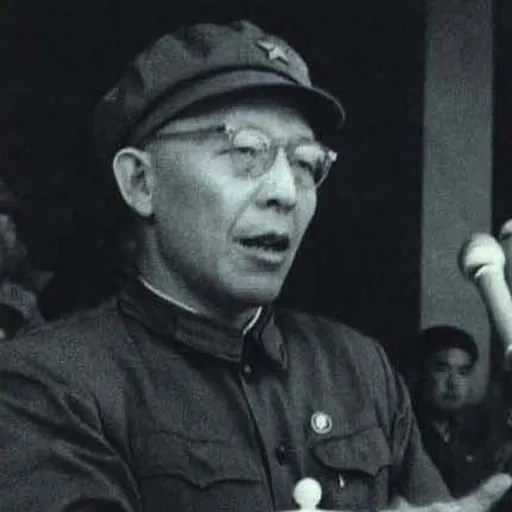
About Zhang Chunqiao
Lived 1917 – 2005 (aged 88). Zhang Chunqiao was a Chinese politician, political scientist and writer.
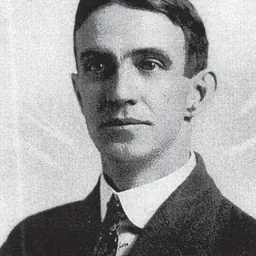
Zhang Chunqiao (; 1 February 1917 – 21 April 2005; also spelled as Chang Chun-chiao ) was a Chinese political theorist, writer, and politician. He came to the national spotlight during the late stages of the Cultural Revolution, and was a member of the ultra-Maoist group dubbed the "Gang of Four".
Zhang joined the Chinese Communist Party in 1938, later becoming a prominent journalist in charge of Jiefang Daily after the establishment of the People's Republic. He rose to prominence after his October 1958 article entitled "Destroy the Ideology of Bourgeois Right" caught the attention of Mao Zedong, who ordered its reproduction in People's Daily.
With the onset of the Cultural Revolution, he was appointed as a member of the Cultural Revolution Group. In 1967, Zhang organized the Shanghai People's Commune and briefly became its chairman, effectively overthrowing the local Shanghai government and local party structures. Afterwards, he was appointed as the director of the Shanghai Revolutionary Committee. He joined the Politburo in 1969, and its inner Standing Committee in 1973, reaching his zenith as the country's second-ranking vice premier in 1975.
After Mao's death in 1976, Zhang was arrested along with the other members of what would become known as the Gang of Four. He was sentenced to death with a two-year reprieve, later commuted to life imprisonment, and then further reduced to 18 years. He was released from prison in 1998 to undergo medical treatment, and died in 2005.
Early life Born in Juye County, Shandong, Zhang worked as a writer in Shanghai in the 1930s, developing strong connections within the city. After attending a 1938 conference in Yan'an, he joined the Chinese Communist Party.
Zhang first saw Mao Zedong at a party in 1938, and spoke to him for the first time in 1939, while he was serving as "head of the propaganda section of a public school in northern Shaanxi."
People's Republic of China With the proclamation of the People's Republic of China, Zhang became a prominent Shanghai journalist, put in charge of the newspaper Jiefang Daily. Here, he met Jiang Qing.
Zhang first came to prominence as the result of his October 1958 article in Jiefang Daily entitled "Destroy the Ideology of Bourgeois Right". Mao Zedong took notice of the article, and ordered it to be reprinted in People's Daily, along with an accompanying "Editor's Note" expressing his mild approval. In the article, Zhang praised the Red Army's egalitarian focus in the 1930s, including its communist mutual relations not just internally but with the masses. According to Zhang, "When comrades lived used to live under the supply system they did not envy wage labor, and people liked this kind of expression of a living institution of relations of equality. Before long, however, this kind of system was attacked by the ideology of bourgeois right. The core of the ideology of the bourgeois right is the wage system."
In 1973 he was promoted to the Politburo Standing Committee therein. In January 1975, Zhang became the second-ranked Vice Premier, and penned "On Exercising All-Round Dictatorship Over the Bourgeoisie" to promote the theoretical study of the dictatorship of the proletariat. Deng Xiaoping was the first-ranked Vice Premier at the time, but was out of the office by 1976. After the death of Zhou Enlai in January 1976, Zhang Chunqiao competed for the position of Premier with his political opponent Deng Xiaoping. However, Mao did not choose either of them. Instead, he chose Hua Guofeng as the new Premier.
Arrest and death Zhang was arrested along with the other members of the so-called "Gang of Four" in October 1976, as part of a conspiracy by Ye Jianying, Li Xiannian and the new party leader Hua Guofeng. He was expelled from the Communist Party in July 1977, and then sentenced to death with a two-year reprieve in 1984, alongside Jiang Qing. His sentence was later commuted to life imprisonment, and was further reduced to 18 years in December 1997.
Zhang remained silent during his 1980 trial, and refused to speak until his relatives were allowed to visit him in prison years later; according to his daughter, Weiwei, he could barely talk by that time.
Don’t just read it —
keep it.
Full-length biographies made to live with: read them, listen on the way to work, watch them tonight.
- E-book
- Audio
- Video
Instant download · yours to keep · every purchase keeps this site free
Important facts
People in Zhang Chunqiao's life
Named in this biography and alive at the same time
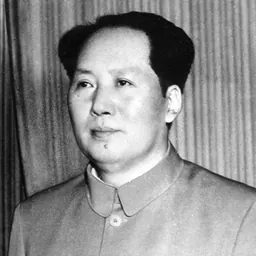
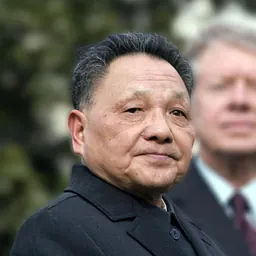



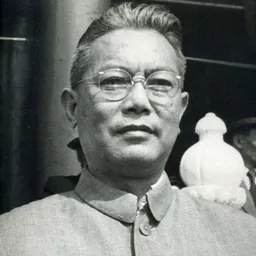

Related people
Same field, nearest in time




Contemporaries
People whose lives overlapped Zhang Chunqiao's

Frequently asked questions
Who was Zhang Chunqiao?
member of the Gang of Four (1917–2005)
When was Zhang Chunqiao born?
Zhang Chunqiao was born on 1 February 1917 in Juye County.
When did Zhang Chunqiao die?
Zhang Chunqiao died on 21 April 2005 in Beijing.
What was Zhang Chunqiao's occupation?
Zhang Chunqiao was a politician, political scientist and writer.
What nationality was Zhang Chunqiao?
Zhang Chunqiao was Chinese.
Sources & further reading
Cite this page
APA: Biography.guide. (2026). Zhang Chunqiao. https://biography.guide/zhang-chunqiao/
MLA: "Zhang Chunqiao." Biography.guide, https://biography.guide/zhang-chunqiao/.
Chicago: "Zhang Chunqiao." Biography.guide. https://biography.guide/zhang-chunqiao/.
Data last updated: 2026-09-22 · Spot an error? Report a correction.
Portrait: Wikimedia Commons · author & licence
Page generated 2026-09-27 05:04 UTC