
About Yuri Gaven
Lived 1884 – 1936 (aged 52). Yuri Gaven was a Russian politician.
Yuri Petrovich Gaven (; ; 18 March 1884 – 4 October 1936), born Jānis Daumanis , was a Latvian revolutionary and Soviet politician and Chekist. He was a key figure in the defeat of the Crimean People's Republic and the establishment of the short-lived Taurida Soviet Socialist Republic and an active participant in the Red Terror in Crimea. The confessions of defendants in the First Moscow Trial in August 1936 depicted Gaven as one of the oppositionists who communicated with Trotsky.
Gaven was not, however, named as a defendant or called as a witness; instead he was arrested on 4 April 1936 on charges of “counterrevolutionary” activities. He was too ill to appear at his trial on 3 October, at which the Military Collegium of the Supreme Court of the Soviet Union sentenced him to death on charges of participation in a counter-revolutionary Trotskyist organization. He was taken from his sickbed outside on a stretcher and shot on 4 October 1936.
He was rehabilitated in 1958.
Writings In memory of those who fell in the revolution 1905-1907.-Moscow, 1933 January events in Riga (published in 1965 in the collection “The Path Traveled” - Riga)
Family His elder brother Ekab (Jēkabs) was a sailor who, after graduating from the Mangelsk Naval School, became a navigator and captain. Ekab was active in the revolutionary movement, contacting Latvian emigrants, illegally delivering revolutionary literature to Riga, and taking part in the Riga riots of 1899. He died in the wreck of the steamer Jupiter off the coast of Denmark in 1900.
Gaven's younger brother Ans (Ansis) had been a member of the revolutionary circle at the Feitl factory since 1903. After graduating from the Pskov Land Surveying School. he participated in the 1905 Revolution, edited the underground student newspaper “Jaunības balss”. Then he worked as a land surveyor in Pskov. After the October Revolution of 1917, he joined the Red Army, was a division commissar under Jānis Fabriciuss, a member of the Revolutionary Military Council of the Latvian Red Army, and commander of the Courland Group of Forces, which captured Riga and Mitava in January 1919. In the summer of 1920, while commanding the 10th division of the 16th Red Army, he died during the assault on Brest-Litovsk.
His brother Heinrich (Heinrihs) studied at the Stieglitz Art School in St. Petersburg. In 1912 he drowned during a vacation in Pskov.
His sister Germina (Hermīne) graduated from Lesgaft Courses in St. Petersburg.
His wife Armenui Sumbatovna Hovvyan, an Armenian from Nagorno-Karabakh, attended courses in Odessa. In 1911 she began work as a teacher at Elena Stasova's Tiflis school, and participated in her underground group, joining the RSDLP in 1910. After the destruction of the group in 1912, she was exiled to Siberia. In 1916 she moved to Minusinsk, where she became close to Gaven and became his faithful comrade and wife.
After the February Revolution of 1917, she was elected Secretary of the Minusinsk Council of Workers' Deputies. At the end of the year, following Gaven, she moved to Crimea and worked as his assistant. In 1921 she became Secretary of the bureau of the Armenian section of the Crimean regional committee of the RCP(b) and a member of the editorial board of the newspaper “Bell of the Commune”.
Beginning in 1923, she led the International Red Aid in Crimea and the “Friends of Children” society, and participated in the resettlement of Armenians repatriated from Turkey. In 1925 she was admitted to the All-Union Society of Old Bolsheviks on the recommendation of Elena Stasova and Sergo Ordzhonikidze.
She worked as the head of the Children's Town named after the Third International in Moscow and sponsored the children's colony for street children in the Conception Monastery, where she lived with the children. She also studied at the Timiryazev Agricultural Academy.
Don’t just read it —
keep it.
Full-length biographies made to live with: read them, listen on the way to work, watch them tonight.
- E-book
- Audio
- Video
Instant download · yours to keep · every purchase keeps this site free
Important facts
People in Yuri Gaven's life
Named in this biography and alive at the same time

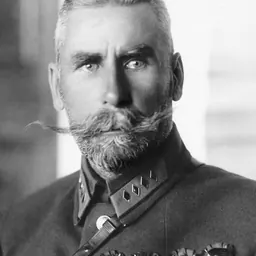

Related people
Same field, nearest in time

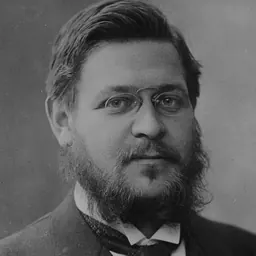



Contemporaries
People whose lives overlapped Yuri Gaven's
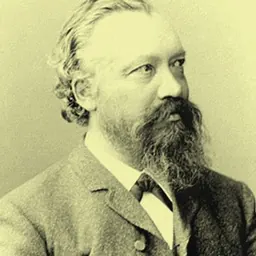
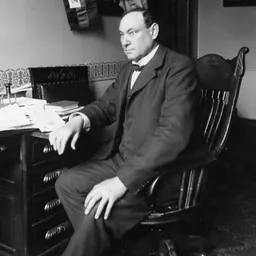

Frequently asked questions
Who was Yuri Gaven?
Soviet politician (1884-1936)
When was Yuri Gaven born?
Yuri Gaven was born on 18 March 1884 in Dreiliņi Parish.
When did Yuri Gaven die?
Yuri Gaven died on 4 October 1936 in Soviet Union.
What was Yuri Gaven's occupation?
Yuri Gaven was a politician.
What nationality was Yuri Gaven?
Yuri Gaven was Russian.
Sources & further reading
Cite this page
APA: Biography.guide. (2026). Yuri Gaven. https://biography.guide/yuri-gaven/
MLA: "Yuri Gaven." Biography.guide, https://biography.guide/yuri-gaven/.
Chicago: "Yuri Gaven." Biography.guide. https://biography.guide/yuri-gaven/.
Data last updated: 2026-09-20 · Spot an error? Report a correction.
Page generated 2026-09-27 05:29 UTC