
About Yuri Filipchenko
Lived 1882 – 1930 (aged 48). Yuri Filipchenko was a Russian botanist, entomologist, geneticist and biologist.
Yuri Aleksandrovich Filipchenko, sometimes Philipchenko (; 1882 — 1930) was a Russian entomologist who coined the terms microevolution and macroevolution, as well as the mentor of geneticist Theodosius Dobzhansky. Though he himself was an orthogeneticist, he was one of the first scientists to incorporate the laws of Mendel into evolutionary theory and thus had a great influence on The Modern Synthesis. He established a genetics laboratory in Leningrad undertaking experimental work with Drosophila melanogaster. Theodosius Dobzhansky worked with him from 1924. Filipchenko is also known for his work in Soviet eugenics, though his work in the subject would later result in his public denunciation due to the rise of Stalinism and increased criticisms that eugenics represented bourgeois science.
Biography Early life and education Yuri Filipchenko was born on February 13, 1882, in Zlyn' in Bolkhovsky District of the Russian Empire. His father was Aleksandrovich Efimovich, a landowner and agriculturalist. Filipchenko also had a brother by the name of Aleksandr Aleksandrovich, who would later become a parasitologist and physician.
He received his secondary education at the Second Saint Petersburg Classical Gymnasium. In 1897, Filipchenko read Darwin’s On the Origin of Species and Sexual Selection for the first time. Two years later, he would read Carl Nägeli’s Mechanisch-physiologische Theorie der Abstamungslehre. These two works would later have a powerful formative influence on Filipchenko and helped to steer him towards a career in zoology.
However, in the wake of the first five-year plan, Filipchenko became publicly castigated for his work in orthogenesis and in eugenics While Filipchenko self-identified as a Darwinist, he only did so in the sense that he believed in the idea of evolution. He did not subscribe to the belief that Darwin's concept of natural selection was as integral to the process of evolution as Darwin espoused, instead positing that evolution was not governed by the principles of Lamarck or natural selection, but rather was intrinsic to life itself. Filipchenko believed that evolution in animals and plants was an inherent developmental process rather than a change induced over successive generations, a process that an organism's environment can affect, but only indirectly.
Filipchenko was drawn to eugenics due to both its potential to be used as a "civic religion" and its promise of a better future for the Soviets, but also due to the immense amount of funding directed towards eugenics due to the Soviet government's interest in the subject. stating that such acts were "crude assaults on the human person" and that the best way to create a "desirable breed" was through positive selection. In Filipchenko's eyes, eugenic progress could only be achieved through education rather than legislative or scientific methods. His articles and textbooks on inheritance were some of the first entry points for Russian biologists like Dobzhansky to modern genetics, and it is for this reason that Soviet botanist and historian Peter Zhukovsky once called Filipchenko "the teacher of our youth."
Published works During his career, Filipchenko published more than 100 works in Russian, 20 works in German, and 4 works in French, often under the name "J.A. Philiptschenko." Below are a few of the articles he put out in his lifetime. Razvitie izotomy (The development of isotomes; St. Petersburg, 1912) Izmenchivost’ i evoliutsiia (Variation and evolution; Petrograd and Moscow, 1915; 2nd ed., Petersburg, 1921) Proiskhozhdenie domashnykh zhivotnykh (The origin of domesticated animals; Petrograd, 1916; 2nd ed., Leningrad, 1924) Nasledstvennost’ (Heredity; Moscow, 1917; 2nd ed., 1924; 3rd ed., 1926) Chto takoe evgenika? (What is eugenics?; Petrograd. 1921) Kak nasleduetsia razlichnye osobennosti cheloveka (How various human traits are inherited; Petrograd, 1921) Izmenchivost i metody ee izucheniia (Variation and methods for its study: Petrograd, 1923;2nd ed. Leningrad 1926; 3rd ed., 1927; 4th ed., Moscow and Leningrad 1929) Obshchedostupnaia biologiia (Biology for the general reader; Petrograd, 1923; 15th ed., 1930) Evoliutsionnaia ideia v biologii (The evolutionary idea in biology; Moscow, 1923; 2nd ed., 1926; 3rd ed., 1977) Puti uluchsheniia chelovecheskogo roda (evgenika) (Ways of improving the human race [eugenics]; Leningrad, 1924) "Frensis Gal’ton i Gregor Mendel” (Francis Galton and Gregor Mendel; Moscow, 1925) Besedy o zhivykh sushchestvakh (Conversations about living substances; Leningrad, 1925) Nasledstvenny li priobretennye priznaki? (Are acquired characteristics inherited?: Leningrad. 1925) Variabilitat und variation (Berlin, 1927) I, Rasteniia (Plants; Leningrad, 1927) II, Zhivotnye (Animals; Leningrad, 1928) Genetika i ee znachenie dlia zhivotnovodstva (Genetics and its significance for animal breeding; Moscow and Leningrad, 1931) Eksperimental naia zoologiia (Experimental zoology; Leningrad and Moscow, 1932) Genetika Miagkikh pshenits (The genetics of soft wheats; Moscow and Leningrad, 1934)
Don’t just read it —
keep it.
Full-length biographies made to live with: read them, listen on the way to work, watch them tonight.
- E-book
- Audio
- Video
Instant download · yours to keep · every purchase keeps this site free
Important facts
People in Yuri Filipchenko's life
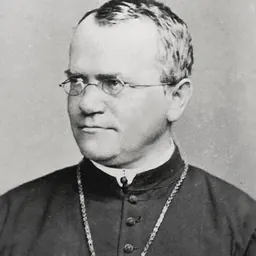
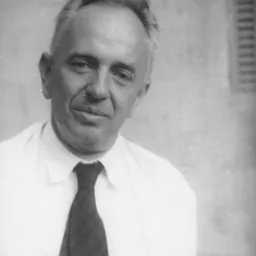
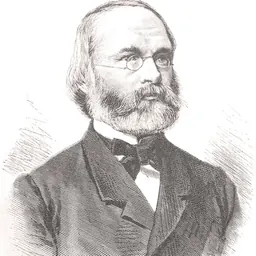
Named in this biography and alive at the same time

Related people
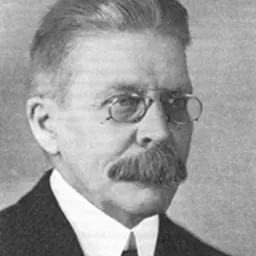
Same field, nearest in time


Contemporaries
People whose lives overlapped Yuri Filipchenko's





Frequently asked questions
Who was Yuri Filipchenko?
Russian entomologist (1882-1930)
When was Yuri Filipchenko born?
Yuri Filipchenko was born on 1 February 1882 in Bolkhovsky District.
When did Yuri Filipchenko die?
Yuri Filipchenko died on 19 May 1930 in Saint Petersburg.
What was Yuri Filipchenko's occupation?
Yuri Filipchenko was a botanist, entomologist, geneticist and biologist.
What nationality was Yuri Filipchenko?
Yuri Filipchenko was Russian.
Sources & further reading
Cite this page
APA: Biography.guide. (2026). Yuri Filipchenko. https://biography.guide/yuri-filipchenko/
MLA: "Yuri Filipchenko." Biography.guide, https://biography.guide/yuri-filipchenko/.
Chicago: "Yuri Filipchenko." Biography.guide. https://biography.guide/yuri-filipchenko/.
Data last updated: 2026-09-26 · Spot an error? Report a correction.
Page generated 2026-09-27 05:16 UTC