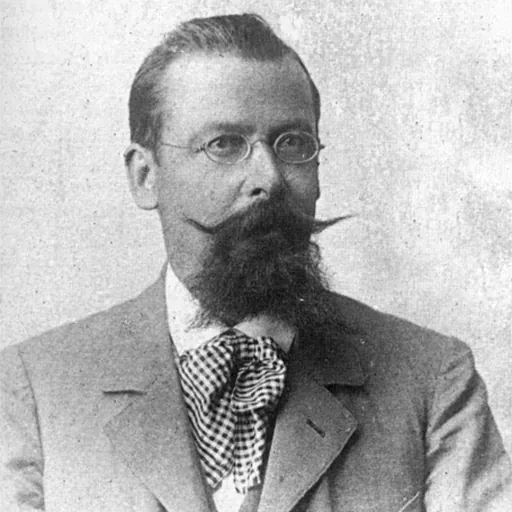
About Emil Goeldi
Lived 1859 – 1917 (aged 57). Emil Goeldi was a Swiss and Brazilian botanist, zoologist, naturalist, ichthyologist, entomologist and botanical collector, known for Brazil and Museu Paraense Emílio Goeldi.
Émil August Goeldi (var. Göldi, Portuguese var. Emílio Augusto Goeldi) (28 August 1859 – 5 July 1917 in Bern), was a Swiss-Brazilian naturalist and zoologist. He was the father of Oswaldo Goeldi, a noted Brazilian engraver and illustrator.
Biography Goeldi studied zoology in Jena, Germany with Ernst Haeckel, and in 1884 he was invited by Ladislau de Souza Mello Netto, the influential director of the Brazilian Museu Imperial e Nacional, to work at that institution. Goeldi arrived in Rio de Janeiro in 1885 to work in the National Museum (now the Museu Nacional do Rio de Janeiro. In May 1890, he was fired, due to political circumstances related to the proclamation of the republic and the exile of his principal benefactor, Emperor D. Pedro II.
He was then invited by the governor of the state of Pará, Lauro Sodré, to reorganize the Pará Museum of Natural History and Ethnography, in Belém, which had been founded in 1866 by Domingos Soares Ferreira Penna. He arrived on 9 June 1894 in Belém. In his pioneering work, Goeldi was helped by several other foreign researchers, such as the Swiss botanist Jacques Huber (1867–1914), zoologist Emilie Snethlage (1868–1929), geologists Friedrich Katzer (1861–1925), and Alexander Karl von Kraatz-Koschlau (1867–1900), and Adolpho Ducke (1876–1959), entomologist, ethnographer and botanist.
In 1902, the Museu Paraense de História Natural e Ethnography was renamed in his honour. It is now called the Museu Paraense Emílio Goeldi. In 1905 Émil Goeldi renounced his post, due to ill health, and returned to Switzerland where he died in Bern, in 1917, at age 58. Huber, then Snethlage and Ducke succeeded him as general directors of the Goeldi Museum in Belém.
Contributions Goeldi was primarily a zoologist and described many new Brazilian species of birds and mammals. Some of the species which bear his name are:
Goeldi's antbird – Myrmeciza goeldii Goeldi's marmoset – Callimico goeldii Goeldi's frog – Flectonotus goeldii
Several other species were named in honour of Émil Goeldi, such as: Acropyga goeldii, Camponotus goeldii, Azteca goeldii, Pachycondyla goeldii, Crematogaster torosa goeldii, Mycocepurus goeldii, Procryptocerus goeldii, Acanthoponera goeldii, Brachymyrmex goeldii, Dorymyrmex goeldii dubius, Paratrechina goeldii, Megalomyrmex goeldii, Myrmelachista goeldii, Neivamyrmex goeldii, Solenopsis goeldii, Pheidole goeldii and Cephalotes goeldii, all species of South American ants described by Auguste Forel; Protambulyx goeldii, a moth; Dubioniscus goeldii, a garden pillbug (isopod); Metazygia goeldii, a Brazilian species of orb-weaver spider; Megaelosia goeldii and Fritziana goeldii, frogs; Trichomycterus goeldii, a pencil catfish; Cynopotamus goeldii, a Characidae fish; Goeldi's pimelodid, Duopalatinus goeldii, a Pimelodidae freshwater fish; Goeldi's hemiodus, Hemiodus goeldii, a Hemiodontidae freshwater fish. Cheirocerus goeldii, also a catfish; Simulium goeldii, a blackfly from the Amazon rainforest; Philodendron goeldii, a philodendron plant. Polistes goeldii, a species of Polistes wasp.
In other scientific fields Goeldi was also recognized as an important early figure in public health and epidemiology in Brazil, because he studied the mechanism of transmission of yellow fever and advocated the importance of fighting the mosquito as the vector of the disease, several years before Oswaldo Cruz did so. His extensive scientific research on the geography, geology, flora, fauna, archaeology, ethnography and socio-economical conditions of the present day region of Amapá was very important to end the Contestado territorial litigation between France and Brazil, ceding the territory to Brazil on 1 December 1900, by the international decision of the court of Bern.
Publications Goeldi, E. A. (1886). Bericht über zwei ältere, unbekannt gebliebene illustrierte Manuskripte portugiesisch-brasilianischer Naturforscher. I. Die zoologischen Zeichnungen von Alexander Rodriguez Ferreira. II. Die zoologischen Zeichnungen von Arruda da Camara. Zoologische Jahrbücher, Jena, 2, 175–184 Goeldi, E. A. (1892). Zur Orientierung in der Spinnenfauna Brasiliens. Mitteilungen aus dem Osterlande (Neue Folge), 5, 200–248 Goeldi, E. A. (1897). A lenda amazônica do "cauré". Bol. Mus. Paraense, 2, 430–441 Goeldi, E. A. (1897). On the nesting of Cassicus persicus, Cassidrix oryzivora, Gymnomystax melanicterus and Todirostrum maculatum. Ibis, 7(3), 361–370 Goeldi, E. A. (1898 (1897)). A lenda amazônica do "cauré". Bol. Mus. Paraense, 2, 430–441 Goeldi, E. A. (1900). Sobre a nidificação do Cassicus persicus (japim), do Cassidix oryzivora (graúna), do Gymnomystax melanicterus (aritauá) e do Todirostrum maculatum (ferreirinho). Bol. Mus. Para. Hist. Nat. Ethnogr., (Mus. Para.), 3, 203–210 Goeldi, E. A. (1904). Against the destruction of white herons and red ibises on the lower Amazon, especially on the Island of Marajó(2 ed.). Belém: Pará Geoldi, E. A. (1905). Myrmecologische Mitteilung das Wachsen des Pilzgartens von Atta cephalotes betreffend. Paper presented at the C.r. 6th Congr. Int. Zool., Berne Goeldi, E. A. (1905). Beobachtungen über die erste Anlage einer neuen Kolonie von Atta cephalotes. Paper presented at the C.r. 6th Congr. Int. Zool., Berne Goeldi, E. A. (1905). Os mosquitos do Pará. Reunião de quatro trabalhos sobre os mosquitos indígenas, principalmente as espécies que molestam o homem. Mem. Museu E. Goeldi, 4, 1–152 Goeldi, E. A. (1908 (1909)). Microtrogon novo nome genérico proposto para Trogon ramonianus Des Murs. Bol. Mus. Para. Hist. Nat. Ethnogr., (Mus. Pará), 5(1), 92–95 Goeldi, E. A. (1911). Der Ameisenstaat, seine Entstehung und seine Einrichtung, die Organisation der Arbeit und die Naturwunder seines Haushaltes. Leipzig & Berlin: Teubner
Don’t just read it —
keep it.
Full-length biographies made to live with: read them, listen on the way to work, watch them tonight.
- E-book
- Audio
- Video
Instant download · yours to keep · every purchase keeps this site free
Important facts
People in Emil Goeldi's life
Named in this biography and alive at the same time

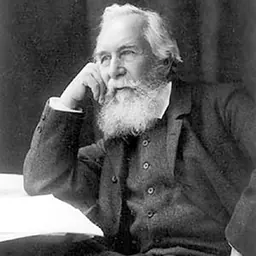

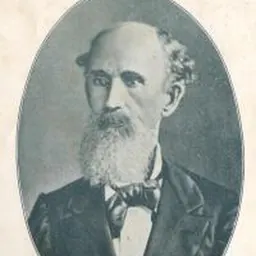


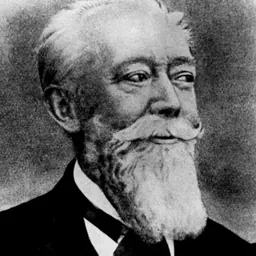
Related people
Same field, nearest in time


Contemporaries
People whose lives overlapped Emil Goeldi's

Frequently asked questions
Who was Emil Goeldi?
Swiss-Brazilian naturalist and zoologist (1859–1917)
When was Emil Goeldi born?
Emil Goeldi was born on 28 August 1859 in Nesslau-Krummenau.
When did Emil Goeldi die?
Emil Goeldi died on 5 July 1917 in Zurich.
What was Emil Goeldi's occupation?
Emil Goeldi was a botanist, zoologist, naturalist, ichthyologist, entomologist and botanical collector.
What was Emil Goeldi known for?
Emil Goeldi was known for Brazil and Museu Paraense Emílio Goeldi.
What nationality was Emil Goeldi?
Emil Goeldi was Swiss and Brazilian.
Sources & further reading
Cite this page
APA: Biography.guide. (2026). Emil Goeldi. https://biography.guide/emil-goeldi/
MLA: "Emil Goeldi." Biography.guide, https://biography.guide/emil-goeldi/.
Chicago: "Emil Goeldi." Biography.guide. https://biography.guide/emil-goeldi/.
Data last updated: 2026-09-23 · Spot an error? Report a correction.
Portrait: Wikimedia Commons · author & licence
Page generated 2026-09-27 05:07 UTC