
Yumjaagiin Tsedenbal
Prime Minister and President of Mongolia
About Yumjaagiin Tsedenbal
Lived 1916 – 1991 (aged 74). Yumjaagiin Tsedenbal was a politician, economist and head of government.
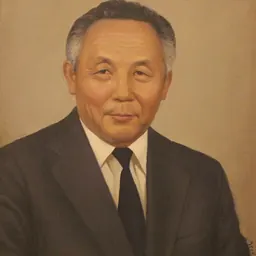
Yumjaagiin Tsedenbal (; 17 September 1916 – 20 April 1991) was a Mongolian military officer and politician who led the Mongolian People's Republic as a dictator from 1952 to 1984. He served as General Secretary of the ruling Mongolian People's Revolutionary Party from 1940 to 1954 and again from 1958 to 1984, as Chairman of the Council of Ministers (head of government) from 1952 to 1974, and as Chairman of the Presidium of the People's Great Khural (head of state) from 1974 to 1984.
Tsedenbal rose to prominence in the 1940s as a member of leader Khorloogiin Choibalsan's inner circle, and succeeded him as premier after his death in 1952. Tsedenbal resisted de-Stalinization, and ousted and internally exiled several of his rivals in the 1960s. His policies were aimed at making Mongolia a loyal political and economic partner of the Soviet Union. Tsedenbal was the longest-serving leader of modern Mongolia and the second longest-serving leader of any Eastern Bloc country (after Todor Zhivkov), serving until his expulsion with Soviet support in 1984. He retired to Moscow and died in 1991, and his legacy has sometimes been considered controversial since the 1990 democratic revolution, but has been rehabilitated since 1997.
Party career and rise
After he was recommended to Mongolia's leader, Khorloogiin Choibalsan, by Soviet intelligence officer and diplomatic representative Ivan Alekseevich Ivanov, in 1939 Tsendenbal joined the Mongolian People's Revolutionary Party (MPRP), and became deputy finance minister that March. From July 1939 to March 1940, Tsedenbal was concurrently Mongolia's minister of finance and chairman of the board of the state bank (Bank of Trade and Industry). In December 1939, Tsedenbal joined Choibalsan and Ivanov for a meeting with Soviet leader Joseph Stalin in Moscow. There, Choibalsan promised to purge sitting MPRP secretary Banzarjavyn Baasanjav to replace him with Tsedenbal, which was done with Baasanjav's execution in February 1940.
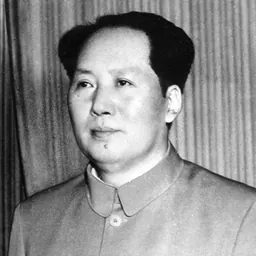
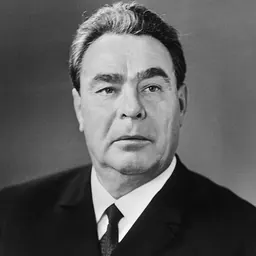
In March 1940, at age 24, Tsedenbal was elected a member of the Central Committee, member of the Presidium, and general secretary at the MPRP's Tenth Congress, becoming the country's number-two leader. Though he was part of Choibalsan's inner circle, unlike him Tsedenbal was not enthusiastic about pan-Mongolian unification, and around 1950 instead supported the proposal advanced by several young party officials that Mongolia join the Soviet Union in order to achieve socialism. Tsedenbal was responsible for the introduction of the Cyrillic script for writing the Mongolian language, replacing Mongolian script. Despite stating that "new young forces must be drawn into leadership work", he cemented an aging leadership, and the Politburo changed little between 1966 and 1981. At the time of the Sino-Soviet split, Tsedenbal decisively sided with the Soviet Union and incurred China's wrath. Despite this, the two countries managed to sign a border treaty in 1962. Mongolia sought to secure its borders, while China sought to normalize relations with both its former Mongolian ally and neutral North Korea, for which the territorial concessions might have been were very large. In the early 1960s, he signed an order expelling all Chinese citizens from Mongolia. The resolution was met with outrage: "Break off Tsedenbal's dog's head," was written onto the Mongolian embassy, and Mao Zedong and Zhou Enlai stated that "Comrade Tsedenbal is trampling on diplomacy." With the intensification of the Sino-Soviet border conflict in the 1960s, the signing of a treaty with the USSR in Ulaanbaatar in early 1966 by Brezhnev and Tsedenbal, allowed the Soviet Union to station troops in Mongolia to ensure mutual defense, being the first time that foreign troops were stationed in the republic.
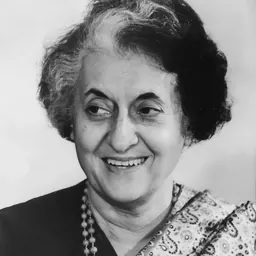
In July 1956, he welcomed North Korean leader Kim Il Sung on a state visit. As it relates to the Korean conflict, Tsedenbal, during a 1971 visit of the North Korean deputy premier in honor of the 50th anniversary of the Mongolian People's Revolution, declared that his nation "strongly support the struggle of the Korean people to unify the motherland by peaceful, democratic means and for the liberation of South Korea." Tsedenbal visited Bucharest on 9 September 1957, becoming the first Mongolian leader to visit Romania. His relationship with President Nicolae Ceaușescu proved to be frosty, being critical of the latter for his more independent foreign policy. Mongolia under Tsedenbal increased its participation in international organizations, attempting first in 1955 to have the MPR join the United Nations (with the request being vetoed by the Republic of China on the island of Taiwan) and being admitted into the UN in 1961. During the Vietnam War, he supported the Soviet position, in part due to the stance of the Chinese in this regard. During a February 1973 visit to New Delhi, an Indo-Mongolian joint declaration was signed by Tsedenbal and Indira Gandhi. Furthermore, he supported India in the Bangladesh Liberation War of 1971, at the expense of relations with Pakistan. Under Tsedenbal, Mongolia established ties with West Germany on 31 January 1974.
Decline and ousting
Around late 1973, Tsedenbal began to experience moments of memory loss and spells of dizziness, which grew increasingly serious from 1975 on. In 1974, Tsendenbal resigned as premier, handing the office to his underling Jambyn Batmönkh, and became chairman of the presidium of the People's Great Khural (head of state). In 1981, at the Eighteenth Party Congress, Tsedenbal was praised as "the best leader of party and state", and again began purging intellectuals and former allies to "root out weeds" in the leadership. In 1982, he dismissed Shirendev, then the president of the Academy of Sciences; in December 1983, he linked Sampilyn Jalan-Aajav, the deputy head of state, to the 1963 "anti-party" group and internally exiled him. By 1984, one-third of the Central Committee and almost half the ministry heads appointed in 1981 had been dismissed by Tsedenbal. After he died, his body was brought back to Mongolia. A statue of Tsedenbal was built in 2000 on the plaza in front of the National Drama Academic Theater which has since been renamed to Tsedenbal Square (Цэдэнбалын талбай). The statue and its surroundings were refurbished in 2013. On 21 September 2016, the Erdenet Mining Corporation was named after him.
In 2019, Mongolian filmmakers produced a biographical film of Tsedenbal. His son Zorig founded the Tsedenbal Academy in Mongolia.
Personal life His Russian wife, Anastasia Filatova, was often said to be the most powerful political figure in Mongolia due to her close relationship with the Soviet leader Leonid Brezhnev. They had three children.
Political positions Yumjaagiin Tsedenbal embraced Marxism-Leninism and state-centered nationalism, while opposing chauvinism.
Awards
Mongolian People's Republic
70px Medal "25th Anniversary of Mongolian People's Revolution" 70px Medal "30 year anniversary of the Battle of Khalkhin Gol" 70px Medal "40 year anniversary of the Battle of Khalkhin Gol"
Soviet Union
70px Medal "For the Victory over Germany in the Great Patriotic War 1941–1945"
70px Jubilee Medal "In Commemoration of the 100th Anniversary of the Birth of Vladimir Ilyich Lenin" 70px Jubilee Medal "Twenty Years of Victory in the Great Patriotic War 1941-1945" 70px Jubilee Medal "Thirty Years of Victory in the Great Patriotic War 1941–1945" 70px Jubilee Medal "50 Years of the Armed Forces of the USSR" 70px Jubilee Medal "60 Years of the Armed Forces of the USSR"
Other countries
Don’t just read it —
keep it.
Full-length biographies made to live with: read them, listen on the way to work, watch them tonight.
- E-book
- Audio
- Video
Instant download · yours to keep · every purchase keeps this site free
Important facts
Family & relationships
People in Yumjaagiin Tsedenbal's life
Named in this biography and alive at the same time



Related people
Same field, nearest in time




Contemporaries
People whose lives overlapped Yumjaagiin Tsedenbal's





Frequently asked questions
Who was Yumjaagiin Tsedenbal?
Prime Minister and President of Mongolia (1916-1991)
When was Yumjaagiin Tsedenbal born?
Yumjaagiin Tsedenbal was born on 17 September 1916 in Uvs Province.
When did Yumjaagiin Tsedenbal die?
Yumjaagiin Tsedenbal died on 20 April 1991 in Moscow.
What was Yumjaagiin Tsedenbal's occupation?
Yumjaagiin Tsedenbal was a politician, economist and head of government.
What nationality was Yumjaagiin Tsedenbal?
Yumjaagiin Tsedenbal's recorded nationality: Mongolian People's Republic.
Sources & further reading
· Wikipedia: Yumjaagiin Tsedenbal
· DBpedia: Yumjaagiin Tsedenbal
Cite this page
APA: Biography.guide. (2026). Yumjaagiin Tsedenbal. https://biography.guide/yumjaagiin-tsedenbal/
MLA: "Yumjaagiin Tsedenbal." Biography.guide, https://biography.guide/yumjaagiin-tsedenbal/.
Chicago: "Yumjaagiin Tsedenbal." Biography.guide. https://biography.guide/yumjaagiin-tsedenbal/.
Data last updated: 2026-09-20 · Spot an error? Report a correction.
Page generated 2026-09-27 05:17 UTC