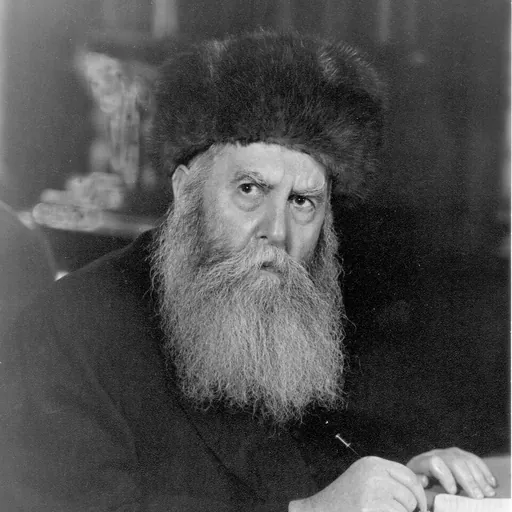
About Yosef Yitzchok Schneersohn
Lived 1880 – 1950 (aged 69). Yosef Yitzchok Schneersohn was a Russian rabbi.
Yosef Yitzchak (Joseph Isaac) Schneersohn (; 21 June 1880 – 28 January 1950) was an Orthodox rabbi and the sixth Rebbe (spiritual leader) of the Chabad Lubavitch Hasidic movement. He is also known as the Frierdiker Rebbe (Yiddish for "Previous Rebbe"), the Rebbe RaYYaTz, or the Rebbe Rayatz (an acronym for Rabbi Yosef Yitzchak). After many years of fighting to keep Orthodox Judaism alive from within the Soviet Union, he was forced to leave; he continued to conduct the struggle from Latvia, and then Poland, and eventually the United States, where he spent the last ten years of his life.
Early life Yosef Yitzchak Schneersohn was born in Lyubavichi, Mogilev Governorate , Russian Empire (present-day Smolensk Oblast, Russia ), the only son of Sholom Dovber Schneersohn (the Rebbe Rashab), the fifth Rebbe of Chabad. He was appointed as his father's personal secretary at the age of 15; in that year, he represented his father in the conference of communal leaders in Kovno. The following year (1896), he participated in the Vilna Conference, where rabbis and community leaders discussed issues such as: genuine Jewish education; permission for Jewish children not to attend public school on Shabbat; and the creation of a united Jewish organization for the purpose of strengthening Judaism. He participated in this conference again in 1908.
On 13 Elul 5657 (1897), at the age of 17, he married his second cousin, Nechama Dina Schneersohn, daughter of Rabbi Avraham Schneerson of Chișinău, son of Rabbi Yisroel Noach of Nizhyn, son of Rabbi Menachem Mendel Schneersohn, the Tzemach Tzedek.
As he matured, he campaigned for the rights of Jews by appearing before the Czarist authorities in Saint Petersburg and Moscow. During the Russo-Japanese War of 1904 he sought relief for Jewish conscripts in the Russian army by sending them kosher food and supplies in the Russian Far East.
Upon the death of his father, Rabbi Sholom Dovber Schneersohn ("Rashab"), in 1920, Schneerson became the sixth Rebbe of Chabad.
Battling the Bolsheviks Following the Communist takeover of Russia, the Yevsektsiya supported anti-religious activity against Orthodox Jewish institutions and practice. As rebbe of a Russia-based Jewish movement, Schneersohn organized activists and religious institutions to preserve Torah study and Jewish observance, including schools, yeshivas, rabbis, ritual slaughterers, teachers and mikvaot. where he lived until 1929 before visiting Mandatory Palestine (now Israel).
Yosef Yitzchak's release from Soviet imprisonment is celebrated each year by the Chabad community.
After his release, Yosef Yitzchak went to Mandatory Palestine where he saw holy gravesites, local yeshivas and Torah centers, and met with rabbis and community leaders from 7–22 August 1929. He visited Hebron ten days before the massacre and, according to Chabad accounts, was the first Jew for many years to be allowed into the Cave of the Patriarchs. Little information is available about the effect his visit had on the attitude of the local Arabs. Schneersohn was greeted by some 600 people, with security provided by over 100 New York City police officers. "May the Almighty bless this great country that has been a refuge for our Jewish people," he said at his arrival. The purpose of his visit was to assess the educational and religious state of American Jewry, and raise awareness of the plight of Soviet Jews. he was honored at a 28 October banquet in Manhattan by Orthodox, Conservative and Reform Jewish leaders.
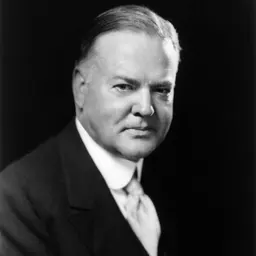
While in the United States, Schneersohn also traveled (among places other than New York) to Philadelphia, Baltimore, Detroit, Boston, and Chicago. On 10 July, he met President Herbert Hoover at the White House. As the Republican presidential candidate, Hoover had lobbied for his release.
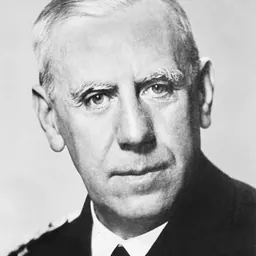
From 1934 until the early part of World War II, he lived in Warsaw, Poland. the government of the United States of America, which was still neutral, used its diplomatic relations to convince Nazi Germany to rescue Schneersohn from the war zone in German-occupied Poland. He remained in the city during the bombardments and its capitulation to Nazi Germany. He gave the full support of his organizations to assist as many Jews as possible to flee the invading armies. With the intercession of the United States Department of State in Washington, DC and with the lobbying of many Jewish leaders, such as Jacob Rutstein, on behalf of the Rebbe (and, reputedly, also with the help of Admiral Wilhelm Canaris, the head of the Abwehr), he was finally granted diplomatic immunity and given safe passage to go via Berlin to Riga, Latvia, where the Rebbe was a citizen and which was still free. From Riga, the Rebbe left for America by way of Sweden with his wife, his mother Shterna Sarah, Shemaryahu Gurary, his wife Chana and son Berka, Chaim Mordechai Aizik Hodakov and his wife, and Nissan Mindel. They traveled in a small plane to Sweden since boats were no longer permitted out of Riga, landing in Stockholm, and then took a boat to Gothenburg. There, they boarded the Drottningholm which sailed to America, arriving in New York City on 19 March 1940, and where they stayed at Manhattan's Greystone Hotel. Major , a decorated German army officer of Jewish descent, was put in command of a group which included Sgt. Klaus Schenk, a half-Jew and Pvt. Johannes Hamburger, a quarter-Jew assigned to locate the Rebbe in Poland and escort him safely to freedom. When Schneersohn came to America (he was the first major Chasidic leader to move permanently to the United States ) two of his chassidim came to him, and said not to start up all the activities in which Lubavitch had engaged in Europe, because "America is different." To avoid disappointment, they advised him not even to try. Schneersohn wrote, "Out of my eyes came boiling tears", and undeterred, the next day he started the first Lubavitcher Yeshiva in America, declaring that "America is no different." In 1949, Schneersohn became a U.S. citizen.
Following Schneerson's escape from Nazi occupied Poland and his settlement in New York City, he issued a call for repentance, stating L'alter l'tshuva, l'alter l'geula ("speedy repentance brings a speedy redemption"). This campaign was opposed by rabbis Avraham Kalmanowitz and Aaron Kotler of the Vaad Hatzalah. In return, Schneersohn was critical of the efforts of rabbis Kalmanowitz and Kotler based on the suspicion that Kalmanowitz and Kotler were discriminating in their use of funds, placing their yeshivas before all else, and that the Mizrachi and Agudas Harabonim withdrew their support of the Vaad after they discovered this fact.
Launch of Lubavitch activities in the United States During the last decade of Rabbi Schneersohn's life, from 1940 to 1950, he settled in the Crown Heights section of Brooklyn in New York City. Rabbi Schneersohn was already physically weak and ill from his suffering at the hands of the Communists and the Nazis and from multiple health issues including multiple sclerosis, but he had a strong vision of rebuilding Orthodox Judaism in America, and he wanted his movement to spearhead it. In New York, he established or expanded Chabad educational, welfare and publishing institutions, including Central Tomchei Temimim, Machne Israel, Kehot Publication Society, Merkos L'Inyonei Chinuch and girls' schools under the names Beis Rivkah and Beis Sarah.
The Ohel Chabad-Lubavitch Center, located adjacent to the Ohel, was established by philanthropist Joseph Gutnick of Melbourne, Australia.
Book collection During his life in Smolensk, Rabbi Schneersohn set up a collection of his family's religious books and writings. It includes texts dating back to the 16th century. After World War I, the Bolsheviks found part of the collection and moved it to the Russian State Library. Another part of the collection was confiscated by Soviet troops in Nazi Germany during World War II and moved to Russia's military archive. In 1994, seven books were loaned to the U.S. Library of Congress for 60 days through an inter-library exchange program.
The books were given to the Chabad-Lubavitch library which helped to prolong the use of the books twice, in 1995 and 1996, before they finally refused to return them to Russia in 2000. They proposed an exchange for the opportunity to keep the books indefinitely, but Russia refused. In 2004, the Chabad-Lubavitch filed a lawsuit against Russia, claiming the remaining books. In 2010, a U.S. federal judge ordered Russia to return the library to Agudas Chasidei Chabad of the United States. Russia continued to hold the collection; in 2013, a U.S. judge imposed a $50,000-per-day fine for failing to return it. In retaliation, in 2011 Russia put a ban on lending works to American museums. Since Rabbi Schneersohn had no heirs, Russia claims the collection is a national treasure of the Russian people. This dispute is related to the deteriorating ties between Moscow and the U.S. over the ongoing 2014 Russian military intervention in Ukraine. A Russian court ruled that the Library of Congress should pay fines of $50,000 a day for refusing to return the books.
Published works
Hebrew and Yiddish Sefer Hamaamarim – 5680–5689, 8 vol. Sefer Hamaamarim – 5692–5693. Sefer Hamaamarim – 5696–5711, 15 vol. Sefer Hamaamarim – Kuntresim, 3 vol. Sefer Hamaamarim – Yiddish Sefer Hasichot – 5680–5691, 2 vol. Sefer Hasichot – 5696–5710, 8 vol. Likkutei Dibburim, 4 vol. Kuntres Torat Hachasidut Kuntres Limud Hachasidut Admur Hatzemach Tzedek U'Tenuat Hahaskalah Kitzurim L'Biurei Hazohar Sefer Hakitzurim – Shaarei Orah Kitzurim L'Kuntres Hatefillah Sefer Hazichronot, 2 vol. Moreh Shiur B'Limudei Yom Yom – Chumash, Tehillim, Tanya Seder Haselichot Maamar V'Ha'ish Moshe Anav, 5698 Igrot Kodesh, 14 vol. Klalei Chinuch veHaDracha
Hebrew translations Likkutei Dibburim, 5 vol. Sefer Hasichot – 5700–5705, 3 vol. Sefer Hazichronot, 2 vol.
English translations Lubavitcher Rabbi's Memoirs, 3 vol. The Tzemach Tzedek and the Haskala Movement On Learning Chasidut On the Teachings of Chasidut Some Aspects of Chabad Chasidism Chasidic Discourses, 2 vol. Likkutei Dibburim, 6 vol. The Principles of Education and Guidance The Heroic Struggle The Four Worlds Creation and Redemption The Majestic Bride Oneness in Creation Touching a City's Soul Defiance and Devotion
CD/video America Is No Different
Literature Rachel Altein: Out of the Inferno. The efforts that led to the rescue of Rabbi Yosef Yitzchak Schneersohn von Lubavitch from war-torn Europe in 1939–1940, New York 2002, 336 p, ISBN 0-8266-0683-0 Bryan Mark Rigg: Rescued from the Reich. How One of Hitler's Soldiers Saved the Lubavitcher Rebbe. Yale University Press 2006.
In film Rabbi Yosef Yitzchak's escape from Poland was the subject of a 2011 Israeli documentary film Ha'rabi Ve'hakatzin Ha'germani (The Chabad Rebbe and the German Officer).
Don’t just read it —
keep it.
Full-length biographies made to live with: read them, listen on the way to work, watch them tonight.
- E-book
- Audio
- Video
Instant download · yours to keep · every purchase keeps this site free
Important facts
People in Yosef Yitzchok Schneersohn's life
Named in this biography and alive at the same time





Related people
Same field, nearest in time



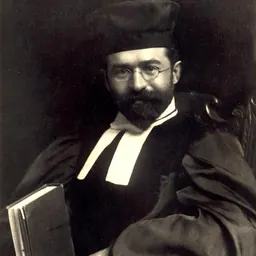
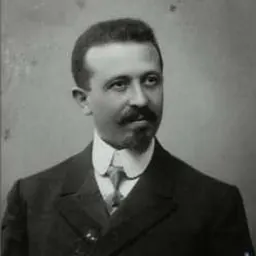
Contemporaries
People whose lives overlapped Yosef Yitzchok Schneersohn's

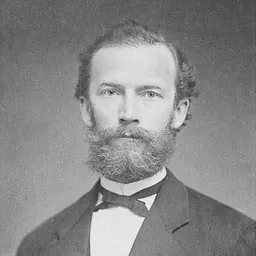
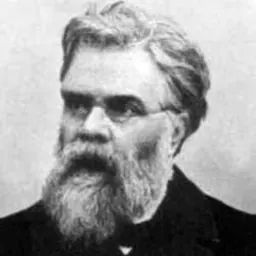
Frequently asked questions
Who was Yosef Yitzchok Schneersohn?
Russian orthodox rabbi (1880–1950)
When was Yosef Yitzchok Schneersohn born?
Yosef Yitzchok Schneersohn was born on 28 June 1880 in Lyubavichi, Rudnyansky District, Smolensk Oblast.
When did Yosef Yitzchok Schneersohn die?
Yosef Yitzchok Schneersohn died on 28 January 1950 in Brooklyn, 770 Eastern Parkway Chabad Lubavitch HQ.
What was Yosef Yitzchok Schneersohn's occupation?
Yosef Yitzchok Schneersohn was a rabbi.
What nationality was Yosef Yitzchok Schneersohn?
Yosef Yitzchok Schneersohn was Russian.
Sources & further reading
· Wikipedia: Yosef Yitzchok Schneersohn
· DBpedia: Yosef Yitzchak Schneersohn
Cite this page
APA: Biography.guide. (2026). Yosef Yitzchok Schneersohn. https://biography.guide/yosef-yitzchok-schneersohn/
MLA: "Yosef Yitzchok Schneersohn." Biography.guide, https://biography.guide/yosef-yitzchok-schneersohn/.
Chicago: "Yosef Yitzchok Schneersohn." Biography.guide. https://biography.guide/yosef-yitzchok-schneersohn/.
Data last updated: 2026-09-22 · Spot an error? Report a correction.
Portrait: Wikimedia Commons · author & licence
Page generated 2026-09-27 05:03 UTC