
About Yogendra Shukla
Lived 1896 – 1960 (aged 63–64). Yogendra Shukla was a politician, revolutionary and freedom fighter.
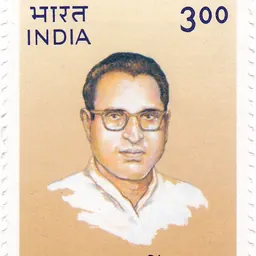
Yogendra Shukla (; 1896 – 19 November 1960) was an Indian nationalist and freedom fighter, notable for his contributions in the state of Bihar. He was incarcerated in the Cellular Jail, also known as Kala Pani, and was a founding member of the Hindustan Socialist Republican Association (HSRA). Shukla, in collaboration with Basawon Singh (Sinha), was also instrumental in establishing the Congress Socialist Party in Bihar. Background Yogendra Shukla, along with his nephew Baikuntha Shukla (15 May 1907 – 14 May 1934), originated from Jalalpur village in the Muzaffarpur district of the Bengal Presidency (present-day Vaishali district in Bihar). He was born in a Bhumihar family. Between 1932 and 1937, Yogendra was incarcerated in the Cellular Jail, known as Kalapani, as a prominent leader of the revolutionary movement in Bihar and Uttar Pradesh. He gained renown for his various exploits and was a close associate of revolutionaries Sardar Bhagat Singh and Batukeshwar Dutt, even playing a role in their training. Over his lifetime, he was imprisoned for over sixteen and a half years due to his involvement in revolutionary activities. His health deteriorated significantly due to the harsh torture he suffered in various jails across India. At the time of his death, he was suffering from illness and had lost his sight.
Kala Pani In October 1932, as per the instructions of the Governor in Council, the Judicial Secretary A.C. Davies requested the Deputy Inspector General (DIG) of the Criminal Investigation Department (CID) to compile a list of revolutionary convicts. The list was to include details such as the offences for which they were convicted, the sentences imposed, and a brief overview of their involvement in the revolutionary movement, with the purpose of moving them to the Celullar Jail in the Andaman Islands. In response, the DIG (CID) suggested several individuals, including Yogendra Shukla, Basawon Singh (Sinha), Shyamdeo Narayan alias Ram Singh, Ishwar Dayal Singh, Kedar Mani Shukla, Mohit Chandra Adhikari and Ram Pratap Singh.
The British Government announced a reward of Rs. 5000 for the arrest of Shukla. He was arrested on 7 December 1942, at Muzaffarpur. The government believed that one day before his arrest Shukla had helped four prisoners escape from Muzaffarpur jail. They were Surajdeo Singh, Ram Babu Kalwar, Brahmanand Gupta and Ganesh Rai.
Yogendra Shukla was lodged in Buxar Jail and kept in bar fetters for three years. In March 1944, he launched hunger-strike in the Buxar Jail.
During and after Independence He was released in April 1946. In 1958, he was nominated a member of the Bihar Legislative Council on behalf of the Praja Socialist Party and continued there till 1960. In 1960, he was taken seriously ill as a result of long years of prison life. He died on 19 November 1960.
Don’t just read it —
keep it.
Full-length biographies made to live with: read them, listen on the way to work, watch them tonight.
- E-book
- Audio
- Video
Instant download · yours to keep · every purchase keeps this site free
Important facts
People in Yogendra Shukla's life
Named in this biography and alive at the same time



Related people
Same field, nearest in time





Contemporaries
People whose lives overlapped Yogendra Shukla's




Frequently asked questions
Who was Yogendra Shukla?
Indian revolutionary
When was Yogendra Shukla born?
Yogendra Shukla was born in 1896 in Bihar.
When did Yogendra Shukla die?
Yogendra Shukla died on 19 November 1960.
What was Yogendra Shukla's occupation?
Yogendra Shukla was a politician, revolutionary and freedom fighter.
Sources & further reading
Cite this page
APA: Biography.guide. (2026). Yogendra Shukla. https://biography.guide/yogendra-shukla/
MLA: "Yogendra Shukla." Biography.guide, https://biography.guide/yogendra-shukla/.
Chicago: "Yogendra Shukla." Biography.guide. https://biography.guide/yogendra-shukla/.
Data last updated: 2026-09-20 · Spot an error? Report a correction.
Page generated 2026-09-27 05:18 UTC