
About Xue Ju
Lived 1922 – 2024 (aged 101–102). Xue Ju was a Chinese politician.
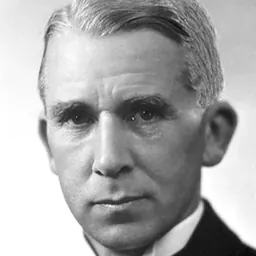
Xue Ju (; March 1922 – January 12, 2024) was a Chinese politician who served as Communist Party Secretary of Zhejiang from 1987 to 1988 and Governor of Zhejiang from 1983 to 1987. He later served as executive vice president of the Central Party School of the Chinese Communist Party and chairman of the Chinese Communist Party Zhejiang Provincial Advisory Commission. He was a member of the 12th Central Committee of the Chinese Communist Party and the 13th Central Committee of the Chinese Communist Party, and served as chairman of the Law Committee of the National People's Congress.
Biography
Xue was born in Yuncheng, Shanxi, in March 1922. He participated in anti-Japanese student activities in Shanghai in 1937 and joined the Chinese Communist Party in December 1938 while studying at Nanfang Middle School. He later attended Datong University, although he did not complete his studies.
From 1938 to 1945, Xue worked in the CCP underground organization in Shanghai and later in the Communist base areas of central Jiangsu during the Second Sino-Japanese War. He served as a political instructor at a military and political cadres' school, secretary of the Ruzhong County Committee of the CCP, and held several organizational and publicity posts in the Subei region. During the Japanese occupation, he was responsible for underground Party work in Nantong and organized anti-Japanese resistance and mass mobilization campaigns.
During the Chinese Civil War, Xue served as secretary of the Youth Work Committee of the Subei Prefectural Committee before being assigned to eastern Zhejiang in 1947. He became secretary of the CCP Yaoyu County Working Committee and later served on the Siming Working Committee, directing organizational and publicity work during the Communist guerrilla campaign in the Siming Mountains. Following the Communist capture of Yuyao in 1949, he served as deputy director of the Yuyao Military Control Commission and deputy president of the Ningbo Military and Political Cadres School.
After the establishment of the People's Republic of China, Xue held a number of senior positions in Zhejiang, including secretary-general and head of the Publicity Department of the Ningbo Prefectural Committee, director of the General Office of the Chinese Communist Party Zhejiang Provincial Committee, deputy secretary-general of the provincial committee, and director of its Policy Research Office. During the Cultural Revolution, he was persecuted, placed under investigation, and sent to perform manual labor at a May Seventh Cadre School before being rehabilitated in the early 1970s.
After returning to public office, Xue became secretary-general of the Zhejiang Provincial Committee and was elected to its Standing Committee. In 1979, he was promoted to deputy secretary of the provincial Party committee while concurrently serving as secretary-general and vice chairman of the Zhejiang Provincial Committee of the Chinese People's Political Consultative Conference. In 1983, he was appointed Governor of Zhejiang, and in 1987 succeeded Wang Fang as Communist Party Secretary of Zhejiang, becoming the province's top Party official.
Following his departure from the provincial leadership in late 1988, Xue served briefly as chairman of the Chinese Communist Party Zhejiang Provincial Advisory Commission. In June 1989, he was transferred to Beijing to become executive vice president of the Central Party School of the Chinese Communist Party, serving until 1993. That year he was elected chairman of the Law Committee of the National People's Congress Standing Committee. He retired in 1998 and subsequently lived in Hangzhou.
Xue was a member of the 12th Central Committee of the Chinese Communist Party and the 13th Central Committee of the Chinese Communist Party. He was also a deputy to the 6th National People's Congress and the 8th National People's Congress.
Xue died in Hangzhou on January 12, 2024, at the age of 101.
Don’t just read it —
keep it.
Full-length biographies made to live with: read them, listen on the way to work, watch them tonight.
- E-book
- Audio
- Video
Instant download · yours to keep · every purchase keeps this site free
Important facts
People in Xue Ju's life
Named in this biography and alive at the same time

Related people
Same field, nearest in time






Contemporaries
People whose lives overlapped Xue Ju's
Frequently asked questions
Who was Xue Ju?
Chinese politician
When was Xue Ju born?
Xue Ju was born in 1922.
When did Xue Ju die?
Xue Ju died on 12 January 2024 in Hangzhou.
What was Xue Ju's occupation?
Xue Ju was a politician.
What nationality was Xue Ju?
Xue Ju was Chinese.
Sources & further reading
· DBpedia: Xue Ju (politician)
Cite this page
APA: Biography.guide. (2026). Xue Ju. https://biography.guide/xue-ju-politician/
MLA: "Xue Ju." Biography.guide, https://biography.guide/xue-ju-politician/.
Chicago: "Xue Ju." Biography.guide. https://biography.guide/xue-ju-politician/.
Data last updated: 2026-09-20 · Spot an error? Report a correction.
Page generated 2026-09-27 05:12 UTC