
About Xiong Qinglai
Lived 1893 – 1969 (aged 75). Xiong Qinglai was a Chinese mathematician, politician and university teacher.
Xiong Qinglai, or Hiong King-Lai (, October 20, 1893 – February 3, 1969), courtesy name Dizhi , was a Chinese mathematician from Yunnan. He was the first person to introduce modern mathematics into China, and served as an influential president of Yunnan University from 1937 through 1947. A Chinese stamp was issued in his honour.
Biography Xiong was born in Xizhai village (nowadays named Qinglai village to honour him) of Mile County, Yunnan province. He was the son of Xiong Guodong (熊国栋), a government official in Zhaozhou.
In 1907, Xiong accompanied his father to Kunming and enrolled in the Yunnan Higher School for preparatory studies. After two years, he began studying English and French. In 1911, he entered the Yunnan Provincial Institute of Higher Learning.
At the age of sixteen, Xiong Qinglai followed his parents' instructions and married Jiang Juyuan (b. 1893). The couple had 5 children.
In 1913, Xiong was successfully selected and funded by Yunnan provincial government to study mining in Belgium. However, following German invasion of Belgium in 1914, Xiong embarked on a journey to Paris, France where he enrolled at Lycée St Louis, focusing on mathematics. After completing his studies at Lycée St Louis in 1915, Xiong began his undergraduate studies at the University of Grenoble later that year. He then moved to Paris, where he continued his studies in mathematics, analytical mechanics, physics, and astronomy at the Faculty of Science in Paris (Faculté des sciences de Paris). He further pursued his education at the University of Montpellier and the University of Marseille. In 1920, Xiong was awarded a Master of Science degree by the University of Montpellier.
In the spring of 1921, Xiong first returned to Kunming, China, where he took up teaching positions at the Kunming Yunnan Industrial School and the Yunnan Road School. Xiong then relocated to Nanjing in September 1921, upon acceptance of Kuo Ping-Wen' s invitation to establish a Department of Mathematics at the National Southeastern University (Later renamed National Central University and Nanjing University). During his tenure as professor of mathematics at the National Southeastern University, Xiong wrote more than ten textbooks on geometry, calculus, differential equations, mechanics, etc. It was the first endeavor in history to introduce modern mathematics in Chinese textbooks.
In the autumn of 1925, Xiong Qinglai briefly taught at Northwestern University for one semester before returning to Southeast University in the following spring. In the autumn of 1926, he received an invitation from Cao Yunxiang and Ye Qisun to join the mathematics department at Tsinghua University as a professor, teaching advanced courses in calculus, differential equations, and analytical functions. Xiong became the head of the Department of Mathematics in 1928 and later the Dean of Science in 1930, replacing Ye Qisun.
During this time, after reading Hua Luogeng's paper in the Shanghai Journal of Science, Xiong invited him to join Tsinghua University as an assistant in the library and meanwhile studying undergraduate courses.
In March 1949, Xiong was instructed by the Department of Education to attend a UNESCO conference in Paris, after which he stayed in France to engage in mathematical research. In 1950, he published Sur une extension du second théorème fondamental de R Nevanlinna and Sur les fonctions méromorphes et leurs dérivées. However, in the same year, he suffered a cerebral haemorrhage that paralyzed the right side of his body.
Between 1953 and 1955, Xiong produced an impressive research output, publishing twelve papers. In 1957, Xiong published a book titled "Sur les fonctions méromorphes et les fonctions algébroïdes, extensions d'un théorème de M R Nevanlinna", upon Henri Villat' s kindly request.
Xiong declined Chen Lifu's offer to go to Taiwan. In 1956, Hua Loo-Keng conveyed an invitation from Premier Zhou Enlai for Xiong to return to the People's Republic of China. He accepted and returned to Beijing in June 1957.
Don’t just read it —
keep it.
Full-length biographies made to live with: read them, listen on the way to work, watch them tonight.
- E-book
- Audio
- Video
Instant download · yours to keep · every purchase keeps this site free
Important facts
People in Xiong Qinglai's life
Named in this biography and alive at the same time
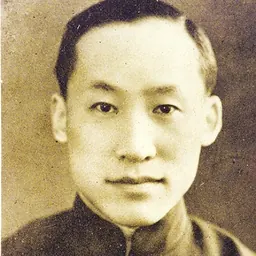




Related people
Same field, nearest in time

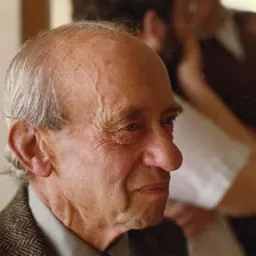
Contemporaries
People whose lives overlapped Xiong Qinglai's
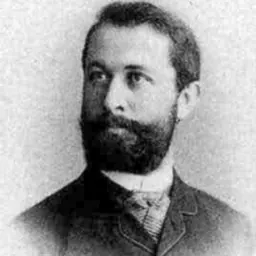

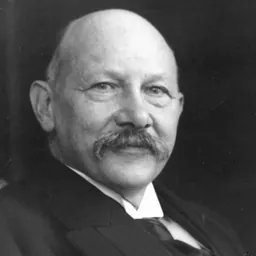
Frequently asked questions
Who was Xiong Qinglai?
Chinese mathematician
When was Xiong Qinglai born?
Xiong Qinglai was born on 20 October 1893 in Mile City.
When did Xiong Qinglai die?
Xiong Qinglai died on 3 February 1969 in Beijing.
What was Xiong Qinglai's occupation?
Xiong Qinglai was a mathematician, politician and university teacher.
What nationality was Xiong Qinglai?
Xiong Qinglai was Chinese.
Sources & further reading
Cite this page
APA: Biography.guide. (2026). Xiong Qinglai. https://biography.guide/xiong-qinglai/
MLA: "Xiong Qinglai." Biography.guide, https://biography.guide/xiong-qinglai/.
Chicago: "Xiong Qinglai." Biography.guide. https://biography.guide/xiong-qinglai/.
Data last updated: 2026-09-20 · Spot an error? Report a correction.
Page generated 2026-09-27 05:33 UTC