
William Roxby Beverly
British painter and scenographer, 1810-1889
About William Roxby Beverly
Lived 1810 – 1889 (aged 78–79). William Roxby Beverly was a British painter, artist, watercolorist, draftsperson and scenographer.
William Roxby Beverly or Beverley (c.1810–1889) was an English theatrical scene painter, known also as an artist in oils and watercolour, and contributor to the large dioramas that were popular attractions in the mid-century. William John Lawrence, writing in the Dictionary of National Biography, considered him second only to Clarkson Stanfield among British scene painters of the 19th century, and describing him as "The last of the old school of one-surface painters, he was proficient in all the mechanical resources of the stage, but was resolutely opposed to the scene ‘builders.’".
As with Stanfield, most of his framed paintings were marine, harbour or beach scenes. He did not consistently sign his paintings (when he did it was usually with initials), which means many paintings are "attributed" to him.
Early life He born around 1810 at Richmond, Surrey into a theatrical family, one of four sons and one daughter of William Roxby (1765–1842), an actor-manager, whose took the stage name of William Roxby Beverl(e)y (the name deriving from the town of Beverley, for which the family had great affection); he was the youngest, Henry Roxby Beverley, Robert Roxby and Samuel Roxby being elder brothers. Under his father's management of the Theatre Royal, Manchester, in 1830, he painted a notable scene of the "Island of Mist" for the dramatic romance The Ice Witch, or the Frozen Hand, an early play of John Baldwin Buckstone. The effect is thought to have been achieved by the use of gauze.
When in 1831 his father and his brothers Samuel and Robert Roxby took over the control of the Durham circuit, Beverley joined them, and for a few seasons played heavy comedy besides painting scenery. In December 1838 he was engaged to paint the major portion of the scenery for the pantomime of Number Nip (E. L. Blanchard) at Edinburgh, where his main contribution was a moving diorama, depicting scenes from William Falconer's poem The Shipwreck. On 16 September 1839 his brother Harry Beverley assumed the control of the Victoria Theatre in London for a short time, and there he painted for the first time in London, executing the scenery for the pantomime of Baron Munchausen. In the autumn of that year he accompanied Albert Richard Smith to Chamonix, and drew sketches from which he executed his dioramic views for "The Ascent of Mont Blanc", presented by Smith at the Egyptian Hall, Piccadilly, on 15 March 1852. While still engaged at the Lyceum Beverly was in 1853 appointed scenic director at the Italian opera, Covent Garden Opera House, in succession to Thomas Grieve. There he was painter for Rigoletto on 16 May, and for many years provided the scenery for the chief operas produced under Frederick Gye. Beverley's association with Drury Lane began under Edward Tyrrel Smith in 1854, and lasted, with few breaks, through the successive managements (Falconer, Chatterton, and Sir Augustus Harris) to 1884. Others to whom he gave practical training were Samuel Bough and George Augustus Sala. Between 1865 and 1880 he exhibited 29 pictures at the Royal Academy, most of them seascapes. His last picture seen there was Fishing Boats going before the Wind: Early Morning, was exhibited in 1880.
William Roxby Beverley is believed, from the fact that he was living in the right area of London at the right time, to be the William Beverley who was the first to discover a magic knight's tour of the chessboard. He sent it to his friend the mathematician Henry Perigal in 1847, who in turn sent it to the editors of the Philosophical Magazine where it was published in August 1848.
Don’t just read it —
keep it.
Full-length biographies made to live with: read them, listen on the way to work, watch them tonight.
- E-book
- Audio
- Video
Instant download · yours to keep · every purchase keeps this site free
Important facts
People in William Roxby Beverly's life
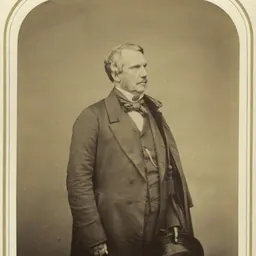
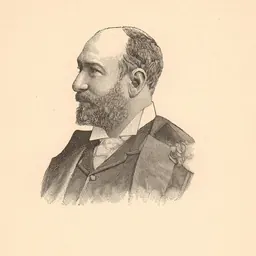
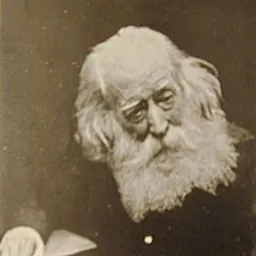
Named in this biography and alive at the same time





Related people
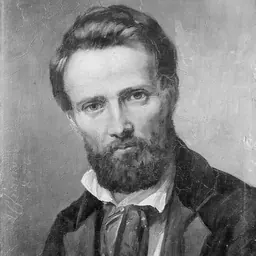
Same field, nearest in time


Contemporaries
People whose lives overlapped William Roxby Beverly's




Frequently asked questions
Who was William Roxby Beverly?
British painter and scenographer, 1810-1889
When was William Roxby Beverly born?
William Roxby Beverly was born in 1810 in Richmond.
When did William Roxby Beverly die?
William Roxby Beverly died in 1889 in Hampstead.
What was William Roxby Beverly's occupation?
William Roxby Beverly was a painter, artist, watercolorist, draftsperson and scenographer.
What nationality was William Roxby Beverly?
William Roxby Beverly was British.
Sources & further reading
· Wikipedia: William Roxby Beverly
· DBpedia: William Roxby Beverly
Cite this page
APA: Biography.guide. (2026). William Roxby Beverly. https://biography.guide/william-roxby-beverly/
MLA: "William Roxby Beverly." Biography.guide, https://biography.guide/william-roxby-beverly/.
Chicago: "William Roxby Beverly." Biography.guide. https://biography.guide/william-roxby-beverly/.
Data last updated: 2026-09-20 · Spot an error? Report a correction.
Page generated 2026-09-27 05:08 UTC