
About William R. Walker
Lived 1830 – 1905 (aged 74). William R. Walker was an American architect.
The Bell Street Chapel in Providence, designed by Walker in the Neoclassical style and completed in 1875. Robinson Hall of Brown University, designed by Walker & Gould in the High Victorian Gothic style and completed in 1878. The former Masonic Temple in Providence, designed by Wm. R. Walker & Son in the Queen Anne style and completed in 1886. The Cranston Street Armory in Providence, designed by Wm. R. Walker & Son in a fortified Gothic Revival style and completed in 1907. William Russell Walker (April 14, 1830 – March 11, 1905) was an American architect in practice in Providence, Rhode Island, from 1864 until his retirement in 1903. From 1881 he was the senior partner of William R. Walker & Son, and during his lifetime was the most prolific architect of public buildings in Rhode Island.
Early life Major-General William Russell Walker was born April 14, 1830, in a part of Seekonk, Massachusetts, that is now East Providence, Rhode Island, to Alfred Walker and Huldah Burdeen Walker, née Perry. Walker was a descendant of the "Widow Walker," one of the original purchasers and proprietors of Rehoboth in 1643. He was educated in the Seekonk public schools and graduated from the Seekonk Classical Seminary, a private school, in 1846. For the next three years he was apprenticed to a Providence carpenter and studied architectural drawing at Scholfield's Commercial College. During the winter of 1850–51 he lived in Augusta, Georgia, but the next summer he returned to Rhode Island and settled in Pawtucket, where he would live for the rest of his life.
In 1857 Walker joined both the Freemasons and the Pawtucket Light Guard of the Rhode Island state militia, two organizations would have a dominant role in his later architectural career. In April 1861, shortly after the outbreak of the American Civil War, the Pawtucket Light Guard was designated Company E of the 1st Rhode Island Infantry, which was raised by Ambrose Burnside. Walker was commissioned a first lieutenant of the company, which mustered out three months later in August. in 1872 by Frank W. Angell and in 1874 by his son, W. Howard Walker. He was a sole practitioner until January 1876, when he and Gould formed the partnership of Walker & Gould. This continued for five years until January 1881, when Gould and Angell withdrew to form their own firm and Walker and his son formed the new partnership of William R. Walker & Son.
Walker was closely associated with the Rhode Island state militia, Republican Party and masonic establishment. Through these connections, he designed most of the public buildings built in Rhode Island during his career, including town and city halls, state armories and public schools. His career culminated in the Cranston Street Armory (1907), begun in 1902 but not completed until two years after his death. Walker had retired from the firm in 1903 due to his declining health. This firm survived nearly forty years after his death: it was led successively by his son W. Howard Walker and grandson William R. Walker until their deaths in 1922 and 1936, respectively, and by his grandson's associates, George H. Rice and Roy F. Arnold, until its dissolution sometime during World War II.
Personal life Walker was a member of the Republican party. He was member of the North Providence town council as well as of that of Pawtucket when it separated from North Providence in 1874. He served two terms in the Rhode Island General Assembly and was a delegate to the 1888 Republican National Convention in Chicago, which nominated Benjamin Harrison for president. In the 1890s he served on the board of park commissioners of Pawtucket. It was substantially through his many political connections that Walker obtained so many public commissions throughout the state. He filled at one time or another nearly all of the offices in the Rhode Island Freemasons. He was the architect of the Masonic Temples in Providence (1886) and Pawtucket (1898), neither of which are extant.
Walker was married in 1852 to Eliza Billings Hall of Providence. They had two children, George Clinton Walker and William Howard Walker. The first Mrs. Walker died in 1895 and Walker married second in 1897 to Mrs. Hannah Maria Gerald. Walker died March 11, 1905, at home in Pawtucket at the age of 74.
Selected works William R. Walker, 1864-1875 1864 - Pawtucket Hair Cloth Mill, 501 Roosevelt Ave, Central Falls, Rhode Island 1865 - John A. Mitchell House, 190 Hope St, Providence, Rhode Island 1866 - Ogden Mills House (Ocean View), 662 Bellevue Ave, Newport, Rhode Island 1868 - Frederic C. Sayles House (Bryn Mawr), East Ave, Pawtucket, Rhode Island Demolished 1868 - Benjamin B. Knight House, 155 Broad St, Providence, Rhode Island Demolished 1870 - Amasa Sprague Jr. House, Valentine Circle, Warwick, Rhode Island Burned in 1930 1870 - Isaac Davis House, 59 Elm St, Worcester, Massachusetts 1871 - Benedict House, 301 Main St, Pawtucket, Rhode Island Demolished in 1979 1871 - Pawtucket City Hall (Old), 35 High St, Pawtucket, Rhode Island Demolished in 1968 1871 - Wamsutta House, Elm & N Washington, North Attleborough, Massachusetts Demolished 1872 - Equitable Building, 1 Custom House St, Providence, Rhode Island 1872 - Alfred A. Reed, Jr. House (Cedar Hill), 4157 Post Rd, Warwick, Rhode Island 1872 - John C. Whitin House, 60 Main St, Whitinsville, Massachusetts Burned in 1909 1873 - Oakland Beach Hotel, Oakland Beach Ave, Oakland Beach, Rhode Island Burned in 1903 1873 - Boston Store, 239 Westminster St, Providence, Rhode Island Demolished 1876 - John E. Troup House, 478 Broadway, Providence, Rhode Island 1876 - Rhode Island Building, Centennial Exposition, Philadelphia, Pennsylvania 1876 - Woonsocket High School (Old), 60 High School St, Woonsocket, Rhode Island Demolished in 2001 1877 - Aldrich Building, Delta St, Providence, Rhode Island. Demolished Demolished 1877 - Daniels Building, 26 Custom House St, Providence, Rhode Island Demolished 1877 - Charles R. Chapman House, 61 Woodland St, Hartford, Connecticut Demolished 1877 - Horatio N. Campbell House, 141 Waterman St, Providence, Rhode Island Demolished 1877 - Union Congregational Church, Broad St, Providence, Rhode Island Demolished 1878 - Henry B. Metcalf House, 145 Broadway, Pawtucket, Rhode Island Demolished 1878 - Sanford C. Hovey House, 173 Congdon St, Providence, Rhode Island 1878 - Narragansett Hotel, 93 Dorrance St, Providence, Rhode Island 1879 - First Baptist Church, 1400 Pawtucket Ave, East Providence, Rhode Island 1880 - Charles P. Young House, 107 N Washington St, North Attleborough, Massachusetts 1880 - Everett P. Carpenter House, 72 Summit St, Pawtucket, Rhode Island 1880 - Nicholson File Office Building, 23 Acorn St, Providence, Rhode Island 1880 - Turner Avenue School, Turner & Smith, Riverside, Rhode Island Demolished
Gallery
Don’t just read it —
keep it.
Full-length biographies made to live with: read them, listen on the way to work, watch them tonight.
- E-book
- Audio
- Video
Instant download · yours to keep · every purchase keeps this site free
Important facts
People in William R. Walker's life
Named in this biography and alive at the same time

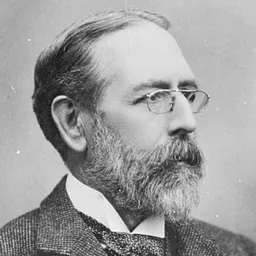

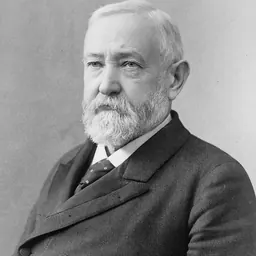



Related people
Same field, nearest in time
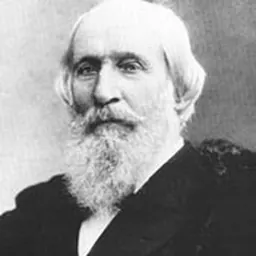

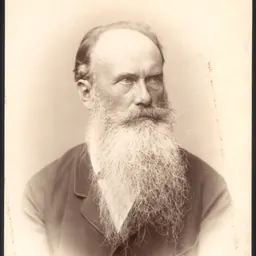


Contemporaries
People whose lives overlapped William R. Walker's



Frequently asked questions
Who was William R. Walker?
American architect (1830-1905)
When was William R. Walker born?
William R. Walker was born on 14 April 1830 in Seekonk.
When did William R. Walker die?
William R. Walker died on 11 March 1905.
What was William R. Walker's occupation?
William R. Walker was an architect.
What nationality was William R. Walker?
William R. Walker was American.
Sources & further reading
· Wikipedia: William R. Walker
· DBpedia: William R. Walker (architect)
Cite this page
APA: Biography.guide. (2026). William R. Walker. https://biography.guide/william-r-walker/
MLA: "William R. Walker." Biography.guide, https://biography.guide/william-r-walker/.
Chicago: "William R. Walker." Biography.guide. https://biography.guide/william-r-walker/.
Data last updated: 2026-09-20 · Spot an error? Report a correction.
Page generated 2026-09-27 05:34 UTC