
About Charles Barry, Jr.
Lived 1823 – 1900. Charles Barry, Jr. was a British and English architect, known for Dulwich and London.
Charles Barry Jr. (21 September 1823 – 2 June 1900) was an English architect known for designing public and private buildings in London and East Anglia. He was the eldest son of Sir Charles Barry, the architect of the Houses of Parliament, and the older brother of fellow architect Edward Middleton Barry. Barry Jr. is best remembered for his work in the south London suburb of Dulwich, and for his collaborations with Robert Richardson Banks (1812–1872) and his brother Edward on several significant projects.
Projects
Charles Sr. had been architect and surveyor to the College of God’s Gift, designing the Old Grammar School (an 1842 establishment for the education of poor boys from Dulwich and Camberwell), among other buildings. Charles Jr. then succeeded his father in the role. He designed the New College (1866–70) – a building of red brick and white stone, designed in a hybrid of Palladian and Gothic styles.
His other projects include:
The Cliff Town Estate, Southend, Essex (with Banks) Bylaugh Hall, Norfolk (1849–1852, with Banks) Lady Wimborne Estate Cottages, Canford Magna, Ashington, and Poole, Dorset, (1849, with Banks) The Pump House in the Italian Gardens, Hyde Park/Kensington Gardens, (1860, with Banks) St Saviour's Church, Harome (1861–1862) The Crystal Palace (High Level) railway station (1863–1865, demolished 1961) and the surviving Crystal Palace Subway
Stevenstone House, Devon (1868–72) Mausoleum of Wynn Ellis, Whitstable (1872) All Saints Church, Whitstable, rebuilding (1875–76) Clumber Park, Nottinghamshire, (1879) Chancel and pulpit of St Peter's Church, Kensington Park Road, London (1879) New chambers at Inner Temple, London (1879; with Edward) Great Eastern Hotel, Liverpool Street station, London (1884; the design was a collaboration with his brother Edward who died in 1880 before it was finished) Cypher drawing by Charles Barry Jr. for the Lady Wimborne Cottages
Charles Jr. was elected a Fellow of the Society of Antiquaries of London in 1876, and was a member of the Society's Council in 1878. He was President of the Royal Institute of British Architects from 1876–79. He was also awarded the prestigious RIBA Royal Gold Medal in 1877. His pupils included Sir Aston Webb (himself a later President of the RIBA and winner of the Royal Gold Medal).
Family He lived in a large villa "Lapsewood" in Sydenham Hill. His son was Lt Col Arthur John Barry CBE, TD, MICE (b. 21 November 1859), civil engineer and architect. A. J. Barry collaborated on major international engineering projects with his uncle, Charles Jr.'s brother John Wolfe-Barry, and Bradford Leslie and was the author of "Railway Expansion in China and the Influence of Foreign Powers in its Development" [London, 1910].
Don’t just read it —
keep it.
Full-length biographies made to live with: read them, listen on the way to work, watch them tonight.
- E-book
- Audio
- Video
Instant download · yours to keep · every purchase keeps this site free
Important facts
more
Charles Barry Junior, Charles BarryFamily & relationships
People in Charles Barry, Jr.'s life
Named in this biography and alive at the same time


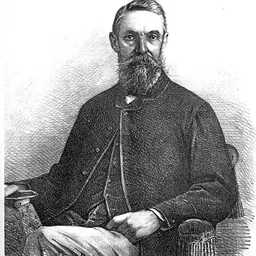


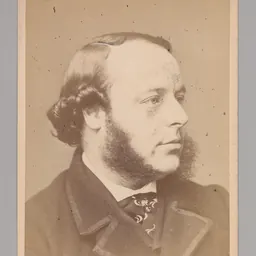

Related people
Same field, nearest in time
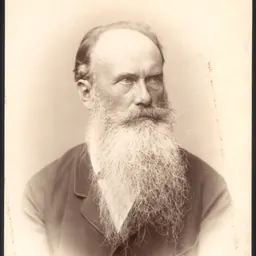

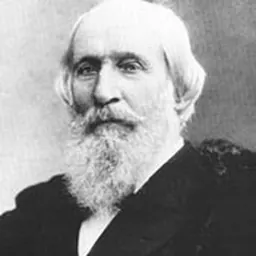
Contemporaries
People whose lives overlapped Charles Barry, Jr.'s



Frequently asked questions
Who was Charles Barry, Jr.?
British architect
When was Charles Barry, Jr. born?
Charles Barry, Jr. was born in 1823.
When did Charles Barry, Jr. die?
Charles Barry, Jr. died in 1900.
What was Charles Barry, Jr.'s occupation?
Charles Barry, Jr. was an architect.
What was Charles Barry, Jr. known for?
Charles Barry, Jr. was known for Dulwich and London.
What nationality was Charles Barry, Jr.?
Charles Barry, Jr. was British and English.
Sources & further reading
· Wikipedia: Charles Barry, Jr.
Cite this page
APA: Biography.guide. (2026). Charles Barry, Jr.. https://biography.guide/charles-barry-jr/
MLA: "Charles Barry, Jr.." Biography.guide, https://biography.guide/charles-barry-jr/.
Chicago: "Charles Barry, Jr.." Biography.guide. https://biography.guide/charles-barry-jr/.
Data last updated: 2026-09-22 · Spot an error? Report a correction.
Page generated 2026-09-27 05:27 UTC