
About Anthony Salvin
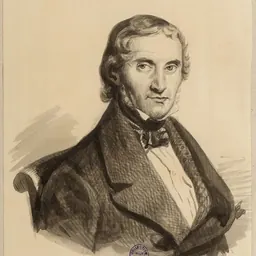
Lived 1799 – 1881 (aged 82). Anthony Salvin was a British architect, known for English country house and Tudor style architecture.
Anthony Salvin (17 October 1799 – 17 December 1881) was an English architect. He gained a reputation as an expert on medieval buildings and applied this expertise to his new buildings and his restorations, such as those of the Tower of London and Windsor Castle. He restored castles and country houses, and built a number of new houses and churches.
Early life and training Anthony Salvin was born in Sunderland Bridge, County Durham, as the only child of Anthony Salvin, a soldier, and his second wife Elizabeth (Eliza) Mills. of Edinburgh while he was working on the restoration of Brancepeth Castle in County Durham.
In 1821 Salvin moved to Finchley in north London. He had an introduction to Sir John Soane but did not enter his office. According to his nephew, he entered the office of John Nash. In 1824 he was elected as a fellow of the Society of Antiquaries. Soon after this he went on a sketching tour of Great Britain. On 26 July 1826 he married his cousin, Anne Andrews Nesfield. With her he had six children, two of whom died in infancy.
In 1851 he surveyed the Beauchamp Tower of the Tower of London and subsequently restored the Salt, Wakefield and White Towers and the Chapel of St Peter ad Vincula. Following this he was instructed by Prince Albert to carry out work on Windsor Castle. This included replacing sash windows with lancets and mullioned windows and rebuilding the Clewer Tower. Salvin designed Peckforton Castle in Cheshire for John Tollemache, 1st Baron Tollemache as a recreation of a castle of the time of Edward I. In 1852 he started work on the restoration of Alnwick Castle in Northumberland. This included replacing one of the towers with a larger tower, the Prudhoe Tower, creating a porte-cochère, replacing windows and replanning the interior. and following this he was made an honorary member of the Cambridge Camden Society. He arranged for the removal of buildings around the south transept of Norwich Cathedral and reordered its choir. He also made alterations to Durham and Wells Cathedrals. In all he designed at least 34 new churches. Salvin's restorations were not to the liking of the Society for the Protection of Ancient Buildings, particularly his removal of "unwanted fabric" from churches. Other work carried out by Salvin included rebuilding the keep of Durham Castle for student accommodation, and work on restoring Trinity College, Cambridge.
Later life
In 1857, while working on Warwick Castle, Salvin suffered a stroke but recovered from it. In 1860, his wife died and he designed a new house for himself, Hawksfold at Fernhurst, Sussex. In 1863 he was awarded the royal gold medal of the Royal Institute of British Architects and in 1879 he retired from formal practice. He died at Hawksfold in 1881 and was buried at Fernhurst. His estate was valued at over £78,000 (£ in 2022).
Don’t just read it —
keep it.
Full-length biographies made to live with: read them, listen on the way to work, watch them tonight.
- E-book
- Audio
- Video
Instant download · yours to keep · every purchase keeps this site free
Important facts
Family & relationships
People in Anthony Salvin's life
Named in this biography and alive at the same time


Related people
Same field, nearest in time


Contemporaries
People whose lives overlapped Anthony Salvin's





Frequently asked questions
Who was Anthony Salvin?
English architect (1799-1881)
When was Anthony Salvin born?
Anthony Salvin was born on 17 October 1799 in Sunderland Bridge.
When did Anthony Salvin die?
Anthony Salvin died on 17 December 1881 in Fernhurst.
What was Anthony Salvin's occupation?
Anthony Salvin was an architect.
What was Anthony Salvin known for?
Anthony Salvin was known for English country house and Tudor style architecture.
What nationality was Anthony Salvin?
Anthony Salvin was British.
Sources & further reading
Cite this page
APA: Biography.guide. (2026). Anthony Salvin. https://biography.guide/anthony-salvin/
MLA: "Anthony Salvin." Biography.guide, https://biography.guide/anthony-salvin/.
Chicago: "Anthony Salvin." Biography.guide. https://biography.guide/anthony-salvin/.
Data last updated: 2026-09-22 · Spot an error? Report a correction.
Page generated 2026-09-27 05:24 UTC