
About William Keith
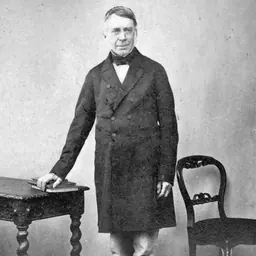
Lived 1838 – 1911 (aged 72). William Keith was an American and British painter, printmaker and visual artist.
William Keith (November 21, 1838 – April 13, 1911) was a Scottish-American painter famous for his California landscapes. He is associated with Tonalism and the American Barbizon school. Although most of his career was spent in California, he started out in New York, made two extended study trips to Europe, and had a studio in Boston in 1871–72 and one in New York in 1880.
Early life Keith was born in Oldmeldrum, Aberdeenshire, Scotland, where he was raised at first by his grandparents, his father having died months before he was born. William claimed to have been a direct descendant of the noble Clan Keith. He emigrated with his mother and sisters to the United States in 1850. They settled in New York City, where he attended school for several years and became an apprentice wood engraver in 1856. He was hired to do illustrations for Harper's Magazine. In 1858 he visited Scotland and England and briefly worked for the London Daily News. He was then offered an opportunity in San Francisco and sailed there in May 1859.
California and Europe Upon Keith's arrival in San Francisco the job he had hoped for did not materialize, so he set up his own engraving business. He formed a partnership with Harrison Eastman in 1862 and with Durbin Van Vleck in 1864. He first studied painting with Samuel Marsden Brookes in 1863, and may have taken watercolor instruction from Elizabeth Emerson, whom he married in 1864. He first exhibited his watercolors in 1866, and they were praised by critics. His subject matter already included views of Yosemite and other High Sierra locations. By 1868 he had begun painting in oils. That year Keith was able to end his engraving career and pursue painting full-time when he received a commission from the Oregon Navigation and Railroad Company to paint scenes of the Pacific Northwest.
"Epic" paintings of the High Sierra, 1870s During the 1870s Keith painted a number of six- by ten-foot panoramas, including Kings River Canyon (Oakland Museum, originally owned by Governor Leland Stanford) and "California Alps" (Mission Inn, Riverside). These competed with paintings of similar size and subject matter by Albert Bierstadt and Thomas Hill.
The 1880s Keith's wife Elizabeth died in 1882. He turned for comfort to a friend, the Swedenborgian minister Joseph Worcester, who ultimately had a strong influence on Keith's approach to landscape painting.
In 1883 Keith married Mary McHenry, who was the first female graduate of Hastings Law School and a leading suffragist. For their honeymoon, they went on a painting tour of the old California missions. A few months later they traveled to the East Coast and then to Munich, where Keith was determined to learn figure and portrait painting. He primarily worked on his own, occasionally receiving criticism from artists including Carl von Marr and J. Frank Currier. They returned to San Francisco in mid 1885.
Through Joseph Worcester, Keith met the architect Daniel Burnham in Chicago while en route to Europe. Burnham became an important patron and agent, showing and selling Keith paintings to collectors in the Chicago area.
In 1886 the Keiths moved into a custom-built house in Berkeley, from where he would commute to his studio in San Francisco each day. That year Keith also cruised Alaska's Inland Passage and sketched some of its glaciers.
Keith painted some portraits on commission and also supplemented his income by giving painting lessons, mostly to women. Among his pupils was the miniaturist Rosa Hooper and Leola Hall who painted Keith's portrait.
In 1888 Keith traveled north with Muir, visiting Mount Shasta and Mount Rainier to create illustrations for Muir's Picturesque California. Muir encouraged Keith to depict mountain scenery realistically, but as Keith's artistic sense had matured, he felt free to depart from geologic reality, placing an imagined glacier or a river in a scene to enhance the beauty of the painting. The two friends argued frequently about such artistic issues. It was said that Muir said, "You never saw a sunrise like that, Keith. Why in the deuce don't you imitate nature?' William would goad Muir by responding, 'Look here now, John, if you'll go out early tomorrow morning and look toward the East you'll see nature imitating my sunrise.".
Later years
From the late 1880s on, Keith painted primarily in a subjective vein in which his emotional and spiritual reactions to the landscape were more important than topographical facts. He painted many woodland views that resembled those of Théodore Rousseau and other Barbizon painters, as well as the American painter George Inness. Inness came to visit the San Francisco Bay Area in 1891. He and Keith painted together, and Keith felt he was learning a lot and regaining an enthusiasm for painting that he had begun to lose. Inness's fame and enthusiasm for Keith's work gave a substantial boost to sales of Keith's paintings.
In the 1890s and early 1900s Keith painted landscapes of Carmel Bay and Cypress Point from his trips to the Monterey Peninsula. He painted the California missions, including Mission San Carlos Borromeo de Carmelo. He was one of the earliest artists to buy land in Carmel-by-the-Sea, California.
Great San Francisco Earthquake of 1906 Keith's San Francisco studio was destroyed in the fires that followed the 1906 San Francisco earthquake. This resulted in the loss of many paintings. Some accounts place the number at several thousand. The psychologist William James, then a professor at Stanford University, reported that in the immediate aftermath of the quake a pair of Keith vigilantes had circulated in San Francisco, breaking into homes to save the Keith paintings within. According to James,hese two citizens, lovers of his work, early in the day diverted their attention from all other interests, their own private ones included, and made it their duty to visit every place which they knew to contain a Keith painting. They cut them from their frames, rolled them up, and in this way got all the more important ones into a place of safety. These benefactors presented the recovered paintings to Keith, who was then working from his primary studio at his Berkeley home. Keith was reportedly so touched at the gesture and "having given up his previous work for lost, [Keith] resolved to lose no time in making what amends he could for the disaster." He consistently contributed paintings to the colony's exhibitions between 1906 and 1911. In the summer of 1906 he briefly appeared in public to support Harry W. Seawell, a drawing instructor at the University of California, in what became an embarrassing scandal. When the university forbade Seawell from using nude models in his life classes, Keith published a blunt declaration of support in the local press, proclaiming that the nude model is "essential to real art." Keith expressed great annoyance with the many high-quality forgeries of his work on the San Francisco market. He is buried in plot 14b at Mountain View Cemetery in Oakland. Keith Avenue in Berkeley was named after William Keith.
Mount Keith was named after William Keith by Helen Gompertz (later Helen LeConte) in July 1896.
San Francisco Mayor Edward Robeson Taylor published an 1898 book of sonnets based on Keith's paintings.
Gallery
Don’t just read it —
keep it.
Full-length biographies made to live with: read them, listen on the way to work, watch them tonight.
- E-book
- Audio
- Video
Instant download · yours to keep · every purchase keeps this site free
Important facts
People in William Keith's life
Named in this biography and alive at the same time



Related people
Same field, nearest in time

Contemporaries
People whose lives overlapped William Keith's

Frequently asked questions
Who was William Keith?
Scottish-American painter (1838-1911)
When was William Keith born?
William Keith was born on 18 November 1838 in Oldmeldrum.
When did William Keith die?
William Keith died on 13 April 1911 in Berkeley.
What was William Keith's occupation?
William Keith was a painter, printmaker and visual artist.
What nationality was William Keith?
William Keith was American and British.
Sources & further reading
· DBpedia: William Keith (artist)
Cite this page
APA: Biography.guide. (2026). William Keith. https://biography.guide/william-keith-painter/
MLA: "William Keith." Biography.guide, https://biography.guide/william-keith-painter/.
Chicago: "William Keith." Biography.guide. https://biography.guide/william-keith-painter/.
Data last updated: 2026-09-22 · Spot an error? Report a correction.
Page generated 2026-09-27 05:26 UTC