
About Albert Bierstadt
Lived 1830 – 1902 (aged 72). Albert Bierstadt was a German and American painter, photographer, architectural drafter and scenographer.
Albert Bierstadt (January 7, 1830 – February 18, 1902) was a German-American artist best known for his monumental landscapes that glorified the American West.
Bierstadt was born in Solingen, Germany and emigrated with his family to New Bedford, Massachusetts at age two. In 1853, Bierstadt traveled to Germany to study painting for several years in Düsseldorf. On his return, Bierstadt became part of the second generation of landscape artists associated with the Hudson River School in New York. Bierstadt's travels to Colorado and Wyoming territories in 1859 shifted his artistic focus to the American West. He joined geographical and geological surveys to document scenery. The grand, theatrical vistas he painted of the Rocky Mountains, Sierra Nevada, and Yosemite Valley brought acclaim and made Bierstadt a financial success, yet also drew criticism when tastes and perspectives shifted.
Early life and education Bierstadt was born in Solingen, Rhine Province, Prussia, on January 7, 1830. He was the son of Christina M. (Tillmans) and Henry Bierstadt, a cooper. His older brothers were prominent stereo view photographers Edward Bierstadt and Charles Bierstadt. Albert was just a year old when his family emigrated to New Bedford, Massachusetts, in 1831. He made clever crayon sketches in his youth and developed a taste for art.
In 1851, Bierstadt began to paint in oils.
Career Among the Sierra Nevada, California, 1868, Smithsonian American Art Museum, Washington, D.C. Rocky Mountain Landscape, 1870, White House, Washington, D.C.
In 1858, Bierstadt exhibited a large painting of a Swiss landscape at the National Academy of Design, which gained him positive critical reception and honorary membership of the Academy. He returned to a studio he had taken at the Tenth Street Studio Building in New York with sketches for numerous paintings he then finished. In 1860, he was elected a member of the National Academy of Design; he received medals in Austria, Bavaria, Belgium, and Germany.
In 1863, Bierstadt traveled west again, this time with the author Fitz Hugh Ludlow, whose wife he later married. The pair spent seven weeks in the Yosemite Valley. Throughout the 1860s, Bierstadt used studies from this trip as the source for large-scale exhibition paintings and he continued to visit the American West throughout his career. The immense canvases he produced after his trips with Lander and Ludlow established him as the preeminent painter of the western American landscape. That painting was based on a stereoscopic photograph taken by his brother Edward Bierstadt, who operated a photography studio at Langley's Tavern in Virginia. The painting received a positive review when it was exhibited at the Brooklyn Art Association at the Brooklyn Academy of Music in December 1861. Curator Eleanor Jones Harvey observed that the painting, created from photographs, "is quintessentially that of a voyeur, privy to the stories and unblemished by the violence and brutality of first-hand combat experience." the equivalent of almost $400,000 in 2020.
In 1867, Bierstadt returned to Europe, arriving in London where he exhibited two landscape paintings in a private reception with Queen Victoria. He then travelled through Europe for the next two years, painting new works while also cultivating social and business contacts to sustain the market for his art on the continent. His exhibition pieces both impressed European audiences and furthered the idea of the American West as a land of promise during a period when European emigration to the U.S. was increasing. Bierstadt's choice of grandiose subjects was matched by his entrepreneurial flair. His exhibitions of individual works were accompanied by promotion, ticket sales, and, in the words of one critic, a "vast machinery of advertisement and puffery."
Despite his popular success, Bierstadt was criticized by some contemporaries for the romanticism evident in his choice of subjects and for his use of light, which they found excessive. Some critics objected to Bierstadt's paintings of Native Americans, believing that including Indigenous Americans "marred" the "impression of solitary grandeur." Yet by the time of his death on February 18, 1902, the taste for epic landscape painting had long since subsided. Bierstadt was buried at the Rural Cemetery in New Bedford, Massachusetts,
On the other hand, his work has also been criticized as largely an imaginary depiction of nature, and even "soulless" in its execution.
Existing work
1853 – Majesty of the Mountains 1855 – The Old Mill 1855 – The Portico of Octavia 1855 – Westphalia 1858 – Lake Lucerne, c. 1853, oil on canvas, National Gallery of Art, Washington, D.C. 1859 – The Wolf River, Kansas, c. 1859, oil on canvas, Detroit Institute of Arts, Detroit, Michigan 1861 – Echo Lake, Franconia Mountains, NH, Smith College Museum of Art, Smith College, Northampton, Massachusetts 1863 – The Rocky Mountains, Lander's Peak, oil on canvas, Metropolitan Museum of Art, New York City, New York 1864 – Cho-looke, the Yosemite Fall, oil on canvas, Timken Museum of Art, San Diego, California 1864 – Valley of the Yosemite, oil on paper, Museum of Fine Arts, Boston, Massachusetts 1865 – Looking Down Yosemite Valley, Birmingham Museum of Art, Alabama 1866 – Yosemite Valley, Oil on canvas on panel-back stretcher, Cleveland Museum of Art, Cleveland, Ohio 1866 – On the Hudson River Near Irvington, 1866–70, oil on paper, Berkshire Museum, Pittsfield, Massachusetts 1866 – A Storm in the Rocky Mountains, Mt. Rosalie, oil on canvas, Brooklyn Museum, New York City, New York 1868 – Connecticut River Valley, Claremont, New Hampshire, 1868, oil on canvas, Berkshire Museum, Pittsfield, Massachusetts 1868 – In the Sierras, Fogg Museum, Harvard University, Cambridge, Massachusetts 1868 – Among the Sierra Nevada, California, Smithsonian American Art Museum, Washington, D.C. 1869 – Glen Ellis Falls, oil on canvas, Zimmerli Art Museum, New Brunswick, New Jersey 1870 – Sierra Nevada Morning, oil on canvas, Gilcrease Museum, Tulsa, Oklahoma 1870 – Puget Sound on the Pacific Coast, oil on canvas, Seattle Art Museum, Seattle, Washington 1870 – Laramie Peak, oil on canvas, Buffalo AKG Art Museum, Buffalo, New York 1871 – Domes of Yosemite, c. 1871, St. Johnsbury Athenaeum, St. Johnsbury, Vermont 1874 – Giant Redwood Trees of California, c. 1874, oil on canvas, Berkshire Museum, Pittsfield, Massachusetts 1875 – Mount Adams, Washington, 1875, oil on canvas, Princeton University Art Museum, Princeton, New Jersey 1876 – Mount Corcoran, c. 1876–77, oil on canvas, Corcoran Gallery of Art, Washington, D.C. 1888 – The Last of the Buffalo, oil on canvas, Corcoran Gallery of Art, Washington, D.C. 1889 – Alaskan Coast Range, c. 1889, Smithsonian American Art Museum, Washington, D.C. 1891 – The Last of the Buffalo, c. 1891, vintage photogravure, Valley Fine Art Gallery, Aspen, Colorado 1895 – The Morteratsch Glacier Upper Engadine Valley – Pontresina
Selected paintings
Legacy and honors
Because of Bierstadt's interest in mountain landscapes, Mount Bierstadt and Bierstadt Lake in Colorado are named in his honor. Bierstadt was probably the first European to visit the summit of Mount Blue Sky in 1863, 1.5 miles from Mount Bierstadt. Bierstadt named it Mount Rosa, a reference to both Monte Rosa above Zermatt and, Rosalie Ludlow, his future wife, but the name was changed from Rosalie to Evans in 1895 in honor of Colorado governor John Evans, and again in 2023 to Blue Sky. In 1998, the United States Postal Service issued a set of 20 commemorative stamps entitled "Four Centuries of American Art", one of which featured Albert Bierstadt's The Last of the Buffalo. In 2008, the USPS issued a commemorative stamp in its "American Treasures" series featuring Bierstadt's 1864 painting Valley of the Yosemite. William Bliss Baker, another landscape artist, studied under Bierstadt. The 2018 novel, The Overstory, by Richard Powers features Bierstadt’s painting “Cathedral Forest” as the cover art, further designed by Evan Gaffney. The book won the 2018 AIGA 50 Covers award. The author also won the 2019 Pulitzer Prize for Fiction for the book.
Don’t just read it —
keep it.
Full-length biographies made to live with: read them, listen on the way to work, watch them tonight.
- E-book
- Audio
- Video
Instant download · yours to keep · every purchase keeps this site free
Important facts
People in Albert Bierstadt's life
Named in this biography and alive at the same time



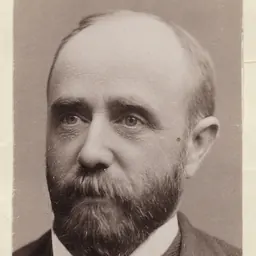

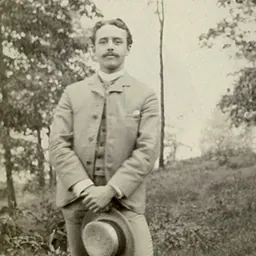


Related people
Same field, nearest in time
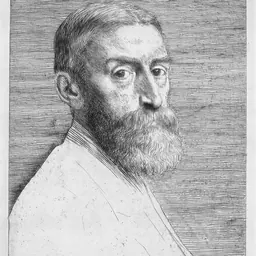
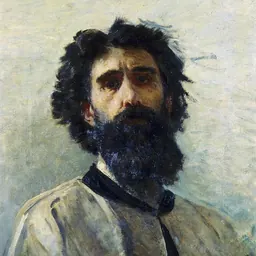
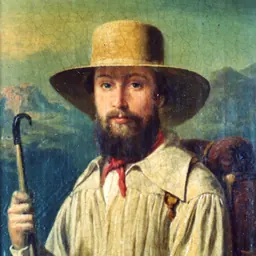
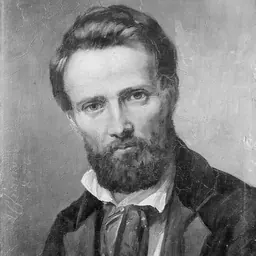

Contemporaries
People whose lives overlapped Albert Bierstadt's



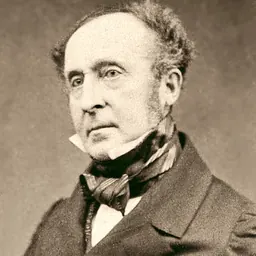
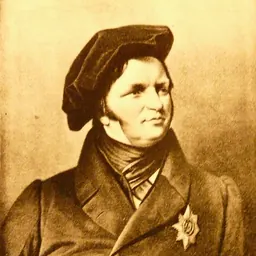
Frequently asked questions
Who was Albert Bierstadt?
American painter (1830–1902)
When was Albert Bierstadt born?
Albert Bierstadt was born on 7 January 1830 in Solingen.
When did Albert Bierstadt die?
Albert Bierstadt died on 18 February 1902 in New York City.
What was Albert Bierstadt's occupation?
Albert Bierstadt was a painter, photographer, architectural drafter and scenographer.
What nationality was Albert Bierstadt?
Albert Bierstadt was German and American.
Sources & further reading
Cite this page
APA: Biography.guide. (2026). Albert Bierstadt. https://biography.guide/albert-bierstadt/
MLA: "Albert Bierstadt." Biography.guide, https://biography.guide/albert-bierstadt/.
Chicago: "Albert Bierstadt." Biography.guide. https://biography.guide/albert-bierstadt/.
Data last updated: 2026-09-20 · Spot an error? Report a correction.
Page generated 2026-09-27 05:30 UTC