
William Brock
Minister of Bloomsbury Chapel
About William Brock
Lived 1807 – 1875 (aged 67–68). William Brock was an abolitionist.
The welcoming, homely style of Brock also showed itself in his inclusive approach to different denominations after leaving Bloomsbury Chapel. Still in good health, but having given up his financially comfortable position as pastor of a major Central London church on reaching the age of 65, he chose to supply churches and chapels of all denominations, part-time. He became, to use his own words, "churchless, wifeless, homeless" in one week, and adapted to retirement from Bloomsbury Chapel by renting rooms in Hampstead (close to where his eldest son lived) for the summers, whilst, during winters, he "hibernated" as he called it, on the south coast, at St. Leonards, where the air was fresher and the climate milder.
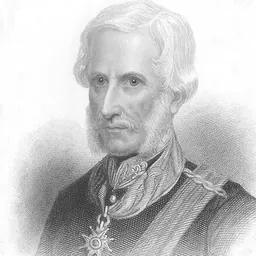
Career as a biographer Amongst his wider interests, Brock was an active member of the Peace Society pioneered by such figures as Henry Richard. Brock was, therefore, opposed to warfare at the time of the Crimean War and Siege of Lucknow but nevertheless wrote a biography of General Sir Henry Havelock, who was a fellow baptist. Published in 1858, Brock's departure into contemporary biography ran to several editions. However, he was widely criticised by those who would not buy his book, including friends in the Baptist ministry and Peace Society, for attempting the portrayal of a Christian who was also a soldier in complex contemporary political and military events. Less controversial was his biography of John Bunyan; it too became a best-seller, bound into many of Cassell's late Victorian editions of Bunyan's works.
Abolitionist Besides his interests in the work of the Peace Society, albeit somewhat compromised by his controversial biographical writing, Brock was also active as an abolitionist. His name occurs frequently in accounts of meetings held in England during the 1840s, 1850s and early 1860s to support the abolition of slavery in the United States, and pressing for abolition in Josiah's Conder's nonconformist newspaper. At an early stage in this work, he appears as a delegate in the painting of the world's first international Anti-slavery Convention in 1840, which hangs in the National Portrait Gallery in London.
Death and memorial Brock died at St. Leonard's on 13 November 1875 and was buried at Abney Park Cemetery in Stoke Newington, London.
Don’t just read it —
keep it.
Full-length biographies made to live with: read them, listen on the way to work, watch them tonight.
- E-book
- Audio
- Video
Instant download · yours to keep · every purchase keeps this site free
Important facts
People in William Brock's life
Named in this biography and alive at the same time


Related people
Same field, nearest in time


Contemporaries
People whose lives overlapped William Brock's





Frequently asked questions
Who was William Brock?
Minister of Bloomsbury Chapel (1807–1875)
When was William Brock born?
William Brock was born in 1807.
When did William Brock die?
William Brock died on 13 November 1875.
What was William Brock's occupation?
William Brock was an abolitionist.
Sources & further reading
· DBpedia: William Brock (pastor)
Cite this page
APA: Biography.guide. (2026). William Brock. https://biography.guide/william-brock/
MLA: "William Brock." Biography.guide, https://biography.guide/william-brock/.
Chicago: "William Brock." Biography.guide. https://biography.guide/william-brock/.
Data last updated: 2026-09-22 · Spot an error? Report a correction.
Page generated 2026-09-27 05:34 UTC