
William Blencowe
English cryptographer
About William Blencowe
Lived 1683 – 1712 (aged 28–29). William Blencowe was an English and British cryptographer.
William Blencowe (Marston St. Lawrence, 6 January 1683 – Northampton, 25 August 1712) was a British scholar and cryptographer who was the first official Royal Encipherer appointed by Anne, Queen of Great Britain. He worked for the English and other Allied governments during the War of the Spanish Succession.
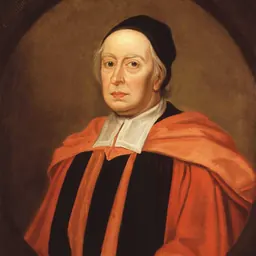
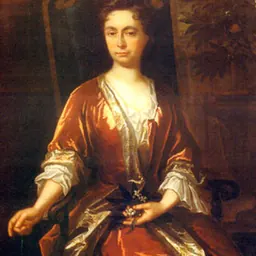
Early life Blencowe, was the third son of Sir John Blencowe (1642–1726), a judge and baron of the Exchequer, and his wife, Anne Blencowe (1656–1718), the eldest daughter of the mathematician and cryptographer John Wallis. He matriculated at Lincoln College, Oxford in 1697 and moved later that year to Magdalen College, where he graduated BA in 1701.
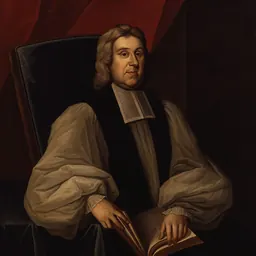
Career Nominated by Archbishop Thomas Tenison, he became a fellow of All Souls College, Oxford on 21 December 1702, and he received his MA in 1704. He was taught cryptography by John Wallis, who was unofficial cryptographer to king William III of England. On the recommendation of his grandfather he received the survivorship of Wallis's pension of £100 per annum, following the latter's death on 28 October 1703. Blencowe succeeded Wallis as decipherer to the government. His eventual salary for the office was £200 per annum.
As a cryptographer Blencowe's work was initially made difficult for lack of intercepts to work on, though he had the occasional success, like the decryption of attack plans of Michel Chamillart, the French minister for war, that had fallen into the hands of the Duke of Marlborough. After the Brussels post office was taken over by François Jaupain (Who happened to be a secret agent for the Dutch.) there came many more intercepts available which Blencowe successfully deciphered. The results were often not shared with the Dutch. An example is the correspondence of the representative of the duke of Holstein-Gottorp in The Hague, Hermann von Petkum, that disclosed secrets about the negotiations between the Marquis de Torcy and the Grand pensionary of the Dutch Republic Anthonie Heinsius in 1709. As a consequence the British managed to bring about the failure of these negotiations
In 1707 the correspondence of the French emissary at the court of the Elector of Bavaria and his colleague in Sweden was intercepted and both Blencowe and Abel Tassin d'Alonne, the Dutch cryptographer, separately tried their hands at it (unbeknownst to each other, of course), and came to subtly different results, though they both successfully decrypted the letters.
In 1712 the correspondence between the secretary of the Bavarian Elector, Malknecht, and a secret agent in the Dutch Republic, masquerading as a merchant, David van Putten, was intercepted. In this time the negotiations which would eventually lead to the Peace of Utrecht were ongoing. The Dutch were trying to convince the Elector of Bavaria, who was the former Governor-General for the French side to take over the part of the Southern Netherlands still in French hands, and hand it over to the Dutch. The British and Austrians were none too pleased about this stratagem, so very interested in this correspondence. The correspondence was intercepted by Jaupain in Brussels and copied to both d'Alonne and Blencowe, who both decrypted it successfully (though the solution by d'Alonne was slightly better according to De Leeuw).
In 1709 Blencowe sought a dispensation to permit him to retain his fellowship at All Souls without his taking holy orders. This request was resisted by the warden, Bernard Gardiner, who tried to force Blencowe and Matthew Tindal, another college fellow, to take orders or resign. After Queen Anne had intervened on Blencowe's behalf, the dispute led to the abolition of the warden's veto on dispensations.
Don’t just read it —
keep it.
Full-length biographies made to live with: read them, listen on the way to work, watch them tonight.
- E-book
- Audio
- Video
Instant download · yours to keep · every purchase keeps this site free
Important facts
People in William Blencowe's life
Named in this biography and alive at the same time




Related people
Same field, nearest in time


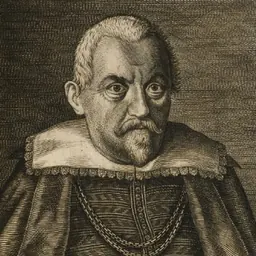
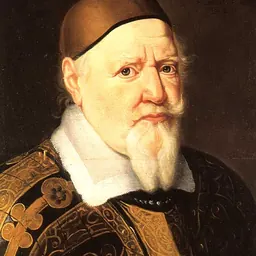
Contemporaries
People whose lives overlapped William Blencowe's
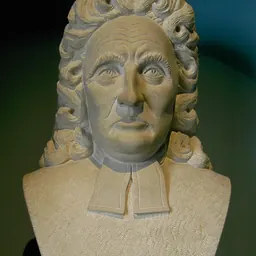


Frequently asked questions
Who was William Blencowe?
English cryptographer
When was William Blencowe born?
William Blencowe was born in 1683.
When did William Blencowe die?
William Blencowe died in 1712.
What was William Blencowe's occupation?
William Blencowe was a cryptographer.
What nationality was William Blencowe?
William Blencowe was English and British.
Sources & further reading
Cite this page
APA: Biography.guide. (2026). William Blencowe. https://biography.guide/william-blencowe/
MLA: "William Blencowe." Biography.guide, https://biography.guide/william-blencowe/.
Chicago: "William Blencowe." Biography.guide. https://biography.guide/william-blencowe/.
Data last updated: 2026-09-20 · Spot an error? Report a correction.
Page generated 2026-09-27 05:26 UTC