
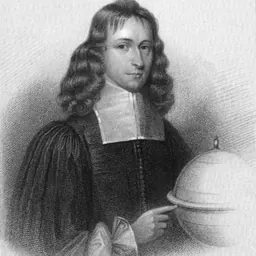
Abel Tasien d'Alonne
Dutch courtier and diplomat
About Abel Tasien d'Alonne
Lived 1642 – 1723 (aged 80–81). Abel Tasien d'Alonne was a cryptographer.
Abel Tassin d'Alonne (The surname is also sometimes spelled as Tasien d'Alonne, for instance in De Leeuw and (2000), Huygens and Thompson.) He was never legitimized by William. His mother later married a Walloon officer in the service of the Dutch Republic by the name of Charles Tassin d'Alonne, and Abel took his name. (According to the editor of Huygens, the stepfather, who died in a duel around 1656, never legitimized the child either, but after his death his brother, who was an attorney in Paris, adopted Abel, and gave him his name.) Abel would remain unmarried and childless. He would later be granted Pickering Castle and other lands by his half-brother William III on 18 May 1697.
Career After Prince William III married Princess Mary, the daughter of James, Duke of York, the brother of king Charles II of England in 1677, d'Alonne became her private secretary. He remained at her side until her death in 1694. When king William's own private secretary Constantijn Huygens Jr. died in 1697, d'Alonne was appointed in his stead. When William in his turn died in 1702, d'Alonne became the private secretary of the Grand pensionary Anthonie Heinsius of the Dutch Republic. As such he also became involved in the latter's secret diplomacy (as he had been in William's service) and he took over Heinsius' Cabinet noir, the center of Dutch espionage during the War of the Spanish Succession.
But he long before embarked on a secret career as a spymaster. As secretary of Princess Mary he intercepted a letter of Mary's chaplain, John Covel, proving his intent to abduct the princess, and bring her back to her father. After the Glorious Revolution he became even more involved in espionage, especially on the Jacobite Court in France. Probably to enable him to intercept correspondence, he was nominated to become head of the general post office in London, though that position went to another. But in 1690 he was involved in the interception of mail between France and the Jacobite army in Ireland.
He was also employed as a cryptographer. The first suspected instance was when the French ambassador to the Dutch Republic the Comte d'Avaux got himself involved in a scandal in 1684, when he wrote an indiscreet letter to pro-French regenten in Amsterdam. The letter was intercepted, and though it was encrypted, successfully decrypted, possibly by d'Alonne. There is more certainty that he was the cryptographer who decrypted intercepted correspondence between the French envoys to Bavaria and Sweden, Rouillé and Bonnac in 1707. The correspondence was intercepted in Brussels and apparently given to both Dutch and British cryptographers. These each decrypted the correspondence independently, but developed different decryptions, which proves that the Dutch version was not simply a copy of the British version.
De Leeuw tells us that in the Dutch archives the existence of a Black Chamber or Cabinet noir can only be inferred from the personal archives of Heinsius, and from a number of cryptographic worksheets in the handwriting of d'Alonne, that were accidentally stored with the archives of the Dutch legation at the Sublime Porte. De Leeuw explains that for decryption purposes the Dutch government usually relied upon the British, or on the Hanoverian Cabinet noir, during the War of the Spanish Succession, at least until the relations with Great Britain became strained with the ascent of the Tory Cabinet under Harley and Bolingbroke in 1710. The use of the Hanoverian cryptographers was definitely ended in 1711, because the Secreete Besogne (Secret Committee) of the States General of the Netherlands that handled foreign affairs for the Dutch Republic, had been indiscreet with material that had been handled by the Hanoverians, and the Hanoverians therefore lost trust. De Leeuw therefore surmises that d'Alonne was only used to decrypt intercepts when the Hanoverians could not be asked. This would only concern intercepts that would have been provided by the Brussels Post Office,"under the nose and without the consent of the British." As d'Alonne worked very closely with Heinsius (they even shared the same office) the decryption did not even need to leave the premises, so secrecy could be assured.
Don’t just read it —
keep it.
Full-length biographies made to live with: read them, listen on the way to work, watch them tonight.
- E-book
- Audio
- Video
Instant download · yours to keep · every purchase keeps this site free
Important facts
People in Abel Tasien d'Alonne's life
Named in this biography and alive at the same time


Related people
Same field, nearest in time



Contemporaries
People whose lives overlapped Abel Tasien d'Alonne's



Frequently asked questions
Who was Abel Tasien d'Alonne?
Dutch courtier and diplomat (1646–1723)
When was Abel Tasien d'Alonne born?
Abel Tasien d'Alonne was born in 1642.
When did Abel Tasien d'Alonne die?
Abel Tasien d'Alonne died in 1723.
What was Abel Tasien d'Alonne's occupation?
Abel Tasien d'Alonne was a cryptographer.
Sources & further reading
· Wikipedia: Abel Tasien d'Alonne
· DBpedia: Abel Tassin d'Alonne
Cite this page
APA: Biography.guide. (2026). Abel Tasien d'Alonne. https://biography.guide/abel-tasien-d-alonne/
MLA: "Abel Tasien d'Alonne." Biography.guide, https://biography.guide/abel-tasien-d-alonne/.
Chicago: "Abel Tasien d'Alonne." Biography.guide. https://biography.guide/abel-tasien-d-alonne/.
Data last updated: 2026-09-20 · Spot an error? Report a correction.
Page generated 2026-09-27 04:57 UTC