
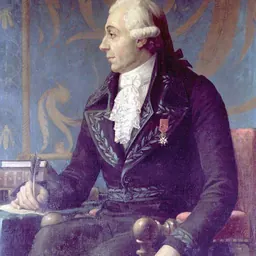
George Scovell
British Army general
About George Scovell
Lived 1774 – 1861 (aged 86). George Scovell was a British cryptographer, military personnel, royal Military College and sandhurst.
General Sir George Scovell, (21 March 1774 – 17 January 1861) was a British Army officer who served in the Napoleonic Wars.
Military career Scovell's parents were George Scovell of Cirencester and the daughter of John Fielding. He was commissioned as cornet and adjutant in the 4th Dragoons in 1798.
He served as Deputy Assistant Quarter Master General at the 1809 Battle of Corunna. For his service in the Peninsular War, he received the gold cross with one clasp and the silver war medal with eight clasps.
Scovell is most remembered for the crucial role he played in breaking the codes of the French forces during that war,
In the spring of 1811, the French began using a code based on a combination of 150 numbers known as the Army of Portugal Code. Scovell cracked the code within two days. At the end of 1811, a new code called the Great Paris Code was sent to all French army officers. It was based on 1400 numbers and derived from a mid-eighteenth century diplomatic code (Grand Chiffre) which added meaningless figures to the end of letters. By December 1812, when a letter from Joseph Bonaparte to Napoleon was intercepted, Scovell could decipher enough of it to read Joseph's explicit account of French operations and plans. The information gained proved vital to Wellington's victory over the French at Vitoria on 21 June 1813.
In 1813 Scovell was given the task of raising, then commanding, the Staff Corps of Cavalry, also known as the Staff Dragoons or the Corps of Gendarmerie. This formation, of four troops equipped as light dragoons (though in red uniforms), was the first formal unit of military police in the British army. The Staff Dragoons, in addition to their policing role, undertook escort and other staff-related duties and were also employed as combat cavalry on occasion.
For his service at Waterloo, he was awarded the 4th class of the Order of St Vladimir.
Don’t just read it —
keep it.
Full-length biographies made to live with: read them, listen on the way to work, watch them tonight.
- E-book
- Audio
- Video
Instant download · yours to keep · every purchase keeps this site free
Important facts
People in George Scovell's life
Named in this biography and alive at the same time
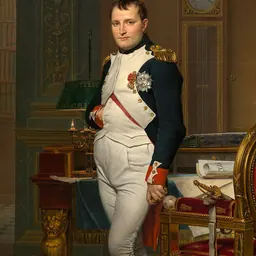
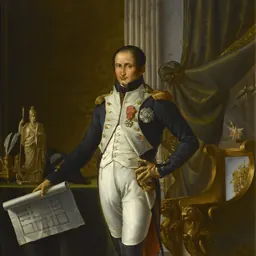
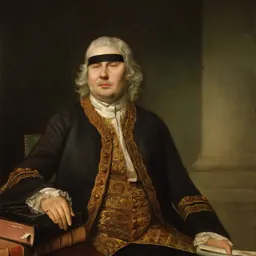
Related people
Same field, nearest in time




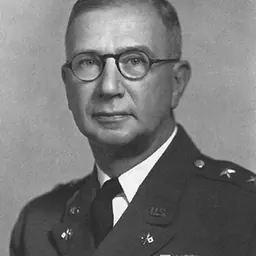
Contemporaries
People whose lives overlapped George Scovell's



Frequently asked questions
Who was George Scovell?
British Army general (1774-1861)
When was George Scovell born?
George Scovell was born on 21 March 1774 in London.
When did George Scovell die?
George Scovell died on 17 January 1861 in Guildford.
What was George Scovell's occupation?
George Scovell was a cryptographer, military personnel, royal Military College and sandhurst.
What nationality was George Scovell?
George Scovell was British.
Sources & further reading
Cite this page
APA: Biography.guide. (2026). George Scovell. https://biography.guide/george-scovell/
MLA: "George Scovell." Biography.guide, https://biography.guide/george-scovell/.
Chicago: "George Scovell." Biography.guide. https://biography.guide/george-scovell/.
Data last updated: 2026-09-20 · Spot an error? Report a correction.
Page generated 2026-09-27 05:23 UTC