
About Willi Münzenberg
Lived 1889 – 1940 (aged 51). Willi Münzenberg was a film producer, politician, publisher and opinion journalist.
Wilhelm Münzenberg (14 August 1889 – June 1940) was a German communist activist and publisher who served as the first head of the Young Communist International from 1919 to 1921 and as a member of the Reichstag from 1924 to 1933. He also founded the famine relief and propaganda organization Workers International Relief in 1921.
He was a leading propagandist for the Soviet-allied Communist Party of Germany (KPD) during the Weimar Era, but later grew disenchanted with the Soviet Union due to Joseph Stalin's Great Purge of the 1930s. Condemned by Stalin to be purged and arrested for treason, Münzenberg left the KPD and in Paris became a leader of the German émigré anti-fascism and anti-Stalinist community until forced to flee the Nazi advance into France in 1940. Arrested and imprisoned by the Daladier government in France, he escaped prison camp only to be found dead a few months later in a forest near the commune of Saint-Marcellin, France. Walter Laqueur described him as "a cultural impresario of genius". He gained his first experience as an organiser in 1907, when he attempted to organise apprentices in Erfurt with the local branch of the Union of Young German Workers, an activity which led to his brief imprisonment. He subsequently travelled through Germany in search of work, eventually reaching Zürich in Switzerland in 1910, where he stayed for the following eight years. Whilst there he initially gravitated towards anarchist politics, and studied the works of Peter Kropotkin and Mikhail Bakunin. He subsequently shifted back towards social democracy. He was initially associated with the party's left wing, However, he was removed from his leadership role with the YCI the following year.
Political career In 1924, Münzenberg was elected to the Reichstag as a KPD member. He served until the KPD was banned in 1933. However, his parliamentary work was low profile: he did not play a leading role in debates and avoided factional struggle in public, preferring to concentrate on his propaganda work. IAH's efforts were valuable not only for the practical help they offered in terms of famine relief, but also due to their propaganda value for the communist movement in Germany and around the world. IAH also owned the Moscow-based film studio Mezhrabpomfilm, which employed 400 members of staff and produced films by Soviet directors including Vsevolod Pudovkin and Nikolai Ekk. Their films, as well as other Soviet productions, were distributed in Germany by its subsidiary Prometheus-Filmgesellschaft, including Battleship Potemkin, which became a major hit in Germany after receiving a poor reception in the Soviet Union. Prometheus also produced films in Germany, such as Kuhle Wampe, whose script was co-written by Bertolt Brecht. These front groups, such the Friends of Soviet Russia, the League Against Imperialism and IAH were superficially devoted to undeniably benign or benevolent causes such as famine relief, anti-imperialism, or peace, but Münzenberg also used them to enlist the support of liberals and moderate socialists in defending the Bolshevik revolution. Following the meeting, Münzenberg formed the permanent World Committee Against War and Fascism, based in Berlin. The Executive Committee of the Communist International was uncomfortable with Münzenberg's views and replaced him with Bulgarian Communist leader Georgi Dimitrov. Early the next year, Adolf Hitler was appointed chancellor of Germany. The World Committee had to move its headquarters to Paris and Münzenberg resumed the leadership.
Dimitrov, along with fellow Communists Blagoy Popov, Vasil Tanev, Ernst Torgler and Marinus van der Lubbe were arrested and tried on a charge of responsibility for the 1933 Reichstag fire. Later in 1934, Münzenberg's influence reached the antipodes when his Comintern machine sent Egon Kisch to the All-Australian Conference of the Movement Against War and Fascism (an Australian Communist Party front organization). What could have been a low-key visit from an unknown Czech writer quickly polarized Australian society when the Joseph Lyons government declared Kisch as "undesirable as an inhabitant of, or visitor to, the Commonwealth" and attempted to exclude Kisch from Australia. With the government unable to produce any legal proof that Kisch was a communist, its case collapsed, and Kisch became a popular speaker disseminating Münzenberg's Comintern message. However, attempts to foster a United Front against fascism in Australia eventually came to nothing.
Münzenberg instructed his assistant, fellow Comintern agent Otto Katz, to travel to the United States to garner support for various pro-Soviet and anti-Nazi causes, as part of the 1935 Comintern Seventh World Congress' proclamation of a "Peoples' Front Against Fascism", aka the Popular Front. Katz made his way to Hollywood, and in July 1936 he formed the Hollywood Anti-Nazi League with Dorothy Parker. Many artists and writers in the U.S. flocked to join the Popular Front, the Anti-Nazi League, and related groups such as the League of American Writers, and movie stars such as Paul Muni, Melvyn Douglas, and James Cagney all agreed to sponsor the Hollywood Anti-Nazi League. and to the aims of Soviet foreign policy. In the autumn of 1936 he travelled to the Soviet Union at the behest of the Comintern's executive, in order to discuss taking up the role of the Comintern's head of agitprop with Dmitry Manuilsky. The visit occurred shortly after the first of the Moscow Trials, and shook his faith in Stalinism: on the same trip he was reprimanded by the Comintern's International Control Commission (ICC) for laxness in security and his political independence. He persuaded Manuilsky to allow him to return to Paris in order to complete the solidarity work he had begun in aid of the Spanish Republicans before starting the position with the Comintern: however, he ran into further problems when attempting to leave the country, and was only given his passport and an exit visa after the intervention of Palmiro Togliatti. According to Louis Fischer, a friend of Münzenberg's, he was afraid of possible reprisals if he returned to the USSR and was disturbed by the victimisation of figures such as Nikolai Bukharin.
In late 1936, fellow KPD exile Walter Ulbricht urged him to take up an offer from Dimitrov, then residing in Moscow, to return there and assume other missions on behalf of the Comintern. Münzenberg refused, as a result becoming persona non grata in the Communist movement. There, another camp inmate, unknown to Münzenberg and his colleagues, befriended Münzenberg and proposed that the two of them escape in the chaos of the Armistice. Some sources believe the unknown Communist was actually an agent of Lavrentiy Beria's NKVD. The initial newspaper report stated that the cause of death was strangulation caused by a "knotted cord" but other sources state that the cause of death was a garrote (a weapon usually formed from a knotted rope or cord). The body was found resting upright on the knees, with a knotted cord draped over the skull. did not interrogate Münzenberg's fellow camp inmates, and cause of death was listed officially as suicide. However, several eyewitnesses at the prison camp, including Valentin Hartig and Hans Siemsen, reported that Münzenberg remained in high spirits both during his days at Chambaran and in the first days of his flight to freedom after which they lost sight of their comrade.
Another theory is that Münzenberg was killed by German agents working for the Gestapo, who had apparently infiltrated his organization in 1939.
Don’t just read it —
keep it.
Full-length biographies made to live with: read them, listen on the way to work, watch them tonight.
- E-book
- Audio
- Video
Instant download · yours to keep · every purchase keeps this site free
Important facts
People in Willi Münzenberg's life
Named in this biography and alive at the same time



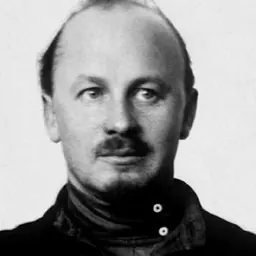
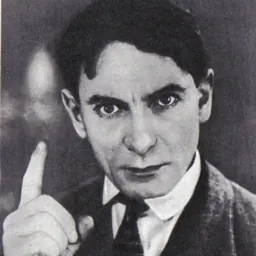
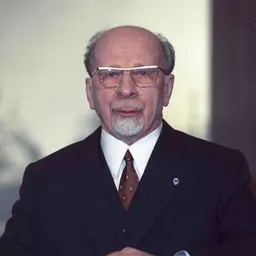
Related people
Same field, nearest in time


Contemporaries
People whose lives overlapped Willi Münzenberg's



Frequently asked questions
Who was Willi Münzenberg?
German politician (1889-1940)
When was Willi Münzenberg born?
Willi Münzenberg was born on 14 August 1889 in Erfurt.
When did Willi Münzenberg die?
Willi Münzenberg died on 21 October 1940 in Saint-Marcellin.
What was Willi Münzenberg's occupation?
Willi Münzenberg was a film producer, politician, publisher and opinion journalist.
What nationality was Willi Münzenberg?
Willi Münzenberg's recorded nationality: German Reich.
Sources & further reading
Cite this page
APA: Biography.guide. (2026). Willi Münzenberg. https://biography.guide/willi-munzenberg/
MLA: "Willi Münzenberg." Biography.guide, https://biography.guide/willi-munzenberg/.
Chicago: "Willi Münzenberg." Biography.guide. https://biography.guide/willi-munzenberg/.
Data last updated: 2026-09-20 · Spot an error? Report a correction.
Page generated 2026-09-27 05:20 UTC