
About Dmitry Manuilsky
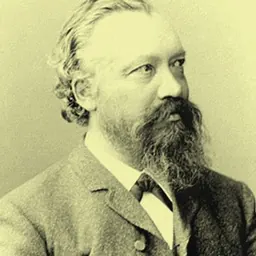
Lived 1883 – 1959 (aged 75). Dmitry Manuilsky was a Russian diplomat, statesperson, politician and revolutionary.
Dmitriy Zakharovich Manuilsky or Dmytro Zakharovych Manuilsky (; ; 3 October 1883 – 22 February 1959) was an important Bolshevik revolutionary, Soviet politician and academic who was Secretary of the Executive Committee of the Communist International from December 1926 to its dissolution in May 1943.
Early life and career
Son of an Orthodox priest, Manuilsky was born to a peasant family in the village of , Kremenets County, Volhynian Governorate (now in Teofipol settlement hromada, Khmelnytsky Oblast, Ukraine). After secondary school, he enrolled at the University of St. Petersburg in 1903, and joined the Bolshevik faction of the Russian Social Democratic Labour Party in 1904.
During the 1905 revolution he was assigned by the Bolsheviks to the naval base in Kronstadt where he took part in the naval revolt in July. Arrested, he was held in Kronstadt prison in 1905–06, then exiled, but escaped, arriving in Kiev and then, in 1907, to Paris, where he continued studies at the Sorbonne University. In 1926, he supplanted Nikolai Bukharin as leader of the Soviet Union delegation on Comintern's executive, and the lead representative at congresses of the French, German, and Czechoslovak communist parties.
Later life and career
From 1935 until the dissolution of Comintern in 1943, Manuilsky acted as deputy to its General Secretary, Georgi Dimitrov. During the Great Purge, almost every Old Bolshevik with a past link with Trotsky was killed or imprisoned, except Manuilsky, whom Stalin despised but by whom he did not feel in any way threatened. In 1939, he told Dimitrov: "Manuilsky is a toady! He was a Trotskyite! We criticised him for keeping quiet and not speaking out when the purges of Trotskyite bandits were going on, and now he has started toadying!"
The Montenegrin communist Milovan Djilas, who met Manuilsky in 1944, admired his learning and writing talent, but remembered him as "a slight and already hunched veteran, dark-haired, with a clipped moustache [who] spoke with a lisp, almost gently and – what astonished me at the time – without much energy." Seeing him again five years later, Djilas thought him an "almost senile, little old man who was rapidly disappearing as he slid down the steep ladder of the Soviet hierarchy."
Between 1944 and 1952, Manuilsky held a post of Foreign Minister of Ukraine. Having fallen out of Stalin's favour after 1950, from 1952 to 1953 he served the Ukrainian ambassador to the United Nations. On the latter position he was known for his speeches denouncing Ukrainian emigration. After Stalin's death Manuilsky left politics. He died in 1959 in Kiev.
Don’t just read it —
keep it.
Full-length biographies made to live with: read them, listen on the way to work, watch them tonight.
- E-book
- Audio
- Video
Instant download · yours to keep · every purchase keeps this site free
Important facts
People in Dmitry Manuilsky's life
Named in this biography and alive at the same time
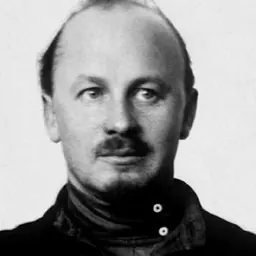
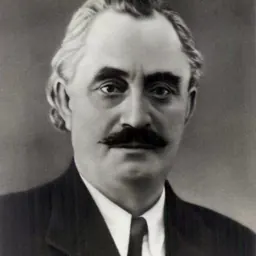
Related people
Same field, nearest in time

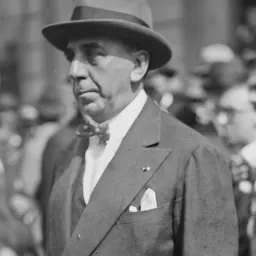
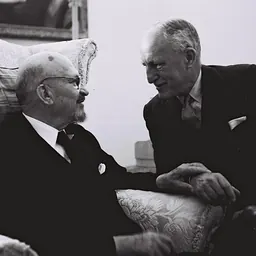
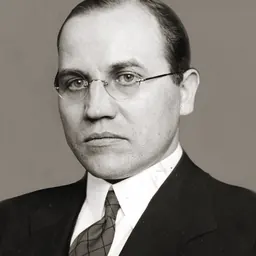
Contemporaries
People whose lives overlapped Dmitry Manuilsky's


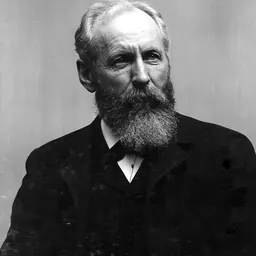

Frequently asked questions
Who was Dmitry Manuilsky?
Soviet politician (1883–1959)
When was Dmitry Manuilsky born?
Dmitry Manuilsky was born on 21 September 1883 in Sviatets.
When did Dmitry Manuilsky die?
Dmitry Manuilsky died on 20 February 1959 in Kyiv.
What was Dmitry Manuilsky's occupation?
Dmitry Manuilsky was a diplomat, statesperson, politician and revolutionary.
What nationality was Dmitry Manuilsky?
Dmitry Manuilsky was Russian.
Sources & further reading
Cite this page
APA: Biography.guide. (2026). Dmitry Manuilsky. https://biography.guide/dmitry-manuilsky/
MLA: "Dmitry Manuilsky." Biography.guide, https://biography.guide/dmitry-manuilsky/.
Chicago: "Dmitry Manuilsky." Biography.guide. https://biography.guide/dmitry-manuilsky/.
Data last updated: 2026-09-20 · Spot an error? Report a correction.
Page generated 2026-09-27 05:33 UTC