
About Lavrentiy Beria
Lived 1899 – 1953 (aged 54). Lavrentiy Beria was a Russian politician and military personnel.
Lavrentiy Pavlovich Beria ( – 23 December 1953) was a Soviet politician and one of the longest-serving and most influential of Joseph Stalin's secret police chiefs, serving as head of the NKVD from 1938 to 1945 during the country's involvement in the Second World War.
An ethnic Georgian, Beria enlisted in the Cheka in 1920, and quickly rose through its ranks. He transferred to Communist Party work in the Caucasus in the 1930s, and in 1938 was appointed head of the NKVD by Stalin. Described by Stalin as his "own Himmler" , his ascent marked the end of Stalin's Great Purge carried out by Nikolai Yezhov, whom Beria purged. After the Soviet invasion of Poland in 1939, Beria organized the Katyn massacre of 22,000 Polish officers and intelligentsia, and after the occupation of the Baltic states and parts of Romania in 1940, he oversaw the deportations of hundreds of thousands of Poles, Balts, and Romanians to remote areas or Gulag camps. In 1940, Beria began a new purge of the Red Army. After Operation Barbarossa, the Axis invasion of the Soviet Union in June 1941, he was appointed to the State Defense Committee, overseeing security.
Beria expanded the system of forced labour, mobilizing millions of Gulag prisoners into wartime production. He also was in charge of NKVD units responsible for barrier and partisan intelligence and sabotage operations on the Eastern Front. In 1943–44, Beria oversaw the mass deportations of millions of ethnic minorities from the Caucasus, actions which have been described by many scholars as ethnic cleansing or genocide. Beria was also responsible for supervising secret Gulag detention facilities for scientists and engineers, known as . From 1945, he oversaw the Soviet atomic bomb project, to which Stalin gave priority; its first nuclear test was in 1949. his cellmate's niece, and they eloped on a train.
At that time, a Bolshevik revolt took place in the Menshevik-controlled Democratic Republic of Georgia, and the Red Army subsequently invaded. The Cheka became heavily involved in the conflict, which resulted in the defeat of the Mensheviks and the formation of the Georgian SSR. Between 1922 and 1924, Beria was deputy chairman of the Georgian OGPU (as Cheka had been renamed).
He then led the repression of a Georgian nationalist uprising in 1924, after which up to 10,000 people were executed.
Relations with Stalin
During this time, he began to attack fellow members of the Georgian Communist Party, particularly Gaioz Devdariani, who served as Minister of Education of the Georgian SSR. Beria ordered the executions of Devdariani's brothers George and Shalva. In 1935, Beria cemented his place in Stalin's entourage with a lengthy oration titled, "On the History of the Bolshevik Organisations in Transcaucasia" (later published as a book), which emphasised Stalin's role. It quoted from what purported to be police reports from early in the century, which identified Stalin, under his real name Jugashvili, as the leader of the Social Democrats (Marxists) in Georgia and Azerbaijan, though as the historian Bertram Wolfe noted: "These new finds tell a different story and even speak another language from all police documents and Bolshevik reminiscences published [...] while Lenin was alive. The language sounds uncommonly like Beria's own."
The Great Purge Nestor Lakoba, Nikita Khrushchev, Beria and Aghasi Khanjian during the opening of the Moscow Metro in 1936, the same year that Lakoba and Khanjian were killed by Beria.
In the first couple of years of mass arrests of members of the Communist Party and Soviet government that began after the assassination of Leningrad party boss Sergei Kirov (1 December 1934), Beria was one of the few regional party leaders considered ruthless enough to purge the region under his control, without outside interference. On 9 July 1936, the First Secretary of the Central Committee of the Armenian Communist Party, Aghasi Khanjian was found dead from a bullet wound. It was officially announced that he had committed suicide, and he was retrospectively denounced as an enemy of the people, but in 1961, the then head of the KGB, Alexander Shelepin reported that he had been murdered by Beria. In December 1936, Nikolai Yezhov, the newly appointed commissar of the NKVD, the ministry which oversaw the state security and police forces, reported that more than 300 people had been arrested in Georgia in the previous few weeks.
On 26 December 1936, Beria summoned the head of the communist party of Abkhazia, Nestor Lakoba, to the Party headquarters in Tbilisi. Beria had Lakoba over for dinner the next day, where he was served fried trout, a favorite of Lakoba's and a glass of poisoned wine. They attended the opera after the dinner, watching the play Mzetchabuki (; "Sun-boy" in Georgian). Officially, Lakoba was said to have died of a heart attack, though a previous medical examination in Moscow had shown he had arteriosclerosis (thickening of the arteries), cardiosclerosis (thickening of the heart), and erysipelas (skin inflammation) in the left auricle that had led to his hearing loss. His body was returned to Sukhumi, though notably all the internal organs (which could have helped identify the cause of death) were removed. Lakoba was accused of "nationalist deviationism", of having helped Trotsky, and of trying to kill both Stalin and Beria.
In the months that followed Lakoba's death, members of his family were implicated on charges against the state. His two brothers were arrested on 9 April 1937, and his mother Sariya was arrested on 23 August of that year. A trial of thirteen members of Lakoba's family was conducted between 30 October and 3 November 1937 in Sukhumi, with charges including counter-revolutionary activities, subversion and sabotage, espionage, terrorism, and insurgent organization in Abkhazia. Nine of the defendants, including Lakoba's two brothers, were shot on the night of 4 November. Rauf, Lakoba's 15-year-old son, tried to speak to Beria, who visited Sukhumi to view the start of the trial. He was promptly arrested as well. Sariya was taken to Tbilisi and tortured in order to extract a statement implicating Lakoba, but refused, even after Rauf was tortured in front of her. Sariya would die in prison in Tbilisi on 16 May 1939. Rauf was sent to a labour camp, and was eventually shot in a Sukhumi prison on 28 July 1941.
On the 10th Congress of the Communist Party of Georgia on 17 May 1937, Beria presented an extensive report, the first part of which discussed the alleged "Trotskyist-spy-wrecking-terrorist center" involving Old Georgian Bolsheviks such as Budu Mdivani, Mikhail Okudzhava, Sergey Kavtaradze, Malakia Toroshelidze, Nikolai Kiknadze, Semen Chikhladze, and George Eliava. They were accused of trying to restore the capitalist system in Georgia, having links with the Trotsky-Zinoviev bloc, planning to use "biological weapons," and plotting to murder Joseph Stalin. At the same time, Beria argued that "A blanket approach to all former nationalists and Trotskyists... can only damage the cause of fighting with real Trotskyites, wreckers and spies." It seems that, at this point, Beria did not unconditionally accept the idea that there were no "former opponents." The second part of the report reviewed the breakdown of various intellectual groups and urged several Georgian authors and artists to "reconsider their ties with the enemies of the Georgian people." In particular, Paolo Iashvili, Konstantine Gamsakhurdia, Mikheil Javakhishvili, Nikolo Mitsishvili, Dimitri Shevardnadze, and others were mentioned. He delivered a "final warning" to the famous Georgian cultural figures and informed the participants of the congress how the authorities had exposed the director of the Rustaveli Theatre, Sandro Akhmeteli, as "the fascist wrecker." Given the difficult relationship between Beria and Akhmeteli, this was a clear signal that Beria now embodied Soviet power in Georgia and could decide questions of life and death. The fate of many of the "warned persons" was soon decided, without them having enough time to "consider his suggestion": Iashvili was driven to suicide; M. Javakhishvili, N. Mitsishvili, and D. Shevardnadze were shot, as were many others. The report clearly showed that, along with carrying out direct orders from the center, Beria was also strengthening his internal position and achieving his personal goals during the course of the purges.
Immediately after this report, on 22 May, the main party newspaper Pravda actually criticized the Tenth Congress of the Georgian Party Organizations for its "lack of sharpness" and "misunderstanding" of the importance of the purges. Beria himself believed that the report had been ordered from Moscow. In his correspondence with Stalin, Beria defended the 10th Congress of the Communist Party of Georgia, arguing that it had fully taken into account the importance of the new policies and had exposed many enemies of the Party and Trotskyists. It is difficult to assess whether the newspaper article was a hint from Stalin to intensify the repressions in the Georgian SSR or the result of some backroom intrigue, but it appears to have influenced Beria's subsequent actions. In June 1937, Beria said in a speech, "Let our enemies know that anyone who attempts to raise a hand against the will of our people, against the will of the party of Lenin and Stalin, will be mercilessly crushed and destroyed." On 20 July, he wrote to Stalin to report that he had 200 people shot, was about to submit a list of another 350 who were also to be shot, and that Shalva Eliava, Lavrenty Kartvelishvili, Maria Orakhelashvili (wife of Mamia Orakhelashvili), and numerous others had all confessed to counter-revolutionary activities but Mamia Orakhelashvili himself was holding out, though he repeatedly fainted under interrogation and had to be revived with camphor. The evidence against all of them was found, after Beria's execution, to have consisted of false confessions extracted under torture. Reputedly, Orakhelashvili's ear drums were perforated and his eyes gouged out.
Following NKVD Order No. 00447, Beria regularly informed Stalin about its implementation in Soviet Georgia. Anticipating arrest, Tengiz Zhghenti, the Secretary of Georgia's Central Election Commission, Artemije Geurkov, the former Secretary of the Adjarian Regional Committee of the Communist Party of Georgia (accused of "Lominadzevschina"; Geurkov followed the example of Vissarion Lominadze), and Paulo Iashvili committed suicide. Beria regretted that he could not personally oversee Iashvili's execution and ordered him to be buried as an enemy of the people.
On 28 October 1937, Beria presented another report at the plenary session of the Central Committee of the Communist Party of Georgia "about the wrecking of dangerous organizations in Georgia and activities to combat the sabotage." He detailed the activities undertaken in fighting the "anti-Soviet elements," including exposing the "counter-revolutionary, spy, terrorist" group headed by Georgian writer M. Javakhishvili, the arrest of 61 NKVD officers, and the purging of all members of the former leaderships of the autonomous republics, accused of being "spies." He also listed some schools and universities that he accused of being open to teachers and students with anti-Soviet sentiments. Beria presented evidence of a nationalist "military center" that was allegedly planning to stage a rebellion in Georgia. He argued that the Central Committee of Georgia would soon require additional execution and imprisonment limits from Moscow for a special Troika.
In a secret report to Stalin on 30 October 1937, Beria noted that 12,000 people had been arrested in Soviet Georgia in 1937; by the end of October, 7,374 had been convicted, including 5,236 by the Troika. Complaining about the overcrowding of prisons, Beria requested that Stalin delegate the functions of the court of military collegiums to local authorities (the Troika and the Supreme Court of the Georgian SSR). This was approved. It seems that Beria took lessons from the May Congress and managed to prove to Stalin his readiness to deal ruthlessly with his alleged enemies and to strictly abide by the orders of the senior leadership. Head of the NKVD
The first page of Beria's notice (oversigned by Stalin and several other officials), to kill approximately 15,000 Polish officers and some 10,000 more intellectuals in the Katyn Forest and other places in the Soviet Union.
In August 1938, Stalin brought Beria to Moscow as deputy head of the NKVD. Under Yezhov, the NKVD carried out the Great Purge: the imprisonment or execution of a huge number, possibly over a million, of citizens throughout the Soviet Union as alleged "enemies of the people". By 1938 the oppression had become so extensive that it was damaging the infrastructure, economy, and the armed forces of the Soviet state, prompting Stalin to wind the purge down. In September, Beria was appointed head of the Main Administration of State Security (GUGB) of the NKVD, and in November he succeeded Nikolai Yezhov as NKVD head. Yezhov was executed in 1940.
Beria's appointment marked an easing of the repression begun under Yezhov. Over 100,000 people were released from the labour camps. The government officially admitted that there had been some injustice and "excesses" during the purges, which were blamed entirely on Yezhov. The liberalization was only relative; arrests, torture, and executions continued. On 16 January 1940, Beria sent Stalin a list of 457 "enemies of the people" of whom 346 were marked to be shot. They included Yezhov and his brother and nephews; Mikhail Frinovsky and his wife and teenage son, Yefim Yevdokimov and his wife and teenage son, dozens more former NKVD officers, and the renowned writer Isaac Babel and the journalist Mikhail Koltsov.
Some of the NKVD officers Beria promoted, such as Boris Rodos, Lev Shvartzman, and Bogdan Kobulov were brutal torturers who were executed in the 1950s. The theatre director Vsevolod Meyerhold described being beaten on the spine and soles of his feet until "the pain was so intense that it felt as if boiling water was being poured on these sensitive areas." His interrogation record was signed by Shvartzman. Robert Eikhe, a former high-ranking party official, was sadistically beaten and had an eye gouged out by Rodos, in Beria's office, while Beria watched. He not only permitted and encouraged the beating of prisoners, but in some cases carried it out. One prisoner who survived to give evidence in the 1950s testified that he was brought to Beria's office and accused of plotting to blow up the Moscow metro, which he denied:
In March 1939, Beria was appointed as a candidate member of the Communist Party's Politburo. Although he did not rise to full membership until 1946, he was by then one of the senior leaders of the Soviet state. In 1941, he was made a Commissar General of State Security, the highest quasi-military rank within the Soviet police system. In 1940, the pace of the purges accelerated again. During this period, Beria supervised deportations of people identified as "political enemies" from Poland, Lithuania, Latvia and Estonia after Soviet occupation of those countries.
On 5 March 1940, after the Gestapo–NKVD Third Conference was held in Zakopane, Beria sent a note (No. 794/B) to Stalin in which he stated that the Polish prisoners of war kept at camps and prisons in western Belarus and Ukraine were enemies of the Soviet Union, and recommended their execution. Most of them were military officers, but there were also intelligentsia, doctors, priests, and others in a total of 22,000 people. With Stalin's approval, Beria's NKVD executed them in what became known as the Katyn massacre.
From October 1940 to February 1942, the NKVD under Beria carried out a new purge of the Red Army and related industries. In February 1941, Beria became deputy chairman of the Council of People's Commissars, and in June, following Operation Barbarossa, Nazi Germany's invasion of the Soviet Union, he became a member of the State Defense Committee (GKO). During the Second World War, he took on major domestic responsibilities and mobilised the millions of people imprisoned in NKVD Gulag camps into wartime production. He took control of the manufacture of armaments, and (with Georgy Malenkov) aircraft and aircraft engines. This was the beginning of Beria's alliance with Malenkov, which later became of central importance.
In 1944, as the Soviet Union had repelled the German invasion, Beria was placed in charge of the various ethnic minorities accused of anti-sovietism and/or collaboration with the invaders, including the Balkars, Karachays, Chechens, Ingush, Crimean Tatars, Kalmyks, Pontic Greeks, and Volga Germans, collectively known as "The Morgans". All these groups were deported to Soviet Central Asia.
In December 1944, the NKVD supervised the Soviet atomic bomb project ("Task No. 1"), which built and tested a bomb by 29 August 1949. The project was extremely labour-intensive. At least 330,000 people, including 10,000 technicians, were involved. The Gulag system provided tens of thousands of people for work in uranium mines and for the construction and operation of uranium processing plants. They also constructed test facilities, such as those at Semipalatinsk and in the Novaya Zemlya archipelago.
In July 1945, as Soviet police ranks were converted to a military uniform system, Beria's rank was officially converted to that of Marshal of the Soviet Union. Although he had never held a traditional military command, he made a significant contribution to the victory of the Soviet Union in the war through his organisation of wartime production and his use of partisans. Abroad, Beria had met with Kim Il Sung, the future leader of North Korea, several times when the Soviet troops had declared war on Japan and occupied the northern half of Korea from August 1945. Beria recommended that Stalin install a communist leader in the occupied territories. Beria's son, Sergo Beria, later recounted that after Stalin's death, his mother Nina told her husband that, "Your position now is even more precarious than when Stalin was alive". Some authors have claimed that Stalin "may have been poisoned" using the anticoagulant warfarin, although others have argued that "the description we have of Stalin's illness does not match the appearance or timeline of patients that experience severe warfarin or warfarin-related overdoses". Towards the end of his life, Stalin was "obsessive about the possibility of being poisoned" and that given his paranoia, "it is difficult to imagine a scenario where Beria or another conspirator could have slipped an anticoagulant into his drink".
Arrest, trial and execution
Beria, as first deputy chairman of the Council of Ministers and an influential Politburo member, saw himself as Stalin's successor, while wider Politburo members had contrasting thoughts on the leadership. On 26 June 1953, Beria was arrested and held in an undisclosed location near Moscow. Accounts of his downfall vary considerably. The historical consensus is that Khrushchev prepared an elaborate ambush, convening a meeting of the Presidium on 26 June, where he suddenly launched a scathing attack on Beria, accusing him of being a traitor and spy in the pay of British intelligence agencies. Beria was taken completely by surprise. He asked, "What's going on, Nikita Sergeyevich [Khrushchev]? Why are you picking fleas in my trousers?"[Unclear meaning of Russian language idiom] When Beria finally realised what was happening and plaintively appealed to Georgy Malenkov to speak for him, Malenkov silently hung his head and pressed a button on his desk. This was an arranged signal to Marshal Georgy Zhukov and a group of armed officers in a nearby room, who burst in and arrested Beria.
As Beria's men were guarding the Kremlin, he was held there in a special cell until nightfall and then smuggled out in the trunk of a car.
Vyacheslav Malyshev succeeded Beria as head of the Soviet nuclear weapons project. After a review of project documentation during the summer of 1953 it was found that Beria had started thermonuclear weapons development without approval from the Central Committee, which was "shocked" by the revelation. Beria had even scratched out the signature block for Malenkov's signature and signed it himself. "Evidently Beria had been confident enough of his ascent to power to assume that he would command sole authority by the time the thermonuclear design was ready to be tested".
Beria and his men were tried by a "special session" of the Supreme Court of the Soviet Union on 23 December 1953 with no defence counsel and no right of appeal. Marshal Ivan Konev was the chairman of the court. Montefiore concludes that the information "reveals a sexual predator who used his power to indulge himself in obsessive depravity". Despite evidence, charges of sexual abuse were disputed by his wife Nina and their son Sergo.
According to the testimony of Colonel Semyonovich Sarkisov and Colonel Sardion Nikolaevich Nadaraia – two of Beria's bodyguardson warm nights during the war, Beria was often driven around Moscow in his limousine. He would point out young women that he wanted to be taken to his dacha, where wine and a feast awaited them. After dining, Beria would take the women into his soundproofed office and rape them. An American report from 1952 quoted a former Muscovite as having "learned from one of Beria's mistresses that it was Beria's habit to order various women to become intimate with him and that he threatened them with prison if they refused".
His bodyguards reported that their duties included handing each victim a flower bouquet as she left the house. Accepting it implied that the sex had been consensual; refusal would mean arrest. Sarkisov reported that after one woman rejected Beria's advances and ran out of his office, Sarkisov mistakenly handed her the flowers anyway. The enraged Beria declared, "Now, it is not a bouquet, it is a wreath! May it rot on your grave!" The NKVD arrested the woman the next day.
According to the historian Amy Knight, rumors about Beria's behavior had been circulating around Moscow, with post-war US embassy employee Edward Ellis Smith claiming that "Beria's escapades were common knowledge among embassy personnel because his house was on the same street as a residence for Americans, and those who lived there saw girls brought to Beria's house late at night in a limousine".
Women also submitted to Beria's sexual advances in exchange for the promise of freedom for imprisoned relatives. In one case, Beria picked up Tatiana Okunevskaya, a well-known Soviet actress, under the pretence of bringing her to perform for the Politburo. Instead he took her to his dacha, where he offered to free her father and grandmother from prison if she submitted. He then raped her, telling her, "Scream or not, it doesn't matter". In fact, Beria knew that Okunevskaya's relatives had been executed months earlier. Okunevskaya was arrested shortly afterwards and sentenced to solitary confinement in the Gulag, which she survived.
Stalin and other high-ranking officials came to distrust Beria. In one instance, when Stalin learned that his teenage daughter, Svetlana, was alone with Beria at his house, he telephoned her and told her to leave immediately. When Beria complimented Alexander Poskrebyshev's daughter on her beauty, Poskrebyshev quickly pulled her aside and instructed her, "Don't ever accept a lift from Beria". After taking an interest in Kliment Voroshilov's daughter-in-law during a party at their summer dacha, Beria shadowed their car closely all the way back to the Kremlin, terrifying his wife. In 2011, building workers digging a ditch in Moscow city centre unearthed a common grave near the same residence containing a pile of human bones, including two children's skulls covered with lime. The lack of articles of clothing and the condition of the remains indicate that these bodies were buried naked.
According to Martin Sixsmith, in a BBC documentary, "Beria spent his nights having teenagers abducted from the streets and brought here for him to rape. Those who resisted were strangled and buried in his wife's rose garden". Vladimir Zharov, head of the Department of Forensic Medicine at Moscow State University and then the head of the criminal forensics bureau, said a torture chamber existed in the basement of Beria's villa and that there was probably an underground passage to burial sites.
A character based on Beria, named "Loria" with his predatorial tendencies, appears in The Saga of Tanya the Evil light novel. Loria is also depicted in the series' animated movie adaptation.
Beria is a significant character in Malcolm Knox's 2024 satirical novel The First Friend, about his fictional childhood friend Vasil Murtov who now works as his driver, and the consequences that follow from a proposed visit by Stalin to Georgia. Beria features once again in Knox's next novel, The Second Child (2026), in which Murtov's daughter, Melor, becomes Beria's adoptive daughter and confidant.
Beria is a significant character in Polostan by Neal Stephenson.
Don’t just read it —
keep it.
Full-length biographies made to live with: read them, listen on the way to work, watch them tonight.
- E-book
- Audio
- Video
Instant download · yours to keep · every purchase keeps this site free
Important facts
People in Lavrentiy Beria's life
Named in this biography and alive at the same time


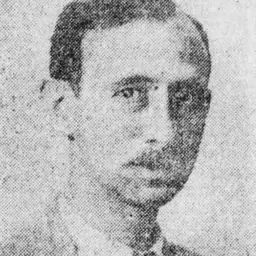
Related people
Same field, nearest in time




Contemporaries
People whose lives overlapped Lavrentiy Beria's
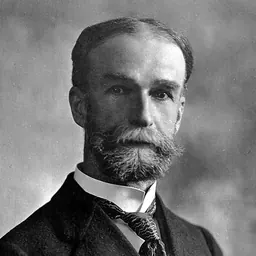
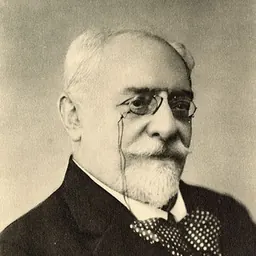
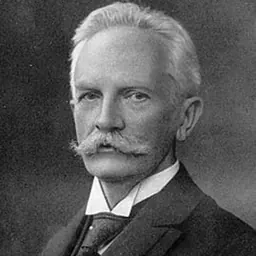

Frequently asked questions
Who was Lavrentiy Beria?
Soviet politician and NKVD police chief
When was Lavrentiy Beria born?
Lavrentiy Beria was born on 17 March 1899 in Merkheuli.
When did Lavrentiy Beria die?
Lavrentiy Beria died on 23 December 1953 in Moscow.
What was Lavrentiy Beria's occupation?
Lavrentiy Beria was a politician and military personnel.
What nationality was Lavrentiy Beria?
Lavrentiy Beria was Russian.
Sources & further reading
Cite this page
APA: Biography.guide. (2026). Lavrentiy Beria. https://biography.guide/lavrentiy-beria/
MLA: "Lavrentiy Beria." Biography.guide, https://biography.guide/lavrentiy-beria/.
Chicago: "Lavrentiy Beria." Biography.guide. https://biography.guide/lavrentiy-beria/.
Data last updated: 2026-09-20 · Spot an error? Report a correction.
Page generated 2026-09-27 05:24 UTC