
Vsevolod Pudovkin
Soviet film director, screenwriter and actor
About Vsevolod Pudovkin
Lived 1893 – 1953 (aged 60). Vsevolod Pudovkin was a Russian actor, film director, screenwriter, writer, film actor and director.
Vsevolod Illarionovich Pudovkin (; 28 February 1893 – 30 June 1953) was a Soviet film director, screenwriter and actor who developed influential theories of montage. Pudovkin's masterpieces are often contrasted with those of his contemporary Sergei Eisenstein; Eisenstein utilized montage to glorify the power of the masses, while Pudovkin preferred to concentrate on the courage and resilience of individuals. He was granted the title of People's Artist of the USSR in 1948.
Biography Vsevolod Pudovkin was born in Penza into a Russian family, the third of six children. His father Illarion Yepifanovich Pudovkin came from peasants of the Penza Governorate, the village of Shuksha and worked in several companies as a manager and a door-to-door salesman. Vsevolod's mother Yelizaveta Aleksandrovna Pudovkina (née Shilkina) was a housewife.
A student of engineering at Moscow University, Pudovkin saw active duty during World War I, being captured by the Germans. During this time he studied foreign languages and did book illustrations. After the war, he abandoned his professional activity and joined the world of cinema, first as a screenwriter, actor and art director, and then as an assistant director to Lev Kuleshov.
In 1924, he married Anna Zemtsova. Pudovkin asserted that his wife encouraged him for pursuing a career as a filmmaker.
His first notable work was a comedy short Chess Fever (1925) co-directed with Nikolai Shpikovsky. José Raúl Capablanca played a small part in it, with a number of other cameos presented. In 1926 he directed what would become one of the masterpieces of silent movies: Mother, where he developed several montage theories that would make him famous. Both movies featured Pudovkin's wife Anna Zemtsova in supporting female parts (she left cinema shortly after).
His first feature was followed by The End of St. Petersburg (1927), and Storm over Asia (also known as The Heir of Genghis Khan, 1928), titles which compose a trilogy at the service of the bolshevik revolutionary policy.
In 1928, with the advent of sound film, Pudovkin, Sergei Eisenstein and Grigori Aleksandrov signed the Manifest of Sound, in which the possibilities of sound are debated, and always understood as being in a state of tension and nonsynchronization with the image. This idea would be brought to bear in his next pictures: A Simple Case (1932) and The Deserter (1933), works that do not match the quality of earlier work. The Heir to Genghis Khan (or Storm over Asia; 1928). Pudovkin was publicly charged with formalism for his experimental sound film A Simple Case, which he was forced to release without its sound track. In 1935 he was awarded the Order of Lenin.
After an interruption caused by health concerns, Pudovkin returned to movie making, this time with a number of historical epics: Victory (1938); Minin and Pozharsky (1939) and Suvorov (1941). The last two were often praised as some of the best movies based on Russian history, along with the works of Sergei Eisenstein. Pudovkin was awarded Stalin Prize first degree for both of them in 1941.
During World War II he was evacuated to Kazakhstan where he directed several patriotic war movies. He also played a small part in the Ivan the Terrible movie (as God's fool). With the end of war he returned to Moscow and continued his work at the Mosfilm studio, making biographical and war movies. In 1947 he was awarded another Stalin Prize first degree for his work on Admiral Nakhimov, and in 1950 — his second Order of Lenin and Stalin Prize second degree for Zhukovsky. His last work was The Return of Vasili Bortnikov (1953).
Apart from directing, screenwriting and acting, Pudovkin was also an educator and a journalist, author of several books on film theory, professor at VGIK, president of the cinema section at VOKS (since 1944) and a member of the Soviet Peace Committee.
Vsevolod Pudovkin died on 30 June 1953 in Dubulti, Latvian SSR after a heart attack. He was buried at the Novodevichy Cemetery. One of the streets in Moscow is named after Pudovkin (see Pudovkin street).
Filmography Year Original Title English Title Role Notes 1920 В дни борьбы In the Days of Struggle Actor 1921 Серп и молот Sickle and Hammer Andrey Screenwriter; assistant director Голод... голод... голод... Hunger... Hunger... Hunger... screenwriter; assistant director 1923 Слесарь и канцлер Locksmith and Chancellor Screenwriter 1924 Необычайные приключения мистера Веста в стране большевиков The Extraordinary Adventures of Mr. West in the Land of the Bolsheviks Shban Art director 1925 Луч смерти The Death Ray Father Revo - Fascist Boss Screenwriter; assistant director; art director Шахматная горячка Chess Fever Director (with Nikolai Shpikovsky) 1926 Механика головного мозга Mechanics of the Brain Director; screenwriter Мать Mother Police Officer Director 1927 Конец Санкт-Петербурга The End of St. Petersburg German Officer Director 1928 Потомок Чингиз-Хана Storm over Asia Director 1929 Живой труп The Living Corpse Fyodor Protasov Веселая канарейка The Happy Canary Illusionist Новый Вавилон The New Babylon Police intendent 1932 Простой случай A Simple Case Director (with Mikhail Doller) 1933 Дезертир The Deserter Director 1938 Победа Victory Director (with Mikhail Doller) 1939 Минин и Пожарский Minin and Pozharsky Director (with Mikhail Doller) 1941 Суворов Suvorov Director (with Mikhail Doller) Пир в Жирмунке Feast in Zhirmunka Director (with Mikhail Doller) 1942 Убийцы выходят на дорогу The Murderers are Coming Director (with Yuri Tarich); screenwriter 1943 Во имя Родины In the Name of the Fatherland German General Director (with Dmitri Vasilyev); screenwriter; actor Юный Фриц The Young Fritz Officer Short, actor 19451958 Иван Грозный Ivan the Terrible Nikola, Simpleton Beggar Actor (final film role) 1947 Адмирал Нахимов Admiral Nakhimov Prince Menshikov Director 1948 Три встречи Three Encounters Director (segment) 1950 Жуковский Zhukovsky Director 1952 Возвращение Василия Бортникова The Return of Vasili Bortnikov Director (with Dmitri Vasilyev)
Published works Film Technique and Film Acting Grove Press. 1958.
Don’t just read it —
keep it.
Full-length biographies made to live with: read them, listen on the way to work, watch them tonight.
- E-book
- Audio
- Video
Instant download · yours to keep · every purchase keeps this site free
Important facts
People in Vsevolod Pudovkin's life
Named in this biography and alive at the same time





Related people
Same field, nearest in time

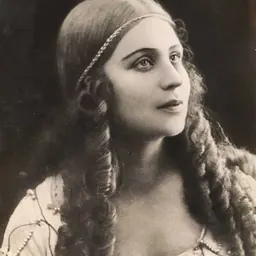
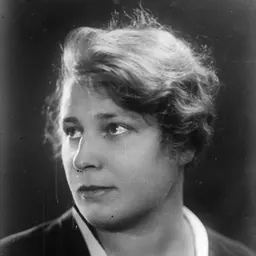
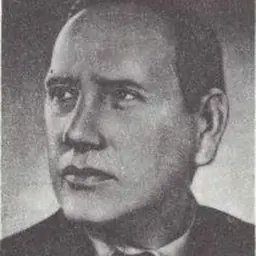
Contemporaries
People whose lives overlapped Vsevolod Pudovkin's
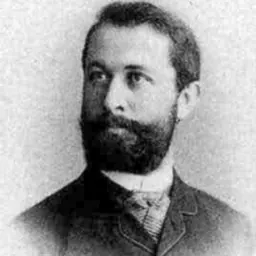


Frequently asked questions
Who was Vsevolod Pudovkin?
Soviet film director, screenwriter and actor (1893–1953)
When was Vsevolod Pudovkin born?
Vsevolod Pudovkin was born on 28 February 1893 in Penza.
When did Vsevolod Pudovkin die?
Vsevolod Pudovkin died on 30 June 1953 in Jūrmala.
What was Vsevolod Pudovkin's occupation?
Vsevolod Pudovkin was an actor, film director, screenwriter, writer, film actor and director.
What nationality was Vsevolod Pudovkin?
Vsevolod Pudovkin was Russian.
Sources & further reading
· Wikipedia: Vsevolod Pudovkin
Cite this page
APA: Biography.guide. (2026). Vsevolod Pudovkin. https://biography.guide/vsevolod-pudovkin/
MLA: "Vsevolod Pudovkin." Biography.guide, https://biography.guide/vsevolod-pudovkin/.
Chicago: "Vsevolod Pudovkin." Biography.guide. https://biography.guide/vsevolod-pudovkin/.
Data last updated: 2026-09-24 · Spot an error? Report a correction.
Page generated 2026-09-27 05:02 UTC