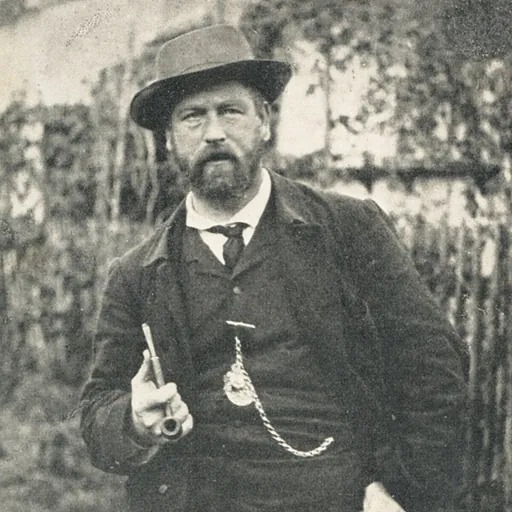
About Wilhelm Leibl
Lived 1844 – 1900 (aged 56). Wilhelm Leibl was a German painter, graphic artist, draftsperson and painting.
Wilhelm Maria Hubertus Leibl (October 23, 1844 – December 4, 1900) was a German realist painter. He became famous for his portraits and depictions of scenes of peasant life.
Biography Leibl was born in Cologne, where his father was the director of the Cathedral choir. He was apprenticed to a locksmith before beginning his artistic training with the local painter Hermann Becker in 1861. Leibl's paintings, which already reflected his admiration for the Dutch old masters, became looser in style, their subjects rendered with thickly brushed paint against dark backgrounds.
Career In 1869, following Courbet's suggestion, Leibl went to Paris, where he was introduced to Édouard Manet, but was forced to return to Germany in 1870, due to the outbreak of the Franco-Prussian War. In 1873 Leibl left Munich for the isolated Bavarian countryside, where he depicted the local peasants in everyday scenes devoid of sentimentality or anecdote. The sketchlike quality of his earlier paintings was replaced by greater precision and attention to drawing. Living from 1878 to 1882 in Berbling, he painted perhaps his best-known work, the Three Women in Church (Kunsthalle, Hamburg). Its intensely realistic style recalls Hans Holbein in its clarity of definition. During the following years he moved to the town of Bad Aibling and, in 1892, to Kutterling, as his paintings united the disciplined drawing he had adopted in the 1880s with a new delicacy and luminosity.
Leibl painted without preliminary drawing, setting to work directly with color, an approach that has parallels to Impressionism. His commitment to the representation of reality as the eye sees it earned him recognition in his lifetime as the preeminent artist of a group known as the Leibl-Kreis (Leibl Circle) that included, among others, Carl Schuch, Wilhelm Trübner, Otto Scholderer, and Hans Thoma.
During the first half of the 1870s, Leibl executed a series of 19 etchings in a meticulous style. His charcoal drawings are conceived in great masses of light and shadow, blocked in as though he were using a brush and paint.
He visited the Netherlands in 1898, and his work was included in the Berlin Secession exhibition the following year. He died in Würzburg in 1900.
Don’t just read it —
keep it.
Full-length biographies made to live with: read them, listen on the way to work, watch them tonight.
- E-book
- Audio
- Video
Instant download · yours to keep · every purchase keeps this site free
Important facts
People in Wilhelm Leibl's life
Named in this biography and alive at the same time
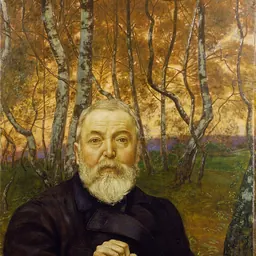

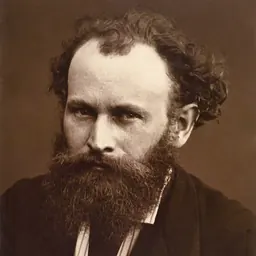

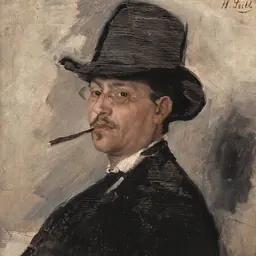

Related people
Same field, nearest in time
Contemporaries
People whose lives overlapped Wilhelm Leibl's
Frequently asked questions
Who was Wilhelm Leibl?
German artist (1844–1900)
When was Wilhelm Leibl born?
Wilhelm Leibl was born on 23 October 1844 in Cologne.
When did Wilhelm Leibl die?
Wilhelm Leibl died on 4 December 1900 in Würzburg.
What was Wilhelm Leibl's occupation?
Wilhelm Leibl was a painter, graphic artist, draftsperson and painting.
What nationality was Wilhelm Leibl?
Wilhelm Leibl was German.
Sources & further reading
Cite this page
APA: Biography.guide. (2026). Wilhelm Leibl. https://biography.guide/wilhelm-leibl/
MLA: "Wilhelm Leibl." Biography.guide, https://biography.guide/wilhelm-leibl/.
Chicago: "Wilhelm Leibl." Biography.guide. https://biography.guide/wilhelm-leibl/.
Data last updated: 2026-09-22 · Spot an error? Report a correction.
Portrait: Wikimedia Commons · author & licence
Page generated 2026-09-27 05:03 UTC