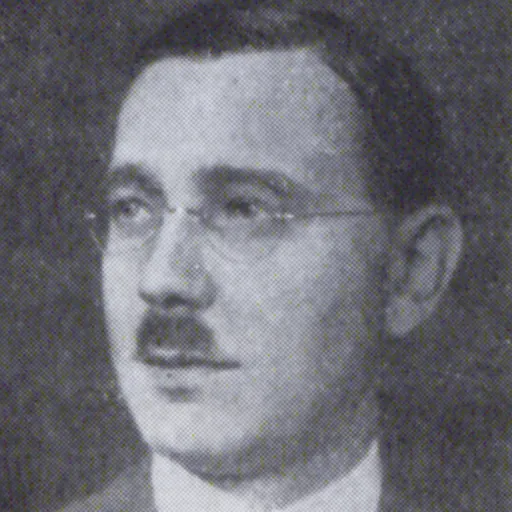
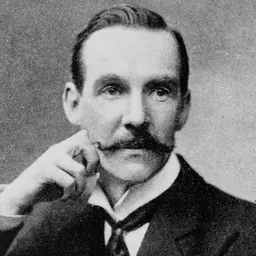
About Wilhelm Klemm
Lived 1896 – 1985 (aged 89). Wilhelm Klemm was a German chemist and university teacher, known for Magnetochemistry, Ytterbium and Zintl phase.
Education Klemm was born on 5 January 1896 in Guhrau, Lower Silesia to Wilhelm and Ottilie (John) Klemm. His father was a master carpenter and furniture manufacturer. He was an army liaison in Turkey, where he learned Turkish and Arabic.
From 1919 to 1923 Klemm studied chemistry at University of Breslau. In 1923, Klemm received a doctor of philosophy degree. Heinrich Biltz supervised Klemm's dissertation on the chemistry of uric acid,
In December 1924 Klemm married Lisabeth Herrmann, who had studied chemistry at Danzig (Gdańsk) and at Breslau University with Heinrich Biltz. She received her degree in 1921, completing a doctoral thesis magna cum laude on the methylation of uric acid and its methyl derivatives. Her father was a forestry scientist. The Klemms formed a community of which Lisbeth Klemm was the social center, and Wilhelm was the intellectual center.
The Technische Hochschule Danzig was at that time located in the Free City of Danzig (1920-1939). The population of the city was predominantly German and faculty and staff tended to align with National Socialism even before 1933. He did sign the later Aufstellung zu den Unterzeichnern des Appells „An die Gebildeten der Welt“ (11. November 1933), a list of academics who professed support for Adolf Hitler and National Socialism. Klemm became a member of the NSDAP (Nazi Party) in 1938, rather later than contemporaries like Adolf Butenandt. In a letter to the editorial staff of Chemische Berichte in June 1942 Klemm argued that contributions from chemist Georg-Maria Schwab and other "non-Aryan" authors should not appear in German chemical journals.
Klemm served as head of the Inorganic Chemistry department of the Technische Hochschule Danzig from 1933 to 1945,
Klemm was the lead author for the preparation and publication of the six inorganic chemistry volumes of the FIAT review of German science, 1939-1946 (1948-1949). FIAT volumes were compiled by leading German scientists in cooperation with the Military Government for Germany, involving Field Information Agencies Technical from the British, French, and U.S. zones, to report on the scientific work done in Germany during the war years.
From 23 May 1947
Klemm's first wife, Lisabeth Klemm (née Herrmann, born 9 October 1895, Eberswalde) died of cancer on 15 October 1948 in Kiel.
Scientific contributions Klemm's scientific work focused on the systematic investigation of solids, to understand the properties of substances and how they related to the substances' atomic arrangement.
Klemm has been described as the founder of modern magnetochemistry
Klemm's areas of focus included the intermetallic compounds, rare earth metals, transition elements and compounds involving oxygen and fluorine. His work on the properties of rare elements such as gallium, germanium, indium, rhenium and related compounds was considered authoritative. He was particularly interested in the synthesis of compounds involving unusual degrees of oxidation, and the comparison of compounds with similar structure in order to better understand their properties.
Klemm studied molar volumes and coefficients of expansion of both fused and solid halides. He also examined indium, gallium, germanium, and rhenium, and rare earth elements, determining their heats of formation and studying their reactivity with ammonia.
In 1934, Wilhelm Klemm and Heinrich Bommer were the first to achieve pure erbium, by heating erbium chloride with potassium. In 1936, Wilhelm Klemm and Heinrich Bommer were the first to isolate elemental ytterbium by reducing ytterbium (III) chloride with potassium at 250 °C. They also determined the crystal structure and magnetic properties of the metal.
Klemm's research led to the identification of systematic relationships among the elements of the periodic system. It also led to a new method for classifying rare earths based on the stability of both completely filled and "half-filled" electrons which could be applied to both ions and metals.
One of Klemm's students and coworkers was Rudolf Hoppe. Hoppe worked with Klemm on fluorides, and in 1962 produced the first noble gas compounds.
Textbooks Over the course of his career, Klemm wrote and co-wrote a number of textbooks on inorganic chemistry which became standard textbooks in the field, repeatedly reprinted and translated. These include: Klemm, Wilhelm, Anorganische chemie (c1935). Berlin, Leipzig, W. de Gruyter & co. Klemm, Wilhelm, Magnetochemie (c1936) Leipzig, Akademische Verlagsgesellschaft m.b.H. Considered a foundational text in magnetochemistry. Klemm, Wilhelm, and Hoppe, Rudolf. Anorganische Chemie (c1979). Berlin; Boston : De Gruyter, c1979. Anorganische Chemie by Klemm and Rudolf Hoppe has been described as a legendary work by two titans of solid state chemistry.
Organizational contributions Klemm was a member of the Academy of Sciences Leopoldina (Deutsche Akademie der Naturforscher Leopoldina) in Halle, Germany; the Bavarian Academy of Sciences and Humanities (Bayerische Akademie der Wissenschaften) in Munich, Germany; the Göttingen Academy of Sciences (Akademie der Wissenschaften zu Göttingen) in Göttingen, Germany; and the Rhine-Westphalian Academy of Sciences in Düsseldorf, Germany. He was the first German scientist to fill such a high international position after World War II. He served on the committee from 1968 to 1975, also holding the position of vice-president. His body was returned to Münster, where he is buried in the Münster Central Cemetery, ID 186397208.
The first scholarships of the Wilhelm-Klemm-Stiftung were awarded in 1987.
Awards and honors 1951, Liebig Medal (Liebig-Denkmünze), Gesellschaft Deutscher Chemiker (Society of German Chemists) 1963, Carl-Duisberg-Plakette, 1965, Lavoisier Medal, Société Chimique de France 1980, Festschrift, The Journal of the Less-Common Metals published an issue in honor of his 85th birthday, which occurred on 5 January 1981. 1981, title of Honourable Senator, University of Münster, in recognition of contributions to the rebuilding of the university. It is part of the university and is the site of the Physics building. 1985, first award of the Wilhelm Klemm Prize, given by the GDCh in his honor.
Additional sources Bibliography: Goubeau, Josef. (1961) "Wilhelm Klemm." In Zeitschrift für Elektrochemie. Berichte der Bunsengesellschaft für Physikalische Chemie. 65, p. 105. King RB 2004, 'The metallurgist's periodic table and the Zintl-Klemm concept', in DH Rouvray DH & RB King (eds), The periodic table: into the 21st century, Institute of Physics Publishing, Philadelphia, , pp. 189–206. Miller GJ, Schmidt MW, Wang F & You T-S 2011, 'Quantitative Advances in the Zintl-Klemm Formalism,' in TF Fässler (ed), Zintl Phases: Principles and Recent Developments, Springer-Verlag, Berlin, pp. 1 56, Klemm W 1950, 'Einige probleme aus der physik und der chemie der halbmetalle und der metametalle', Angewandte Chemie, vol. 62, no. 6, pp. 133–42
Don’t just read it —
keep it.
Full-length biographies made to live with: read them, listen on the way to work, watch them tonight.
- E-book
- Audio
- Video
Instant download · yours to keep · every purchase keeps this site free
Important facts
Family & relationships
People in Wilhelm Klemm's life
Named in this biography and alive at the same time




Related people
Same field, nearest in time



Contemporaries
People whose lives overlapped Wilhelm Klemm's




Frequently asked questions
Who was Wilhelm Klemm?
German chemist (1896–1985)
When was Wilhelm Klemm born?
Wilhelm Klemm was born on 5 January 1896 in Góra.
When did Wilhelm Klemm die?
Wilhelm Klemm died on 24 October 1985 in Gdańsk.
What was Wilhelm Klemm's occupation?
Wilhelm Klemm was a chemist and university teacher.
What was Wilhelm Klemm known for?
Wilhelm Klemm was known for Magnetochemistry, Ytterbium and Zintl phase.
What nationality was Wilhelm Klemm?
Wilhelm Klemm was German.
Sources & further reading
Cite this page
APA: Biography.guide. (2026). Wilhelm Klemm. https://biography.guide/wilhelm-klemm/
MLA: "Wilhelm Klemm." Biography.guide, https://biography.guide/wilhelm-klemm/.
Chicago: "Wilhelm Klemm." Biography.guide. https://biography.guide/wilhelm-klemm/.
Data last updated: 2026-09-20 · Spot an error? Report a correction.
Portrait: Wikimedia Commons · author & licence
Page generated 2026-09-27 04:57 UTC