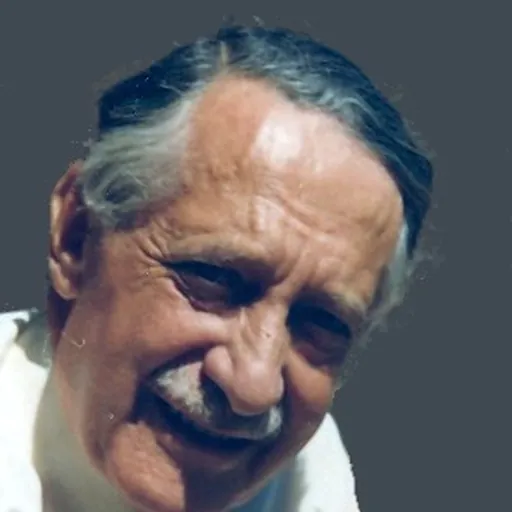
About Georg-Maria Schwab
Lived 1899 – 1984 (aged 85). Georg-Maria Schwab was a German chemist and university teacher, known for Catalyst poisoning, Heterogeneous catalysis and Ozone.
Georg-Maria Schwab (, ; 3 February 1899 – 23 December 1984) was a German-Greek physical chemist recognised for his important contributions in the field of catalysis and the kinetics thereof.
Schwab's early academic career at the Friedrich Wilhelm University of Berlin and the University of Würzburg (1923–1928) was characterised by meticulous experimental work as a kineticist, before starting his specialisation in heterogeneous catalysis at the Ludwig-Maximilians-Universität München (1928–1938). Eventually returning to West Germany in the 1950s, Schwab served as professor of physical chemistry at the Ludwig-Maximilians-Universität München until retirement (1951–1967). He kept the position and taught the subject for the next 10 years. At the time, it was still not certain whether the tetratomic species oxozone, , was also present in ozone samples. The work of young Schwab conclusively refuted the century-old theory of oxozone, which led to the exceptional grade of his dissertation.
Early kinetic work Schwab's research interests seem to have switched to kinetics under the guidance of Max Bodenstein while at Nernst's Institute of Physical Chemistry in Berlin. Some of the problems on which Schwab worked on his own in this period included the thermal decomposition of methane, chemical reactions taking place during a cold cathode discharge, and the speed of dissolution of gases.
In Würzburg, he continued along a similar line of work studying gas dissolution, the thermal decomposition of ammonia, and the kinetics of photochlorination reactions.
Catalysis Generalised depiction of heterogeneous catalysis studied by Schwab: the reactant (blue) is converted to product (red) at the surface of the catalyst phase (brown). It was at the Ludwig-Maximilians-Universität München (1928–1938) that Schwab started systematic work on heterogeneous catalysis which marked the rest of his career. Among the catalysis-related topics he studied at the Ludwig-Maximilians-Universität München were the kinetics of heterogeneously catalysed reactions, the nature of the heat of adsorption, the poisoning of catalysts and the spatial distribution of active catalytic sites. He also collaborated with his future wife Elly on her research about the influence of free radicals on parahydrogen, a work which they completed in Greece.
In the Kanellopoulos Institute (1939–1950), with the academic freedom he was given Schwab produced research on various occasional topics such as inorganic chromatography (which he is credited with inventing), turn-over transitions, carbon adsorption and properties of parahydrogen. He also built on his previous work with a series of kinetic studies, which eventually led to his theory on the electronic mechanisms of metal catalysis.
In later years, after returning to the Ludwig-Maximilians-Universität München as professor of physical chemistry, Schwab discovered the surface catalytic influence of a metal in contact with a semiconductor catalyst or an insulator in contact with a metal catalyst (occasionally referred to as Schwab effects of the 1st and of the 2nd type, respectively).
Textbooks Schwab was also known as a writer of physical chemistry and catalysis textbooks, with important works such as the Physico-chemical Foundations of Chemical Technology (, 1928) or Catalysis from the Standoint of Chemical Kinetics (, 1931), the English translation of which was a standard textbook on catalysis for decades. He was the editor of all 7 volumes of the international Handbook of Catalysis (1940–1960).
Honours Schwab received honours throughout his lifetime in recognition of his scientific work. In 1952 he became one of the only 45 ordinary members of the Bavarian Academy of Sciences, and in 1956 he was also inducted as a member of the Heidelberg Academy of Sciences and the German National Academy of Sciences Leopoldina.
In 1960 he was awarded the Liebig Medal of the German Chemical Society; he had also been awarded the Order of the Crown of Belgium (Officer class) as well as the Golden Cross of the Greek Order of George I.
Additionally, he was conferred honorary doctorates from the Sorbonne, the Free University of Berlin and the University of Liège, as well as an honorary professorship at the Central University of Venezuela.
Don’t just read it —
keep it.
Full-length biographies made to live with: read them, listen on the way to work, watch them tonight.
- E-book
- Audio
- Video
Instant download · yours to keep · every purchase keeps this site free
Important facts
Family & relationships
People in Georg-Maria Schwab's life
Named in this biography and alive at the same time

Related people
Same field, nearest in time


Contemporaries
People whose lives overlapped Georg-Maria Schwab's




Frequently asked questions
Who was Georg-Maria Schwab?
German chemist (1899–1984)
When was Georg-Maria Schwab born?
Georg-Maria Schwab was born on 3 February 1899 in Berlin.
When did Georg-Maria Schwab die?
Georg-Maria Schwab died on 23 December 1984 in Munich.
What was Georg-Maria Schwab's occupation?
Georg-Maria Schwab was a chemist and university teacher.
What was Georg-Maria Schwab known for?
Georg-Maria Schwab was known for Catalyst poisoning, Heterogeneous catalysis, Ozone and Physical chemistry.
What nationality was Georg-Maria Schwab?
Georg-Maria Schwab was German.
Sources & further reading
· Wikipedia: Georg-Maria Schwab
Cite this page
APA: Biography.guide. (2026). Georg-Maria Schwab. https://biography.guide/georg-maria-schwab/
MLA: "Georg-Maria Schwab." Biography.guide, https://biography.guide/georg-maria-schwab/.
Chicago: "Georg-Maria Schwab." Biography.guide. https://biography.guide/georg-maria-schwab/.
Data last updated: 2026-09-22 · Spot an error? Report a correction.
Portrait: Wikimedia Commons · author & licence
Page generated 2026-09-27 05:02 UTC