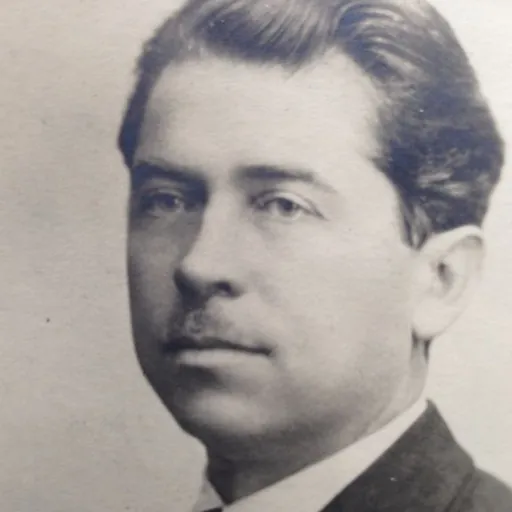
About Constantin Cândea
Lived 1887 – 1971 (aged 83). Constantin Cândea was a Romanian chemist and university teacher, known for Analytical chemistry, Chemistry and Organic chemistry.
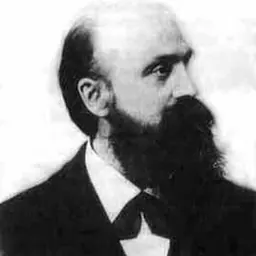
Constantin Cândea (; December 15, 1887 – March 4, 1971) was a Romanian chemist, professor, Doctor Docent, Engineer with habilitation in Chemistry, and Rector of the Politehnica University of Timișoara (then the Polytechnic School of Timișoara) between 1946 and 1947. He founded the chemistry laboratories of the Polytechnic School of Timișoara, served as a deputy, and was a member of the Romanian Academy of Sciences.
Biography
Constantin Cândea was born on December 15, 1887, in the commune of Mărgineni, Bacău, Bacău County.
He married Maria Cândea née Antoniade on September 27, 1923 (born in Galați – died in Bucharest), a professor of French and Romanian, Doctor of Letters from the Sorbonne, who founded and served as principal of the Girls' Normal School "Queen Marie" (today the National Pedagogical College "Queen Marie") in Ploiești from November 10, 1918.
The couple had two children: Mioara-Rodica Georgescu née Cândea, an architect, (July 9, 1924, Ploiești – September 13, 2017, Montreal), and Ioan-Radu Cândea, a civil engineer (September 24, 1925, Ploiești – February 11, 2016, Bucharest).
Constantin Cândea passed away on March 4, 1971, in Bucharest at the age of 83. He was buried in Bellu Cemetery, Plot 4.
Education In 1906, he graduated from the "Prince Ferdinand" High School in Bacău, His doctoral dissertation, structured in two parts, addressed both fundamental studies in organic chemistry and analyses concerning the economics of energy resources. The first part, entitled "On the Constitution of Diphenol-, Dithiophenol-, Di-α- and β-Naphthol, Dithionaphthol, Dimethylaniline-, Thionaphthenquinones, α-Naphtholisatin and Their Dye Derivatives", examined the structure and properties of a series of phenolic compounds and their derivatives relevant to dye chemistry. The second part, "The Importance of Petroleum for Romanian Industry", analyzed the strategic role of petroleum in the economic development of Romania during the first half of the twentieth century.
Career and Professional Activity At the beginning of his academic career, Constantin Cândea served as a lecturer at the Faculty of Sciences of the University of Bucharest, the institution where he also earned his doctorate in chemistry. At the same time, he was active as president of the Industrial Studies Circle, where he delivered lectures on policies for the development of Romanian industry.
During the first academic year of the Polytechnic School of Timișoara, established following Royal Decree No. 4822 of November 11, 1920, issued by King Ferdinand I, Professor Constantin Cândea founded the chemistry laboratory, while Professor Constantin Stăncescu established the physics laboratory.
As part of his work at the Polytechnic School of Timișoara, during the 1922–1923 academic year, Constantin Cândea also established and directed an official Laboratory for Industrial Research, Studies and Analyses, separate from the teaching laboratories. The laboratory was intended to conduct applied research, technical-scientific studies, and chemical and chemical-engineering analyses for industry.
Organized into several industrial sections (inorganic industry, metallurgy, organic industry, fuels, and general expertise), the laboratory carried out analyses of industrial raw materials, fuels, oils, fats, metals, water, and chemical products, as well as studies with direct industrial applications. Constantin Cândea served as its director, working alongside specialists such as Er. Toporescu, Cerchez Manughevici, C. Ștefănescu, and other academic and technical staff members.
As part of his teaching activity, Constantin Cândea authored several university textbooks used as study materials at the Polytechnic School of Timișoara.
1928 – Course of Inorganic Chemistry: First Year, Polytechnic School of Timișoara 1928 – Course of Organic Chemistry: First Year, Polytechnic School of Timișoara 1929 – Course of Organic Chemistry II: Aromatic Series, Polytechnic School of Timișoara 1929 – Course of Petroleum Chemistry, Physics and Technology: Second Year, Polytechnic School of Timișoara
Throughout his academic career, Constantin Cândea regularly participated in international chemistry congresses, where he annually presented papers on the results of his research in organic and industrial chemistry in The Hague, Liège, Brussels, Prague, Paris, Madrid, Sardinia, Rome, and Nancy.
An important part of his scientific and educational work is today preserved in the collections of the Romanian Academy Library, where it is consulted as a reference source for the history of Romanian chemistry.
As Director of the Institute of Chemistry of the Polytechnic School of Timișoara, Constantin Cândea published numerous specialized studies in Romanian and foreign journals. Among these were "The Upgrading of Romanian Lignites", published in România Petroliferă, no. 393, May 31, 1943, and "The Utilization of Methane Gas", published in the same journal, no. 394, July 5, 1943, both reproduced in full by the publication.
On November 22, 1934, following elections for the leadership of the Polytechnic School of Timișoara, Constantin Cândea was elected President of the Council of Deans.
Beginning in 1942, Professor Constantin Cândea served as Vice-Dean of the Faculty of Mining and Metallurgy of the Polytechnic School of Timișoara, playing an important role in organizing the faculty's academic and administrative activities.
Subsequently, between 1946 and 1947, he served as rector of the Politehnica University of Timișoara—then known as the Polytechnic School of Timișoara. in the Runcu–Scorțeni oil field area of Prahova County.
The explosion occurred during intervention works on the extraction installation and resulted in fatalities, numerous serious injuries, and extensive material damage.
The investigation sought to determine the technical causes of the violent eruption of crude oil and gas, analyze the interventions carried out on the jammed well piston, and assess compliance with technical and safety regulations governing petroleum operations. The inquiry also examined the risks posed by accumulations of flammable gases and the procedures used during pressure-release operations in the well column.
Dr. Eng. Constantin Cândea's participation in this investigation reflected recognition of his scientific and technical expertise in petrochemistry and industrial safety. He was appointed by the Ministry of Labour to identify the causes of the accident, clarify responsibilities, and formulate recommendations aimed at preventing similar accidents in Romania's petroleum-producing regions.
Patents
During his scientific and applied research career, Professor Constantin Cândea held several patents in the fields of industrial chemistry and hydrocarbon use, including:
1932: Constantin Cândea, as principal inventor together with J. Kühn, obtained Patent No. 20787/1932, entitled "Process for the Decomposition of Hydrocarbons into Carbon and Hydrogen". The patent was granted by Royal Decree No. 924 of 1932, published in the Official Gazette, Part I, No. 148 of June 27, 1932. In the subsequent detailed publication in the Official Gazette, Part I, No. 151 of June 30, 1932, the other co-applicants and economic holders of the patent are also listed, namely Maria Cassale-Sacchi and the company Cesag A.G., in accordance with the patent's administrative file. 1934: Constantin Cândea, as principal inventor together with Ilie G. Murgulescu and J. Kühn, obtained Romanian Royal Patent No. 23259/1934, entitled "Conversion of Methane by Metallic Chlorides". The patent is mentioned in the Official Gazette, Part I, No. 118 of May 28, 1945, in the context of the publication of the Ministry of National Education report concerning the transformation of the chemistry lectureship at the Faculty of Mining and Metallurgy of the Polytechnic School of Timișoara into a chair of Analytical and Physical Chemistry, and the appointment of Ilie G. Murgulescu as full professor.
Political Activity
In June 1939, Constantin Cândea ran as an independent candidate and was elected a deputy to the Chamber of Deputies, representing the category of "Intellectual Professions" in the Timiș electoral district, in his capacity as an academic and technical personality. He served on the Committee for National Education, Religious Affairs, and Arts. His mandate ended in September 1940 with the dissolution of Parliament.
On June 23, 1939, as part of his parliamentary activity, Professor Cândea delivered a speech before the Chamber of Deputies in which he addressed the role of higher technical education, scientific research, and industry in economic development and the strengthening of national defense. He put forward concrete proposals concerning the modernization and expansion of polytechnic schools, the establishment of scientific research institutes connected to national defense, the development of the Polytechnic School of Timișoara, support for university research, the specialization of young engineers, the creation of strategic industries, the use of natural resources, and the encouragement of private enterprise.
Honors and awards
Throughout his career, Constantin Cândea was awarded the Order of the Crown of Romania in the rank of Officer and the Order of the Star of Romania in the rank of Knight,
Affiliations
During his university studies in Munich, Constantin Cândea became a member of the Romanian Students' Society Patria in Munich in 1907. In May 1911, he was elected president of the organization, founded in 1898, whose objectives included the intellectual and cultural development of its members in the spirit of Romanian national identity, as well as the promotion of artistic, scientific, and literary activities and collegial and social engagement.
From February 1919, he became a member of the General Association of Engineers of Romania (AGIR).
From 1920, he served as president of the Industrial Studies Circle of the University of Bucharest.
In 1929, Constantin Cândea was appointed president of the Timișoara branch of the newly established Chemical Society of Romania. In this capacity, he coordinated the organization of the Fourth National Congress of Chemistry of Romania, held in Timișoara from May 21 to 24, 1933, serving as local chairman of the organizing committee. He led the branch until 1939, when the activities of the Chemical Society of Romania were suspended, resuming only in 1992.
From October 1935, he was a member of the Polytechnic Society of Romania.
He became a corresponding member of the Romanian Academy of Sciences on December 21, 1935, and a full member on December 20, 1936.
Committees and Advisory Activities
Throughout his career, Constantin Cândea served on numerous committees and advisory bodies, contributing both to technical education and to industrial and national defense matters:
Council for Advanced Studies of the Polytechnic School of Timișoara (from 1930) – as a delegated member of the professors' council, he participated in organizing educational activities and evaluating professional development programs. board of directors of the Polytechnic School of Timișoara (from 1930) – as a delegated member of the professors' council, he contributed to the institution's administrative and technical-pedagogical coordination. Executive Committee of the Banat-Crișana Social Institute (from 1932) – member. Technical Assessor to the Labor Court of Timișoara (from 1933) – provided expert opinions on technical and administrative issues in the engineering field. Advisory Commission of the Ministry of Army Equipment (from 1939) – appointed member of a scientific advisory commission dealing with technical and scientific matters related to national defense. Supervisory Administrator of the Municipal Electric Plant of Jimbolia (from June 12, 1945) – exercised oversight and technical coordination responsibilities in the local energy sector. Honorary Technical Adviser to the Ministry of Mines and Petroleum (from 1945) – honorary technical adviser to the Minister's Office, responsible for matters relating to industries connected with the mining sector. Member of the board of directors of the National Institute for Technological Research (from November 27, 1945), an institution established under Law No. 516 of June 30, 1945, and placed under the authority of the Ministry of Mines and Petroleum.
As a member and later chairman of university appointment committees, Constantin Cândea contributed to the promotion of Leon Sauciuc to the position of lecturer in Organic and Petroleum Chemistry at the Faculty of Mining and Metallurgy of the Polytechnic School of Timișoara, and of Ilie G. Murgulescu to the rank of full professor of Analytical and Physical Chemistry at the same faculty in 1945.
In 1946, at Constantin Cândea's initiative, in his capacity as chairman of the baccalaureate examination committee of the "Carmen Sylva" High School of Timișoara and Rector of the Polytechnic School of Timișoara, the sum of 642,000 lei was deposited into an account of the Savings and Deposit Bank (C.E.C.) to assist the victims of the drought and famine of 1946–1947 in Moldavia.
Works Professor Constantin Cândea maintained a prolific scientific activity in the fields of organic chemistry, inorganic chemistry, analytical chemistry, and petrochemistry. His works addressed topics such as the hydrogenation of petroleum and petroleum residues, the cracking and oxidation of hydrocarbons, the synthesis of organic compounds, qualitative and volumetric analysis of chemical substances, and the reactions of methane gas with various compounds. His contributions were published in both Romanian and international specialized journals, demonstrating a remarkable thematic and practical diversity.
All of the works listed below, together with his doctoral dissertation and the university textbooks he authored, are preserved in the collections of the Romanian Academy Library.
Year Title (with English translation) Co-authors Journal / Venue ISSN Pages Field 1924 Colorantul de dithymolizalină (Dithymolizaline Dye) – Buletinul Societății de Chimie din Timișoara – – Organic chemistry / indicators 1932 La décomposition thermique du gaz méthane de Sărmășel (Thermal Decomposition of Sărmășel Methane Gas) – XIIe Congrès de Chimie Industrielle, Paris – – Inorganic chemistry / methane 1933 Die Reduktion von Eisenerzen mit Naturgas (Reduction of Iron Ores with Natural Gas) – Rocznik Chemiczny (Polish Journal of Chemistry), vol. 13 – – Reduction reactions / metallurgy 1933 Sur la constitution de la bis-cliéthyl-anilinisatine et du colorant vert obtenu par oxydation (On the Constitution of Bis-Cliethyl-Anilinisatine and the Green Dye Obtained by Oxidation) – Bulletin Scientifique de l’École Polytechnique de Timișoara, tome 4, fasc. 3–4 – – Organic chemistry / dyes 1934 Die Reduktion von Eisenoxyd mit Naturgas (Reduction of Iron Oxide with Natural Gas) – Bulletin de la Société de Chimie de Roumanie – – Metallurgical reductions 1934 Die Reduktion von Kupferoxyd und Zinndioxyd mit Naturgas (Reduction of Copper Oxide and Tin Dioxide with Natural Gas) – Petroleum, vol. 35 – – Metallurgy / reduction 1934 Die Umsetzung von Methan und Petroleum-Kohlenwasserstoffen mit Wasserdampf (Reaction of Methane and Petroleum Hydrocarbons with Steam) – Bulletin Scientifique de l’École Polytechnique de Timișoara, Band 5, Heft 2 – – Methane reforming 1934 La décomposition thermique du gaz méthane de Sărmășel – Communication présentée au XVIe Congrès de Chimie Industrielle (Thermal Decomposition of Sărmășel Methane Gas – Paper Presented at the 16th Congress of Industrial Chemistry) – Chimie et Industrie, vol. 33, nr. 4 – – Industrial chemistry 1934 Analitische Arbeitsmethoden (Analytical Working Methods) L. Sauciuc Bulletin Scientifique de l’École Polytechnique de Timișoara – – Analytical chemistry 1934 Action du méthane sur le chlorure de sodium (Action of Methane on Sodium Chloride) I. G. Murgulescu XIVe Congrès de Chimie Industrielle, Paris – – Methane reactivity / inorganic chemistry 1934 Trennung der Metalle der Kupfergruppe (Separation of the Copper-Group Metals) – Analytical and Bioanalytical Chemistry 1618–2642 (Print) / 1618–2650 (Online) 276–276 Analytical chemistry / metallurgy 1934 Zur Trennung der sauren Sulfide von den übrigen Gliedern des Schwefelwasserstoffniederschlags (On the Separation of Acid Sulfides from the Other Components of the Sulfide Precipitate) – Fresenius Journal of Analytical Chemistry 0937-0633 (Print) / 1432-1130 (Online) 118–118 Analytical chemistry 1934 Pour la séparation des sulfures acides des autres composés du précipité sulfuré (For the Separation of Acid Sulfides from the Other Components of the Sulfide Precipitate) – Analytical and Bioanalytical Chemistry 1618–2642 / 1618–2650 118–118 Analytical chemistry 1935 Action du gaz méthane sur les chlorures de lithium et de potassium (Action of Methane Gas on Lithium and Potassium Chlorides) I. G. Murgulescu Chimie et Industrie – – Physical chemistry / inorganic chemistry 1935 Hydrogenation du pétrole roumain (Hydrogenation of Romanian Petroleum) – XIVe Congrès de Chimie Industrielle de France – – Hydrogenation 1935 Beitrag zum Kracken eines rumänischen Petroleum bei Atmosphärendruck (Contribution to the Cracking of a Romanian Petroleum at Atmospheric Pressure) L. Sauciuc Bulletin Scientifique de l’École Polytechnique de Timișoara – – Petrochemistry / cracking 1935 Die Wärmespaltung von rumänischem Petroleum aus Moreni (Thermal Decomposition of Romanian Petroleum from Moreni) C. Manughevici Bulletin Scientifique de l’École Polytechnique de Timișoara – – Thermal degradation of petroleum 1935 La catalyse du pétrole lampant de Moreni (Catalysis of Moreni Kerosene) J. Kühn, C. Manughevici Paris – – Catalysis / petroleum products 1935 Bromderivés de quinoléinhomoneurine (Brominated Derivatives of Quinoléinhomoneurine) E. Macovski, J. Kühn Atti del V Congresso nazionale di chimica pura ed applicata, Sardegna – – Brominated organic compounds 1935 La decomposizione termica del petrolio rumeno di Moreni nei riguardi della formazione di etilene (Thermal Decomposition of Romanian Petroleum from Moreni with Respect to Ethylene Formation) C. Manughevici Atti del V Congresso nazionale di chimica – – Cracking / ethylene 1935 Die konduktometrische Titration der Molybdate mit Silbernitrat (Conductometric Titration of Molybdates with Silver Nitrate) I. G. Murgulescu Bulletin de la Société Chimique Roumaine, vol. XVII – 103–110 Analytical chemistry 1935 Die konduktometrische Titration der Wolframate mit Silbernitrat (Conductometric Titration of Tungstates with Silver Nitrate) I. G. Murgulescu Bulletin de la Société Chimique Roumaine, vol. XVII – 223 Analytical chemistry 1936 Anreicherung der aromatischen Kohlenwasserstoffe in Benzin (Enrichment of Aromatic Hydrocarbons in Gasoline) L. Sauciuc Bulletin Scientifique de l’École Polytechnique de Timișoara – – Aromatic hydrocarbons 1936 Die thermische Spaltung von Benzin und Heizöl unter Berücksichtigung der Äthylen-Bildung (Thermal Decomposition of Gasoline and Fuel Oil, with Consideration of Ethylene Formation) C. Manughevici Bulletin Scientifique de l’École Polytechnique de Timișoara, tome 6, fasc. 3–4 – – Industrial chemistry / petrochemistry 1936 Einfluss der hohen Temperaturen auf Krackgase, erhalten durch thermische Spaltung von rumänischem Petroleum (Moreni) (Influence of High Temperatures on Cracking Gases Obtained by Thermal Decomposition of Romanian Petroleum (Moreni)) E. Macowski Bulletin Scientifique de l’École Polytechnique de Timișoara, tome 6, fasc. 3–4 – – Industrial chemistry / petrochemistry 1936 Hydrogénation destructive des résidus du pétrole roumain de Moreni (Destructive Hydrogenation of Romanian Petroleum Residues from Moreni) A. Marschall Chimie et Industrie – – Hydrogenation / petroleum residues 1936 Dosage volumétrique du plomb et des molybdates avec des indicateurs d’absorption (Volumetric Determination of Lead and Molybdates Using Adsorption Indicators) I. G. Murgulescu Annales de chimie analytique – – Analytical chemistry / titrimetry 1936 Action du gaz méthan de Sărmășel sur le chlorure de lithium et de potassium (Action of Sărmășel Methane Gas on Lithium and Potassium Chloride) I. G. Murgulescu Chimie et Industrie, vol. 36, nr. 5 – – Methane reactivity 1937 Action du méthan sur le chlorure de strontium et de baryum (Action of Methane on Strontium and Barium Chlorides) I. G. Murgulescu Chimie et Industrie, vol. 38, nr. 1 – – Inorganic chemistry / methane reactions 1937 Blei (Lead) – Analytical and Bioanalytical Chemistry, vol. 110, nr. 5 1618–2642 / 1618–2650 206–208 Analytical chemistry 1937 Hydrogenation du pétrole roumain (Hydrogenation of Romanian Petroleum) – IIe Congrès mondial du Pétrole, Paris – – Hydrogenation 1937 Hydrogenation du pétrole roumain (Hydrogenation of Romanian Petroleum) – Comptes rendus de l’Académie des Sciences de Roumanie – – Hydrogenation 1937 Hydrogenation destructive de la paraffine (Destructive Hydrogenation of Paraffin) – Acad. des Sciences de Roumanie – – Hydrogenation 1937 Spalten schwerer Mineralöle bei Atmosphärendruck (Decomposition of Heavy Mineral Oils at Atmospheric Pressure) L. I. Sauciuc Bulletin Scientifique de l’École Polytechnique de Timișoara, tome 7, fasc. 1–2 – – Industrial chemistry / petrochemistry 1937 Über den Einfluss verschiedener Stoffe auf das Verhalten von Motortreibmittel bei der Oxydation (On the Influence of Various Substances on the Oxidation Behavior of Motor Fuels) N. Cristodulo Bulletin Scientifique de l’École Polytechnique de Timișoara, tome 7, fasc. 1–2 – – Industrial chemistry / fuels 1938 Destruktive Hydrierung eines rumänischen Paraffins (Destructive Hydrogenation of a Romanian Paraffin) L. Sauciuc Atti del X Congresso Internazionale di Chimica – – Hydrogenation / paraffins 1938 Hydrogénation du pétrole roumain de Bucsani (Hydrogenation of Romanian Petroleum from Bucsani) J. Kühn XVIIIe Congrès de Chimie Industrielle, Nancy – – Petrochemistry / hydrogenation 1939 Spalthydrierung von Petroleum (Hydrogenative Cracking of Petroleum) – Petroleum, nr. 43, 42 – – Hydrogenation / thermal degradation 1939 Hidrogenarea țițeiului de Bucșani (Hydrogenation of Bucșani Crude Oil) – Petroleum – – Petrochemistry 1939 Destruktive Hydrierung eines rumänischen Paraffins (Destructive Hydrogenation of a Romanian Paraffin) – Petroleum Zeitschrift – – Hydrogenation 1939 Die Hydrierung von Erdöl aus Boldesti im rotierenden Autoklaven (Hydrogenation of Boldești Petroleum in a Rotating Autoclave) J. Kühn Petroleum Zeitschrift – – Hydrogenation technology 1939 Qualitative Analyse (Qualitative Analysis) – Analytical and Bioanalytical Chemistry, vol. 108, nr. 9 1618–2642 / 1618–2650 340–345 Analytical chemistry 1939 Brennstoffe, Kraftstoffe (Fuels and Motor Fuels) – Analytical and Bioanalytical Chemistry, vol. 118, nr. 5 1618–2642 / 1618–2650 208–222 Petrochemistry / fuels 1941 Die Oxydation rumänischem Petroleums (Oxidation of Romanian Petroleum) C. Manughevici, N. Cristodulo Bulletin Scientifique de l’École Polytechnique de Timișoara – – Petroleum oxidation 1941 Hydrierung rumänischer Braunkohle; Die Oxydation von Petroleum; Die Kondensation der Oxybenzaldehyde mit Nitrofluoren (Hydrogenation of Romanian Lignite; Oxidation of Petroleum; Condensation of Oxybenzaldehydes with Nitrofluorene) – Institut des Sciences de Roumanie – – Hydrogenation / oxidation / synthesis 1941 Hydrierung rumänischer Braunkohle (Hydrogenation of Romanian Lignite) – Acad. des Sciences de Roumanie, Tome V, 1–2 – – Lignite hydrogenation 1941 Hydrierungsversuche an rumänischer Braunkohle (Hydrogenation Experiments on Romanian Lignite) – Öl und Kohle, vol. 39, nr. 2 – – Hydrogenation 1942 Druckhydrierung von Krackbenzin (Pressure Hydrogenation of Cracked Gasoline) – Institut des Sciences de Roumanie – – High-pressure hydrogenation 1942 Die Kondensation der Oxybenzaldehyde und Nitrobenzaldehyde cu 2.7-Dinitro-fluoren (Condensation of Oxybenzaldehydes and Nitrobenzaldehydes with 2,7-Dinitrofluorene) – European Journal of Inorganic Chemistry, vol. 75, nr. 12 1434–1948 2017–2018 Organic synthesis 1942 Gazul metan în legătură cu apărarea națională (Methane Gas in Relation to National Defense) – Buletinul Academiei de Științe din România, nr. 10 – – Energy strategy 1943 Organische Stickstoffverbindungen (Organic Nitrogen Compounds) – Analytical and Bioanalytical Chemistry, vol. 125, nr. 1 1618–2642 / 1618–2650 48–57 Organic chemistry 1943 Die Umsetzung von Methan-Gas mit Zinkchlorid (Reaction of Methane Gas with Zinc Chloride) I. G. Murgulescu Angewandte Chemie 0044-8249 / 1521–3757 247–248 Methane reactivity / inorganic chemistry 1943 Die Oxydation rumänischer Handelsbenzine (Oxidation of Romanian Commercial Gasolines) N. Cristodulo Bulletin Scientifique de l’École Polytechnique de Timișoara – – Gasoline oxidation 1943 Hydrierung von Erdölrückständen (Hydrogenation of Petroleum Residues) L. Sauciuc Bulletin Scientifique de l’École Polytechnique de Timișoara – – Hydrogenation of petroleum residues 1943 Innobilarea ligniților românești (Upgrading of Romanian Lignites) – Buletinul Societății Politehnice din România, April 15, 1943 – – Lignite processing 1944 Die Oxydation von Maisöl und Sonnenblumenöl (Oxidation of Corn Oil and Sunflower Oil) C. Manughevici Bulletin Scientifique de l’École Polytechnique de Timișoara – – Oxidation of vegetable oils 1945 Hidrogenarea cărbunilor de Doman din Banat (Hydrogenation of Doman Coals from Banat) Filofteia Dobrescu Bulletin Scientifique de l’École Polytechnique de Timișoara – – Coal hydrogenation 1948 Hidrogenarea petrolului (Hydrogenation of Petroleum) – Bulletin de Science et Technique de la Polytechnique de Timișoara, tome 13, fasc. 1 – 7 p. Petrochemistry / hydrogenation
Don’t just read it —
keep it.
Full-length biographies made to live with: read them, listen on the way to work, watch them tonight.
- E-book
- Audio
- Video
Instant download · yours to keep · every purchase keeps this site free
Important facts
Family & relationships
People in Constantin Cândea's life
Named in this biography and alive at the same time

Related people
Same field, nearest in time




Contemporaries
People whose lives overlapped Constantin Cândea's




Frequently asked questions
Who was Constantin Cândea?
Romanian chemist
When was Constantin Cândea born?
Constantin Cândea was born on 15 December 1887 in Mărgineni.
When did Constantin Cândea die?
Constantin Cândea died on 4 March 1971 in Bucharest.
What was Constantin Cândea's occupation?
Constantin Cândea was a chemist and university teacher.
What was Constantin Cândea known for?
Constantin Cândea was known for Analytical chemistry, Chemistry, Organic chemistry and Rector (academia).
What nationality was Constantin Cândea?
Constantin Cândea was Romanian.
Sources & further reading
· Wikipedia: Constantin Cândea
Cite this page
APA: Biography.guide. (2026). Constantin Cândea. https://biography.guide/constantin-candea/
MLA: "Constantin Cândea." Biography.guide, https://biography.guide/constantin-candea/.
Chicago: "Constantin Cândea." Biography.guide. https://biography.guide/constantin-candea/.
Data last updated: 2026-09-23 · Spot an error? Report a correction.
Portrait: Wikimedia Commons · author & licence
Page generated 2026-09-27 05:05 UTC