
About Adolf Butenandt
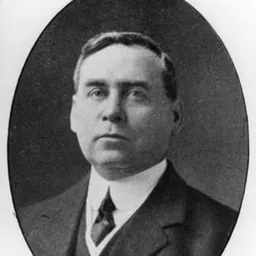
Lived 1903 – 1995 (aged 91). Adolf Butenandt was a German biochemist, chemist, politician and university teacher.
Adolf Friedrich Johann Butenandt (; 24 March 1903, Lehe near Bremerhaven – 18 January 1995, Munich) was a German biochemist. He was President of the Max Planck Society from 1960 to 1972. He was also the first, in 1959, to discover the structure of the sex pheromone of silkworms, which he named bombykol.
Education and early life Born in Lehe, near Bremerhaven, he started his studies at Marburg University. For his PhD, he joined the working group of the Nobel laureate Adolf Windaus at the University of Göttingen and he finished his studies with a PhD in chemistry in 1927. His doctoral research was on the chemistry of the insecticidal toxin found in the roots of Derris elliptica which he isolated and characterized. After his Habilitation he became lecturer in Göttingen 1931.
Professional career He became a professor ordinarius at the Technical University of Danzig from 1933 until 1936. while also joining the NSDAP on 1 May 1936 (party member No. 3716562). The earlier director of the Kaiser Wilhelm institute was Carl Neuberg, who had been removed for being a Jew. His work on rotenones was considered useful by the Nazi leadership as it could be useful for controlling lice among soldiers in the trenches. As the head of a leading institute, he applied for government funding on concentrated research labeled kriegswichtig (important for the war), some of which focused on military projects like the improvement of oxygen uptake for high-altitude bomber pilots. While working as professor in Danzig at the Chemisches Institut he was continuing his works over hormones extracting progesterone in 1934 and testosterone a year later, the research results were along with the synthesis of steroids by Leopold Ružička considered significant enough to be awarded later by Nobel Committee in 1939. In 1940 he was involved in research on a hormone treatment to make long submarine voyages more comfortable for submariners in the Kriegsmarine. When the institute moved to Tübingen in 1945 he became a professor at the University of Tübingen. In 1948, he was considered for the chair for physiological medicine at the University of Basel. He entered in negotiations but eventually was convinced by the chemical industry to stay in Germany. His wife , born in 1906, died in 1995 at 88. They had seven children.
Honours and awards 1939: Nobel Prize in Chemistry (shared with Leopold Ruzicka) for the identification of the sex hormones, oestrogen, progesterone and androsterone 1942: War Merit Cross, Second Class (Germany) 1943: War Merit Cross, First Class (Germany) 1953: Paul Ehrlich and Ludwig Darmstaedter Prize 1959/1964: Knight Commander's Cross and Grand Cross of the Order of Merit of the Federal Republic of Germany 1960: Honorary Citizen of the City of Bremerhaven 1960: President of the Max Planck Society 1961: Wilhelm Normann Medal of the German Society for Fat Research 1962: Bavarian Order of Merit 1962: Pour le Mérite 1964: Austrian Decoration for Science and Art 1967: Cultural Honor Prize of the City of Munich 1969: Commander of the French Legion of Honour 1972: Ordre des Palmes Académiques 1981: Bavarian Maximilian Order for Science and Art 1985: Grand Cross 1st class of the Order of Merit of the Federal Republic of Germany 1985: Honorary Citizen of the City of Munich 1994: Grand Gold Decoration for Services to the Republic of Austria 1951–1992: 31 participations in the Lindau Nobel Laureate Meetings (record)
Honorary doctorates Butenandt received 14 honorary doctorates, including the University of Tübingen (1949), the Ludwig-Maximilians-Universität München (1950), the University of Graz (1957), the University of Leeds (1961), Aristotle University of Thessaloniki (1961), Complutense University of Madrid (1963), the University of Vienna (1965), Saint Louis University (1965), the Humboldt University of Berlin (1966), the University of Cambridge (1966) and Gdańsk University of Technology (1994).
Don’t just read it —
keep it.
Full-length biographies made to live with: read them, listen on the way to work, watch them tonight.
- E-book
- Audio
- Video
Instant download · yours to keep · every purchase keeps this site free
Important facts
People in Adolf Butenandt's life
Named in this biography and alive at the same time






Related people
Same field, nearest in time


Contemporaries
People whose lives overlapped Adolf Butenandt's
Frequently asked questions
Who was Adolf Butenandt?
German biochemist (1903-1995)
When was Adolf Butenandt born?
Adolf Butenandt was born on 24 March 1903 in Bremerhaven.
When did Adolf Butenandt die?
Adolf Butenandt died on 18 January 1995 in Munich.
What was Adolf Butenandt's occupation?
Adolf Butenandt was a biochemist, chemist, politician and university teacher.
What nationality was Adolf Butenandt?
Adolf Butenandt was German.
Sources & further reading
Cite this page
APA: Biography.guide. (2026). Adolf Butenandt. https://biography.guide/adolf-butenandt/
MLA: "Adolf Butenandt." Biography.guide, https://biography.guide/adolf-butenandt/.
Chicago: "Adolf Butenandt." Biography.guide. https://biography.guide/adolf-butenandt/.
Data last updated: 2026-09-20 · Spot an error? Report a correction.
Page generated 2026-09-27 05:21 UTC