
About Wilhelm Eduard Weber
Lived 1804 – 1891 (aged 86). Wilhelm Eduard Weber was a German physicist, university teacher and philosopher, known for Electrodynamometer, Magnetism and Speed of light.
Biography
Early years Weber was born in Schlossstrasse in Wittenberg, where his father, Michael Weber, was Professor of Theology at the local university. The building in which they lived had previously been the home of Abraham Vater.
Wilhelm was the second of three brothers, all of whom were distinguished by an aptitude for science. After the dissolution of the University of Wittenberg in 1817, his father was transferred to the university in Halle. Wilhelm had received his first lessons from his father, but was now sent to the Orphan Asylum and Grammar School in Halle. After that he entered the university and devoted himself to natural philosophy. He distinguished himself so much in his classes, and by original work, that after taking his degree of Doctor and becoming a Privatdozent, he was appointed as Professor Extraordinarius of Natural Philosophy at Halle.
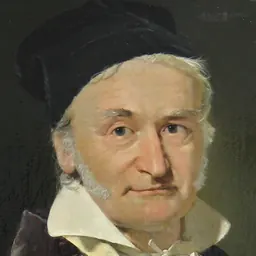
Career In 1831, on the recommendation of Carl Friedrich Gauss, he was hired by the University of Göttingen as professor of physics, at the age of twenty-seven. His lectures were interesting, instructive, and suggestive. Weber thought that, in order to thoroughly understand physics and apply it to daily life, mere lectures, though illustrated by experiments, were insufficient, and he encouraged his students to experiment themselves, free of charge, in the college laboratory. As a student of twenty years he, with his brother, Ernst Heinrich Weber, Professor of Anatomy at Leipzig, had written a book on the Wave Theory and Fluidity, which brought its authors a considerable reputation. Acoustics was a favourite science of his, and he published numerous papers upon it in Poggendorffs Annalen, Schweigger's Jahrbücher für Chemie und Physik, and the musical journal Carcilia. The 'mechanism of walking in mankind' was another study, undertaken in conjunction with his younger brother, Eduard Weber. These important investigations were published between the years 1825 and 1838. Gauss and Weber constructed the first electromagnetic telegraph in 1833, which connected the observatory with the institute for physics in Göttingen.
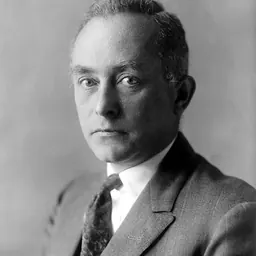
In December 1837, the Hanoverian government dismissed Weber, one of the Göttingen Seven, from his post at the university for political reasons. Weber then travelled for a time, visiting England, among other countries, and became professor of physics in Leipzig from 1843 to 1849, when he was reinstated at Göttingen. One of his most important works, co-authored with Carl Friedrich Gauss and Carl Wolfgang Benjamin Goldschmidt, was Atlas des Erdmagnetismus: nach den Elementen der Theorie entworfen (Atlas of Geomagnetism: Designed according to the elements of the theory), a series of magnetic maps, and it was chiefly through his efforts that magnetic observatories were instituted. He studied magnetism with Gauss, and during 1864 published his Electrodynamic Proportional Measures containing a system of absolute measurements for electric currents, which forms the basis of those in use. Weber died in Göttingen, where he is buried in the same cemetery as Max Planck and Max Born.
He was elected a foreign member of the Royal Swedish Academy of Sciences in 1855.
In 1855, with Rudolf Kohlrausch (1809–1858), he demonstrated that the ratio of electrostatic to electromagnetic units produced a number that matched the speed of light. This finding led to Maxwell's conjecture that light is an electromagnetic wave. This also led to Weber's development of his theory of electrodynamics. Also, the first usage of the letter "c" to denote the speed of light was in an 1856 paper by Kohlrausch and Weber.
International recognition The SI unit of magnetic flux, the weber (symbol: Wb) is named after him.
Works Elektrodynamische Maaßbestimmungen : insbesondere Zurückführung der Stromintensitäts-Messungen auf mechanisches Maass (with Wilhelm Weber) 1857. "Electrodynamic Measurements, Especially Attributing Mechanical Units to Measures of Current Intensity". German text. English translation
Don’t just read it —
keep it.
Full-length biographies made to live with: read them, listen on the way to work, watch them tonight.
- E-book
- Audio
- Video
Instant download · yours to keep · every purchase keeps this site free
Important facts
People in Wilhelm Eduard Weber's life
Named in this biography and alive at the same time





Related people
Same field, nearest in time


Contemporaries
People whose lives overlapped Wilhelm Eduard Weber's





Frequently asked questions
Who was Wilhelm Eduard Weber?
German physicist (1804–1891)
When was Wilhelm Eduard Weber born?
Wilhelm Eduard Weber was born on 4 October 1804 in Lutherstadt Wittenberg.
When did Wilhelm Eduard Weber die?
Wilhelm Eduard Weber died on 23 June 1891 in Göttingen.
What was Wilhelm Eduard Weber's occupation?
Wilhelm Eduard Weber was a physicist, university teacher and philosopher.
What was Wilhelm Eduard Weber known for?
Wilhelm Eduard Weber was known for Electrodynamometer, Magnetism, Speed of light and Telegraphy.
What nationality was Wilhelm Eduard Weber?
Wilhelm Eduard Weber was German.
Sources & further reading
· Wikipedia: Wilhelm Eduard Weber
· DBpedia: Wilhelm Eduard Weber
Cite this page
APA: Biography.guide. (2026). Wilhelm Eduard Weber. https://biography.guide/wilhelm-eduard-weber/
MLA: "Wilhelm Eduard Weber." Biography.guide, https://biography.guide/wilhelm-eduard-weber/.
Chicago: "Wilhelm Eduard Weber." Biography.guide. https://biography.guide/wilhelm-eduard-weber/.
Data last updated: 2026-09-20 · Spot an error? Report a correction.
Page generated 2026-09-27 05:22 UTC