
About Werner Scholem
Lived 1895 – 1940 (aged 44). Werner Scholem was a politician and journalist.
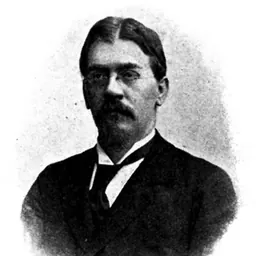
Werner Scholem (29 December 1895 – 17 July 1940) was a German communist politician and journalist who served in the Landtag of Prussia from 1921 to 1925 and the Reichstag from 1924 to 1928. He was a leading member of the Communist Party of Germany from 1924 to 1925, part of a triumvirate alongside Ruth Fischer and Arkadi Maslow. He was executed in Buchenwald in 1940. Scholem and his wife, Emmy, were portrayed in the 2014 documentary "Between Utopia and Counter Revolution."
Background Scholem was born on December 29, 1895, into a Jewish family in Berlin. His father was a print shop owner. His brother was Gershom Scholem.
In their youth, Werner and Gerhard (later Gershom) were members of the Zionist youth-movement "Jung Juda". Shortly before the outbreak of the First World War, Werner joined a socialist workers' youth group. During the war, both brothers debated the conflicts and common grounds of Zionism and socialism.
From the age of 16, Scholem became involved in journalism. In 1915, he was drafted into the German Army, and the following year was wounded during the Serbian campaign. In 1917, he joined the Independent Social Democratic Party (USPD) and was temporarily detained at Roter Ochse for insulting the Emperor and anti-war activities.
In the Gershom Scholem Collection at the National Library of Israel, there is a copy of Solomon Schecter's German book on Hasidism, "Die Chassidim", published in Berlin in 1904. The book contains the signature of Werner Scholem, and at some point, it came into the possession of his younger brother Gershom.
Career In 1919, Scholem worked in Halle (Saale), as editor of the Volksblatt.
In 1920, Scholem joined the Communist Party of Germany with the left wing of the USPD. In 1921, he became one of the Party's representatives to the Prussian Landtag. The same year, Scholem was entrusted with editing the party newspaper Die Rote Fahne (The Red Flag).
A warrant was issued for his arrest only weeks later, on charges that he had sponsored the calls for workers to strike and to engage in violent uprisings against the state that March. Later, the charge that he supervised the publication of an article revealing the intentions of Germany to invade Polish territory in Silesia increased the potential severity of sentence—escalating the charge to treason. It later turned out that the documents reported in this article were forgeries although there was, in fact, something like a full-scale war going on in Silesia at that time, with German personnel in the fighting coming from the Freikorps. Perhaps the documents were forged in the sense that they had been written up by members of the Freikorps? Though plausible, no one can say, because the documents are not archived along with his court proceedings. The apparent counterfeiting did not reduce the threat of a long imprisonment for Scholem (who as a member of the Prussian Landtag was supposed to be immune from prosecution but had been exposed to this assault by a vote of the Landtag to permit it).
He was arrested on a train platform, as the editor responsible for an article of the Rote Fahne in September 1921 after having spent a few months in hiding. He was imprisoned for three and half months in a pre-trial detention center in the Moabit district of Berlin. His cellmate—a man named Ernst Krull—was a longtime member of one the Freikorps active in Silesia was suspected in the assassination of Rosa Luxemburg (leader of the German revolution). According to the prison staff, Krull was also being questioned in ongoing investigations into the assassination of Matthias Erzberger.
Scholem was expelled from the party in November 1926 after having co-sponsored the Declaration of the 700 against the oppression of the United Left Opposition in the Soviet Union. This episode led to a notable falling out with the Soviet dictator Josef Stalin, who insulted Scholem directly—calling him out by name—in a meeting of the Executive Committee of the Comintern. Scholem subsequently joined the group of Left Communists in the Reichstag and, in April 1928, founded with others a "Leninbund". This association grew to become one of the leading splinter Communist organizations in Germany. However, Scholem left the Leninbund within the year, and remained unaffiliated while still sympathizing with Trotskyist positions and the Left Opposition (LO). He frequently wrote articles for their newspaper Permanente Revolution.
In a novelization of his life written by a close communist party member from this period, Scholem is portrayed, sometimes tragically, sometimes more comedically, as a Soviet spy "in the service of the world revolution." He is said to have seduced Marie Luise von Hammerstein, daughter of the Chief of the Army High Command, Colonel General Kurt von Hammerstein, in order to extract her father's official secrets from her. This 'seduction' is supposed to have taken place during an early period in Scholem's career—General Hammerstein was later involved in discussions with Hindenburg about whether or not Hitler should be made Chancellor of Germany. A bust of Werner Scholem's head (right) at the Nazi exhibition "The Eternal Jew" in Munich, 1937. As a Jew and a communist, Scholem was arrested after the Nazi seizure of power by the Nazi Party in 1933, and he continued to be held in "preventative custody" until he was deported to Buchenwald in 1938. He was part of a group of former Reichstag members held at the concentration camp; their prominent status afforded them some degree of protection. However, in 1940, the SS singled out Scholem and another Jewish ex-Reichstag member, Ernst Heilmann, for execution. Heilmann was killed by injection, and Scholem was shot by Hauptscharführer Blank.
Reichminister of Propaganda Joseph Goebbels called out Werner Scholem by name during the 1935 Nuremberg Rally, in a speech that introduced the German people to the Third Reich's new laws on racial hygiene. The Nuremberg Rally, "was the public climax in the National Socialist calendar year," and had an almost cultic ceremonial significance under the Third Reich. During this speech, Goebbels spoke of Scholem as "the mastermind of the Red Flag."
In a letter to Werner's younger brother in Jerusalem written shortly thereafter—the 'Kabbalist of the Holy City', Gershom Scholem—their mother, Betty Scholem, remarked that on her most recent visit to see Werner at the Stalag IV-D concentration camp where he was being held at the time
A statue of Werner Scholem's head and nose were featured in a Nazi exhibition under the heading "The Eternal Jew" in 1937.
Documentary The life of Scholem and his wife, Emmy, is portrayed in the 2014 documentary "Between Utopia and Counter Revolution" (German: Zwischen Utopie und Gegenrevolution, with English subtitles) by Niels Bolbrinker. It features an interview with Renee Goddard talking about the arrest of her parents by the Nazis in 1933. Already in 2008, Renee Goddard was interviewed by German filmmaker Alexander Kluge, a feature that was shown on German TV under the title "Manche Toten sind nicht tot".
Don’t just read it —
keep it.
Full-length biographies made to live with: read them, listen on the way to work, watch them tonight.
- E-book
- Audio
- Video
Instant download · yours to keep · every purchase keeps this site free
Important facts
People in Werner Scholem's life
Named in this biography and alive at the same time





Related people
Same field, nearest in time





Contemporaries
People whose lives overlapped Werner Scholem's

Frequently asked questions
Who was Werner Scholem?
German politician (1895-1940)
When was Werner Scholem born?
Werner Scholem was born on 29 December 1895 in Berlin.
When did Werner Scholem die?
Werner Scholem died on 17 July 1940 in Buchenwald concentration camp.
What was Werner Scholem's occupation?
Werner Scholem was a politician and journalist.
What nationality was Werner Scholem?
Werner Scholem's recorded nationality: German Reich.
Sources & further reading
Cite this page
APA: Biography.guide. (2026). Werner Scholem. https://biography.guide/werner-scholem/
MLA: "Werner Scholem." Biography.guide, https://biography.guide/werner-scholem/.
Chicago: "Werner Scholem." Biography.guide. https://biography.guide/werner-scholem/.
Data last updated: 2026-09-20 · Spot an error? Report a correction.
Page generated 2026-09-27 05:31 UTC