
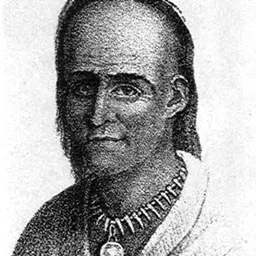
Waubonsie
Potawatomi leader
About Waubonsie
Lived 1760 – 1848 (aged 87–88). Waubonsie was a traditional leader or chief and warrior.
Waubonsie (c. 1760 – c. 1848) was a leader of the Potawatomi Native American people. His name has been spelled in a variety of ways, including Wabaunsee, Wah-bahn-se, Waubonsee, Waabaanizii in the contemporary Ojibwe language, and Wabanzi in the contemporary Potawatomi language (meaning "He Causes Paleness" in both languages, also cited as meaning “early dawn”)
Biography The documentary record of Waubonsie's life is sparse. His birth name, parentage, and place of birth are unknown. The year of his birth has been estimated from 1756 to 1765. ) after sneaking into a place where some enemy Osages were located, killing and scalping one or more of them, and escaping at daybreak.
During Tecumseh's War and the War of 1812, Waubonsie supported Tecumseh and the British against American expansion. In September 1811, Waubonsie led an attack on one of William Henry Harrison's supply boats as it ascended the Wabash River in Indiana. Waubonsie jumped on the boat, killed the lone American on board, and leapt off before the Americans on the far shore could respond.
Waubonsie opposed the attack on Fort Dearborn in 1812, and protected the family of John Kinzie during the massacre that followed.
When the Black Hawk War erupted in 1832, Waubonsie and other Potawatomi leaders worked to keep their people out of the conflict, but found it difficult to do so. Many white settlers, recalling the Fort Dearborn massacre, distrusted the Potawatomis and assumed that they would join Sauk leader Black Hawk's uprising. Potawatomi leaders worried that the tribe as a whole would be punished if any Potawatomis supported Black Hawk. Waubonsie and Potawatomi chief Shabbona told Black Hawk that they would not come to his aid. Hoping to demonstrate their good intentions to the Americans, the Potawatomis offered military assistance, fielding a force under Billy Caldwell and Waubonsie. They were less than enthusiastic allies, but managed to demonstrate support for the Americans while avoiding battle.
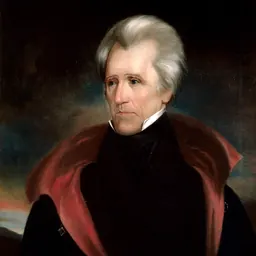
After the war, Waubonsie visited Washington, D.C., on two occasions, and met once with President Andrew Jackson. another states he died in Booneville, Missouri, as a result of his injuries in early 1846.
Toponyms and Memorials Waubonsie State Park, Iowa Wabaunsee County, Kansas Wabaunsee Township, Kansas Wabaunsee Creek, Kansas Lake Wabaunsee, Kansas Waubonsie Valley High School, Aurora, Illinois Waubonsee Community College, Sugar Grove, Illinois Wabansia Ave, Chicago, Illinois Waubonsee Trail, Batavia, Illinois
USS Waubansee (YTM-366), a United States Navy harbor tug placed in service in 1944 and stricken in 1983, was also named for him.
Don’t just read it —
keep it.
Full-length biographies made to live with: read them, listen on the way to work, watch them tonight.
- E-book
- Audio
- Video
Instant download · yours to keep · every purchase keeps this site free
Important facts
People in Waubonsie's life
Named in this biography and alive at the same time





Related people
Same field, nearest in time

Contemporaries
People whose lives overlapped Waubonsie's




Frequently asked questions
Who was Waubonsie?
Potawatomi leader
When was Waubonsie born?
Waubonsie was born in 1760.
When did Waubonsie die?
Waubonsie died in 1848.
What was Waubonsie's occupation?
Waubonsie was a traditional leader or chief and warrior.
Sources & further reading
Cite this page
APA: Biography.guide. (2026). Waubonsie. https://biography.guide/waubonsie/
MLA: "Waubonsie." Biography.guide, https://biography.guide/waubonsie/.
Chicago: "Waubonsie." Biography.guide. https://biography.guide/waubonsie/.
Data last updated: 2026-09-20 · Spot an error? Report a correction.
Page generated 2026-09-27 05:25 UTC